Answering the call for flexible, tall, and wide pet gates, this guide highlights five top picks that fit doorways, stairs, and hallways without wall damage. Ideal for buyers seeking no-drill, pressure-mounted solutions that still offer strong security for cats and small dogs. Each option is evaluated for best-fit scenarios, such as extra-tall needs, wide openings, or easy one-handed operation. The table below summarizes core specs to help compare at a glance.
| Product | Height Range | Width Range | Best For |
|---|---|---|---|
| Gardner Pet White (B0FM3FZM55) | 51″–87″ | 27.56″–37″ | Versatile, no-drill setup for hallways and stairs |
| unipaws 75″ High | 75″ tall (extends to 98″ with rods) | 21″–34″ | Escape-proof for high-jumping cats |
| COIHTOE 78.74″ | 78.74″ tall | 27.56″–32.28″ | No-drill, tall containment with clear panel option |
| No Pawblems 55″ | 55″ tall | 29″–40″ | Auto-close, narrow spacing for small pets |
| NiceTCU 74.80–98.43″ | 74.80″–98.43″ | 20.8″–38″ | Clear acrylic design, large adjustable openings |
Gardner Pet White 51″–87″ Full Door Gate
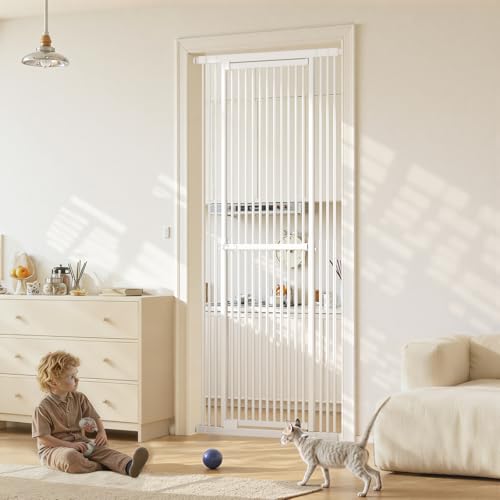
Height range and wide fit: This gate extends from 51″ to 87″ high and widens from 27.56″ to 37″ with included short and long extensions. It uses a pressure-mounted system for quick, tool-free installation in doorways, stairs, or hallways. The Stabilizing Brackets add stability in high-traffic areas.
Best for: Homeowners needing a flexible, expansive gate that can adapt to multiple openings without wall damage. Great for growing families or spaces that frequently reconfigure.
Limitations: Ensure your doorway height is within the 51″ minimum; some taller door frames may require careful positioning to avoid gaps.
unipaws 75″ High Extra Tall Gate

Escape-proof design and height: A 75″ body with extendable rods can reach up to 98″ high, forming a floor-to-ceiling barrier for 21″–34″ wide spaces. The ultra-narrow bar spacing (less than 1.4″) deters kittens and smaller pets from squeezing through. The dual-latch system provides added security against clever escape attempts.
Best for: Households with very active cats or tall dogs that attempt to jump or squeeze through standard gates. Suitable for doorways and hallways where maximum height is needed.
Limitations: Check your door frame width and ceiling clearances; ensure a precise fit before purchase to avoid gaps at the bottom.
COIHTOE 78.74″ Extra Tall Gate

Tall, no-drill setup with clear panel option: This gate stands 78.74″ tall and fits 27.56″–32.28″ widths. It uses a pressure-mounted system, designed to protect walls from damage while keeping pets contained. Clear acrylic-style design enhances visibility and aesthetics in modern homes.
Best for: Renters or owners who want a tall, unobtrusive gate that blends with interior decor while offering solid containment.
Limitations: Width range is narrower than some competitors; measure openings to ensure a snug fit and avoid gaps.
No Pawblems 55″ Extra Tall Gate

Ultra-narrow spacing with auto-close: The gate stands 55″ tall and provides a 1.37″ bar spacing to prevent slipping or head entrapment. It features an auto-close function and a hold-open option when placed at a wide angle, plus dual-direction access for convenience.
Best for: Homes needing tall containment with reliable auto-closing features for busy kitchens or entryways. Suitable for households with curious cats or small to medium dogs.
Limitations: Taller options may be preferable if you frequently encounter jumpers; consider combining with a higher gate for very tall pets.
NiceTCU 74.80–98.43″ Clear Pet Gate

Extra tall with wide range and clear panel: This gate covers 74.80″–98.43″ in height and 20.8″–38″ in width. The clear acrylic design improves visibility and reduces visual obstruction, while the pressure-mounted setup keeps walls undamaged.
Best for: Large, active households needing wide openings with a modern look. Ideal where visibility through the gate matters for supervising pets.
Limitations: The tall height requires stable placement; ensure walls or frames allow secure pressure mounting across the chosen opening.
Buying Guide: Key Purchase Considerations
- Gate height: Choose height based on your pet’s jumping ability. Extra-tall options deter escape attempts for larger cats and small dogs.
- Width adjustability: Assess the widest and narrowest openings you need to cover. Some models include multiple extensions for a snug fit.
- Installation method: Pressure-mounted gates avoid wall damage but require solid walls and stable corners. Some models offer tool-free setup with stabilizing brackets.
- Door design: Look for dual-swing or walk-through designs if you frequently carry items through the gate.
- Bar spacing: Narrow gaps (around 1.37″) reduce the chance of small pets squeezing through but ensure it’s not so narrow that it makes passing through cumbersome for humans.
- Visibility and aesthetics: Clear panels or light colors can blend with interiors while maintaining safety.
- Durability and materials: Steel frames with secure latches offer long-term reliability; consider rust-resistant finishes for kitchens or humid areas.
- Safety features: Auto-close, hold-open mechanisms, and dual-height latches add layers of security against persistent escape attempts.
Frequently Asked Questions
- Do these gates require drilling? Most listed options are pressure-mounted and do not require drilling, though always check manufacturer instructions.
- What is the best gate height for a small apartment with energetic cats? A tall, pressure-mounted gate with narrow bar spacing is typically best to prevent climbing and squeezing through.
- Can I install these gates on stairs? Yes, several models are designed for stairs with stabilizing brackets or extended width options for stair landings.
- Are there non-toxic finishes I should look for? Look for powder-coated steel or rust-resistant finishes that are easy to wipe clean and safe around pets and children.
- Is a clear panel gate better for visibility? Clear panels help you monitor pets without opening the gate, and they often suit modern interiors.
- How do I measure for a correct fit? Measure the opening width (between walls or banisters) and the doorway height, then compare with the gate’s adjustable range.