Answer: If you need hot water on the go or in compact spaces, RV and compact residential water heaters that offer electric, gas, or hybrid heating are ideal. This guide compares five well-rounded options to match different needs—from hybrid RV heaters for faster recovery to tankless and porcelain-lined models for durability and energy efficiency. Best for RV users, off-grid adventures, and small homes with limited installation space, these picks balance flexibility, safety, and ease of use.
Buyer types at a glance: travelers and nomads benefit from compact, dual-fuel or hybrid options; camping-only setups favor electric-optional or propane-ready units; small homes or cabins benefit from tankless or high-capacity tank models. The following table highlights key distinctions to help you decide at a glance.
| Product | Best For | Fuel Type | Notes |
|---|---|---|---|
| KingK N/A 6 Gallon RV Hybrid ( KINGRVER ) | RV users needing fast hot water | Gas & Electric (Hybrid) | Dual heating modes; DC ignition; good for moderate demand |
| Suburban SW12DE | Mid-size RVs or cabins needing reliability | Gas with Electric Element | Porcelain-lined, replaceable anode rod |
| Orbek Tankless RV Heater | Busy RV families needing on-demand hot water | Propane Gas (Tankless, on-demand) | Remote control; high output |
| Rheem RTG-70DVLN | Residential or larger homes needing flow | Natural Gas (Tankless) | High efficiency, 7.0 GPM |
| Suburban SW6DE | Compact spaces with electric option | Gas with Electric Element | Durable, practical mid-size option |
KingK N/A 6 Gallon RV Hybrid Water Heater

Product overview: This KINGRVER model supports gas and electric heating separately or together for faster hot water recovery. It’s designed for RV cutouts in the 4–6 gallon range and uses a porcelain-lined steel tank with a direct spark ignition system.
Best for: RV owners who want flexibility between gas efficiency and electric stability with quick hot water recovery when on the move.
Why selected: Dual fuel modes and a compact footprint help RV users optimize space and performance. The DC gas ignition aligns with typical RV power systems for convenient off-grid use.
Limitations: Installation depth requires extra pipe space (3″ minimum) and standard 1/2″ NPT connections; ensure your RV bay can accommodate this footprint.
Suburban SW12DE – 12 Gallon Porcelain Lined Tank

Product overview: A 12-gallon tank with porcelain lining and a direct spark ignition, plus an optional electric element for generator or campsite power. The anode rod provides corrosion protection and simplifies maintenance.
Best for: RVs or small homes where a larger tank is beneficial and you want flexibility to heat with either gas or electricity.
Why selected: Durable tank design with corrosion protection and a straightforward maintenance path makes this a reliable all-rounder for semi-permanent setups.
Limitations: Does not feature full tankless capability; if you require instant hot water, consider a tankless alternative or hybrid approach for higher demand periods.
Orbek RV Tankless Water Heater
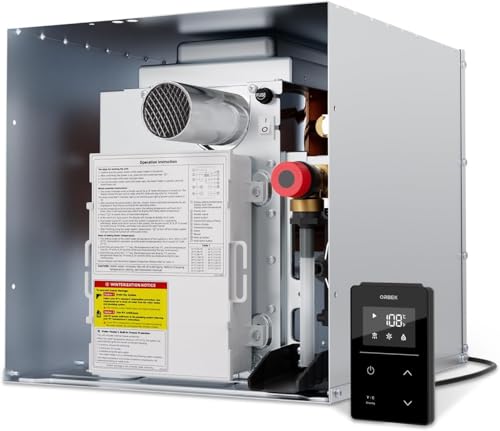
Product overview: On-demand hot water with 60,000 BTU output per minute, designed for busy RV families. This unit heats water only when needed, reducing energy waste and improving efficiency.
Best for: RV households that prioritize nonstop hot water during showers, dishes, and laundry while camping or traveling.
Why selected: Tankless design offers endless hot water and energy efficiency, with high-altitude adaptability and staged combustion technology.
Limitations: Installation requires dedicated space and venting considerations; ensure compatibility with your RV’s layout and gas lines.
Rheem RTG-70DVLN Tankless Natural Gas Heater

Product overview: Indoor installation tankless unit delivering up to 7.0 GPM with 160,000 BTUs. Provides continuous hot water with electric ignition and compact footprint for wall mounting by a qualified installer.
Best for: Homes or larger RVs that need consistent, high-flow hot water across multiple outlets.
Why selected: High efficiency and robust flow rate make it a strong option for point-of-use or whole-home setups where gas safety and reliability are priorities.
Limitations: Indoor installation requires proper venting and professional installation to meet code and safety standards.
Suburban SW6DE – 6 Gallon Porcelain Lined Tank
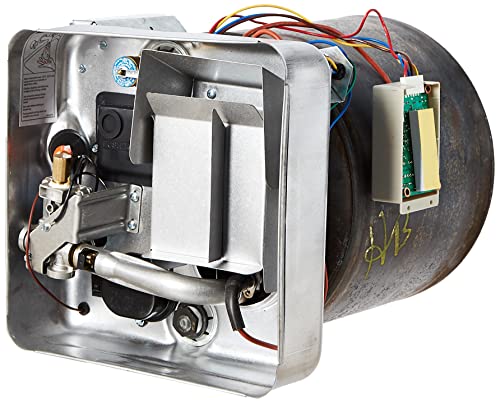
Product overview: A compact 6-gallon porcelain-lined steel tank with DSI and an Incoloy electric element, designed for durability and dependable heat delivery in tight spaces.
Best for: RVs or small installations where space is a premium, and you want option to heat with electricity when available.
Why selected: Strong corrosion protection and a compact footprint make this a practical, space-conscious choice for mobile living.
Limitations: Smaller tank size means more frequent refills or higher replenishment work during high hot-water demand periods.
Buying Guide
What should you consider before buying a hot water heater for RVs or small spaces?
- Heating method: Choose between gas, electric, or a hybrid. Tankless models provide on-demand hot water but may require more complex installation; hybrid units offer a balance of speed and reliability.
- Tank vs. tankless: Tanks provide straightforward installation and ample hot water storage; tankless units save space and energy but may require precise venting and gas sizing.
- Fuel availability: Ensure your setup has accessible propane supply, electrical capacity, and proper wiring. RVs often need 12V or 120V AC, plus gas connections.
- Size and fit: Measure cutouts and confirm depth, width, and height. Look for models designed to fit common RV or small-space configurations (4–6 gallon tanks, etc.).
- Maintenance: Porcelain-lined and anode-protected tanks reduce corrosion risk. Tankless heaters require periodic inspection of clean burners and venting.
- Installation considerations: Some units require professional installation (venting, electrical, gas). Check local codes and vehicle or home setup compatibility.
- Durability and materials: Look for corrosion-resistant tanks and robust ignition systems for reliable performance in varied climates.
Frequently Asked Questions
- What is the difference between electric and gas water heaters for RVs?
Electric heaters use 120V AC power and are simpler to install, while gas heaters rely on propane and can offer faster heating and better performance in off-grid conditions.
- Are tankless RV heaters better than tank models?
Tankless heaters provide endless hot water and save storage space, but may require more complex installation and higher upfront cost.
- Can I use a hybrid water heater in an RV?
Yes, some hybrid models support both gas and electric heating, giving flexibility for different trips and power availability.
- What maintenance do these heaters require?
Inspect anodes and tanks for corrosion, replace worn components, and ensure proper venting in gas models. Tankless units require periodic burner and vent inspection.
- Which heater is best for high-demand showers?
Tankless or high-capacity hybrid models typically perform better under multiple simultaneous hot-water demands.