When renovating masonry walls, you want a high-build paint that blocks moisture, resists alkali, and adheres well to rough or textured surfaces. This guide highlights top options that are designed for concrete, brick, stucco, and cinder block walls. It’s ideal for homeowners tackling basements, foundations, or exterior masonry projects, as well as DIYers seeking a robust, easy-to-apply finish. The following picks emphasize waterproofing, alkali resistance, and self-priming properties to simplify application and maintenance.
| Product | Best For | Key Benefit |
|---|---|---|
| KILZ Basement and Masonry Waterproofing Paint | Basement walls and exterior masonry | Nanotechnology-based waterproof barrier |
| INSL-X WaterBlock Acrylic Masonry | Basement walls and foundations | Fast-drying, high alkali resistance |
| KILZ Self-Priming Masonry (Gray) | General masonry, stucco, brick | Self-priming with excellent hiding |
| KILZ Self-Priming Masonry (White) | Dry interiors and exteriors | White finish with strong adhesion |
| KILZ Self-Priming Masonry (Tan) | Neutral finish for varied aesthetics | Even coverage and alkali resistance |
KILZ Basement and Masonry Waterproofing Paint

Best for: Basement walls and masonry surfaces needing a water barrier. This product uses nanotechnology to block water pressure up to 12 PSI, helping to prevent infiltration on concrete and masonry surfaces. It’s suitable for both interior and exterior use, including concrete blocks, stucco, and retaining walls. It is not intended for floors or walls with active leaks. The finish resists alkali buildup, delivering durable performance in high moisture environments.
Why chosen: The nanotechnology-based waterproofing feature provides a modern solution for moisture-prone areas, combining protection with an appealing finish. It’s best for buyers who want a single-coat barrier alongside long-term moisture control. Caution: Do not apply where active water leaks are present; prepare with hydraulic cement cracks before painting.
INSL-X WaterBlock Acrylic Masonry Waterproofer Paint
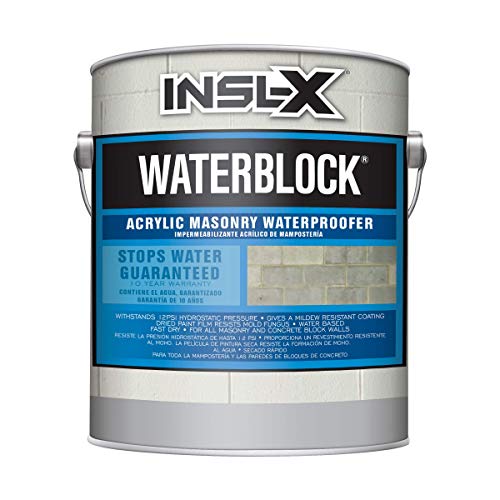
Best for: Vertical interior and exterior concrete walls, including basements and foundations. This water-based coating dries quickly and provides effective sealing for masonry surfaces such as cinder blocks, stucco, brick, and foundations. It offers high alkali resistance (up to pH-13), making it suitable for environments with strong masonry substrates and moisture challenges.
Why chosen: It’s a strong option when rapid drying and alkali resistance matter most. The high pH tolerance helps ensure the coating won’t degrade on porous masonry. Caution: While fast-drying, re-coating times depend on humidity and temperature; plan work in dry conditions for best results.
KILZ Self-Priming Masonry, Stucco and Brick Paint (Gray)

Best for: Textured interior or exterior masonry surfaces where a reliable, self-priming option is desired for smooth to rough textures. This acrylic latex, water-base paint offers good hiding, adhesion, and water repellency on masonry, drywall, stucco, brick, and similar substrates. It’s alkali-resistant and easy to apply with brushes, rollers, or spray systems.
Why chosen: The self-priming capability reduces preparation steps, saving time in projects that involve multiple textures. It’s a strong choice for general masonry work needing consistent coverage. Caution: Available in multiple color options; choose the one that aligns with your exterior or interior aesthetic.
KILZ Self-Priming Masonry, Stucco and Brick Paint (White)

Best for: White finish on properly prepared smooth, rough, or textured masonry surfaces. This interior/exterior acrylic latex paint provides strong coverage and adhesion on stucco, brick, and drywall. It remains alkali-resistant up to pH 12.0 and cleans up easily with soap and water.
Why chosen: White is a versatile neutral option for both indoor and outdoor masonry projects, balancing opacity and ease of maintenance. Caution: Avoid over-application on highly porous surfaces without proper technique, as heavy buildup can lead to longer drying times.
KILZ Self-Priming Masonry, Stucco and Brick Paint (Tan)

Best for: Neutral-toned finishes on masonry, stucco, bricks, and textured surfaces where a warm tan look is preferred. It’s a self-priming option with good hiding and adhesion, suitable for interior and exterior projects where color coordination matters.
Why chosen: Tan provides a more natural, earthy aesthetic while maintaining performance on porous masonry. Caution: Color consistency may vary slightly between batches; test a small area first to ensure uniform shade.
Buying Guide: Key Considerations For High Build Masonry Paint
What is “high build” in masonry paint? High-build coatings offer thicker film formation, improving durability and hiding power on rough surfaces. Look for products with waterproofing features, alkali resistance, and self-priming capabilities to streamline application.
Waterproofing vs. stain-blocking: Do you need a barrier against water infiltration or a finish that hides stains and microcracks? Choose products with documented moisture resistance or waterproofing properties for basements and exteriors.
Surface compatibility: Surfaces like brick, concrete block, stucco, and cinder block can differ in porosity. Ensure the product notes suitability for the exact substrate and consider surface prep—crack filling and cleaning—before painting.
Drying time and climate: If you’re painting in humid or cool conditions, fast-drying formulas may help, but ensure full cure before moisture exposure. For exterior jobs, pick products designed to withstand sun and weathering in your region.
Primer needs: Self-priming paints reduce steps but may not always replace all primer on severely damaged or very porous surfaces. Assess whether a dedicated primer is needed for best results.
Color and finish options: White, tan, gray, and other neutrals are common. Consider the desired final aesthetic and how it interacts with surrounding lighting and architectural style.
Frequently Asked Questions
- What is the advantage of self-priming masonry paint? It reduces prep work by combining primer and topcoat in one product, saving time on projects involving multiple masonry surfaces.
- Can these paints be used indoors and outdoors? Yes, most listed options are formulated for interior and exterior masonry, concrete, brick, and stucco surfaces.
- Is waterproofing essential for basement walls? For basement walls, a waterproofing feature helps resist moisture ingress, but proper crack repair and ventilation are also important.
- How do I choose between gray, white, or tan finishes? Consider the architectural style, lighting, and aesthetic you want. Neutral tones offer flexibility for outdoor exteriors and interior spaces.
- Should I worry about alkali resistance? Yes. Alkali resistance helps prevent paint degradation on masonry substrates that naturally raise pH levels, extending finish life.
- How long does it take for masonry paint to cure? Curing times vary with product and conditions; follow label guidance and avoid moisture exposure until fully cured.