For homes and offices where quick, on-demand hot water matters, under-sink mini-tank heaters offer compact, efficient solutions. This guide highlights five top options that fit under a standard cabinet, deliver near-immediate hot water, and install with minimal hassle. Each model brings a balance of fast recovery, durability, and energy efficiency, so you can choose the best fit for your space and usage.
| Product | Brand |
|---|---|
| BOSCH Electric Mini‑Tank Tronic 3000 T 2.5 Gal (ES2.5) | Bosch |
| Electric Mini Tank Water Heater UL Listed, ThermoMate 2.5 Gal (ES250) | thermomate |
| BOSCH Electric Mini‑Tank Tronic 3000 T 4 Gal (ES4) | Bosch |
| Feelrogast Electric Tank Water Heater – 8 Gal | Feelrogast |
| 2.5 Gallon Mini Tank Electric Water Heater (Under Sink) | YONOOQ |
Choosing the right under-sink heater involves considering capacity, build quality, heating element material, insulation, and safety features. The following product sections summarize practical details, performance highlights, and installation notes to help you compare options and decide which model best aligns with your hot water needs.
BOSCH Tronic 3000 T 2.5-Gallon Mini-Tank
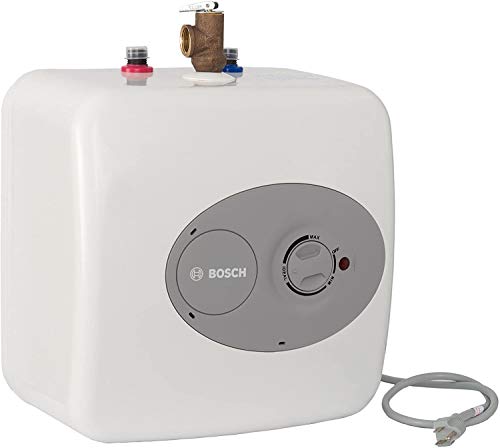
The BOSCH Tronic 3000 T 2.5-Gallon mini-tank is designed to fit under a sink, providing hot water exactly where you need it. It features a high thermal efficiency of 98% and compact dimensions (13.75 W x 13.75 H x 10.75 D inches). It operates at 120 VAC with a 12-amp draw and includes a 36-37 inch cord for straightforward installation. The glass-lined tank is built for longevity and reliability, supporting independent installation or in-line with a larger hot water source. Quick recovery ensures a prompt supply for point-of-use needs.
Key considerations:
- Pros: Compact footprint, high efficiency, easy under-sink placement, independent wiring option.
- Cons: 2.5 gallons limits hot water output for multiple simultaneous uses.
- Best for: Single-sink setups, offices, or small apartments needing near-instant hot water.
ThermoMate 2.5-Gallon Mini Tank

The ThermoMate 2.5-Gallon Mini Tank is a small under-sink heater designed for point-of-use hot water. It offers a 2.5-gallon capacity with rapid on-demand output and a 1440W heater at 120V. The adjustable temperature range from 50°F to 149°F supports varying needs, while the 30mm thick polyurethane insulation reduces heat loss and improves energy efficiency. The unit features a three-layer porcelain enamel glass-lined tank for corrosion resistance and an Incoloy 800 stainless steel heating element, which enhances durability and heating performance. This model targets reliability and efficient operation in compact spaces.
Key considerations:
- Pros: Quick recovery, strong insulation, corrosion-resistant lining, stainless heating element.
- Cons: Higher wattage may impact circuit load in smaller spaces.
- Best for: Areas requiring immediate hot water with a compact footprint and robust longevity.
BOSCH Tronic 3000 T 4-Gallon Mini-Tank
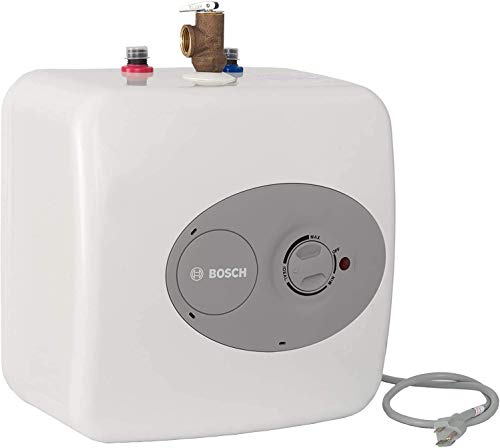
The BOSCH Tronic 3000 T 4-Gallon mini-tank extends hot water availability to a larger point-of-use need without sacrificing space. Similar in design to the 2.5-gallon model, it maintains 98% thermal efficiency and 12A at 120V, with a compact footprint of 13.75 W x 13.75 H x 13.5 D inches. The unit can be installed independently or in-line with other hot water sources, and its glass-lined tank is built to withstand daily use. This option suits small kitchens or bathrooms where a 4-gallon reservoir can cover more hot water demand per run.
Key considerations:
- Pros: More hot water per cycle than 2.5-gallon version, fits under most sinks, easy to mount.
- Cons: Slightly larger than the 2.5-gallon model; still limited in total daily output.
- Best for: Users needing more simultaneous use capacity from a compact unit.
Feelrogast 8-Gallon Electric Tank

The Feelrogast 8-Gallon Electric Tank provides a larger point-of-use solution suitable for kitchens, RVs, campers, or small food-service setups. It uses a 1500W, 120V heating element and features a 316 stainless steel heating element design for rapid heating and corrosion resistance. The unit includes safety features such as leakage protection, temperature control, and multiple insulation layers to reduce heat loss. Its dual mounting options (wall or floor) enable flexible placement under counters or near equipment that benefits from quick hot water access.
Key considerations:
- Pros: Higher capacity, robust stainless steel construction, strong insulation, versatile mounting.
- Cons: Requires a larger space than smaller under-sink models.
- Best for: Small commercial kitchens, camping trailers, or workspaces needing more hot-water volume.
YONOOQ 2.5-Gallon Mini Tank
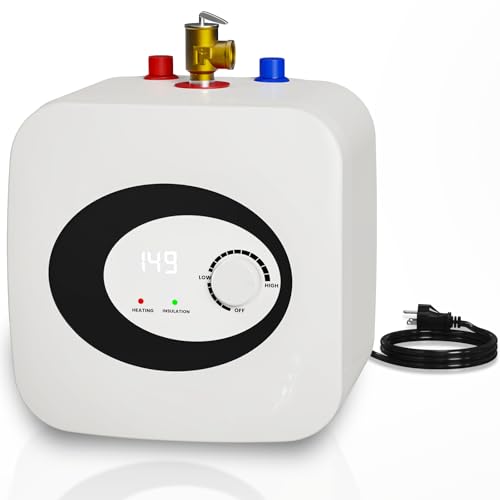
The 2.5-Gallon Mini Tank from YONOOQ emphasizes compact size with a quick-heating capability suitable for under-sink installations. It includes a digital display and a pressure-relief valve, with corrosion-resistant 304 stainless steel interior and a 316 stainless steel heating element delivering high thermal efficiency. The unit supports a temperature range typically adjustable from 86°F to 149°F and emphasizes energy-saving standby modes. It is designed for easy wall or floor mounting and aims to deliver reliable hot water for kitchen and bathroom needs in small spaces.
Key considerations:
- Pros: Digital display for easy temperature control, corrosion-resistant inner tank, fast heating.
- Cons: 2.5 gallons may not sustain long successive hot water draws.
- Best for: Compact apartments, RVs, or under-sink setups where space is at a premium.
Buying Guide: Key Purchase Considerations
- Capacity needs: Under-sink units range from 2.5 to 8 gallons. Choose based on typical hot water usage per task and how many devices or outlets will rely on hot water at once. For single-sink use, 2.5–4 gallons often suffice; for small households with multiple outlets, consider larger models or tankless options.
- Electrical requirements: Most units run on 120V with varying amperage (commonly 12–15A or higher). Confirm circuit capacity in your space and whether you need dedicated circuits to avoid tripping breakers.
- Insulation and efficiency: Look for units with glass-lined or enamel-coated tanks and thick polyurethane insulation. Higher thermal efficiency reduces standby losses and can lower energy costs over time.
- Heat source and element material: Stainless steel 304/316 interior tanks and Incoloy elements offer better corrosion resistance and longevity in hot-water environments. Consider element material if you anticipate mineral-rich water or high usage.
- Installation and space: Measure cabinet dimensions to ensure a proper fit. Some units include flexible cords and can be installed independently, while others are designed for inline connections with larger systems.
- Safety features: Anti-leakage protection, dry-fire protection, temperature controls, and compact safety shutoffs are important for long-term reliability and user safety in kitchens and laundry areas.
- Maintenance: Look for glass-lined or enamel tanks that resist scale buildup and corrosion. Regular flushing and inspection help extend the life of any mini-tank heater.
- Versatility: If you need hot water at multiple points, consider models with larger capacities or tankless options that provide on-demand water without a storage tank.
Comparative Quick Take
- Best for compact spaces: BOSCH Tronic 3000 T 2.5-Gallon and YONOOQ 2.5-Gallon mini tanks.
- Best overall durability: Feelrogast 8-Gallon with thicker insulation and stainless components.
- Best for higher hot-water demand at a single point: BOSCH Tronic 3000 T 4-Gallon or ThermoMate ES250 in smaller setups.
All selected models are designed for under-sink or cabinet installation, delivering hot water quickly without occupying significant space. When choosing, align the unit’s capacity and electrical requirements with your household’s hot-water demand, available wiring, and space constraints to optimize performance and reliability.