When selecting an outdoor well pressure tank, focus on durability, capacity, and compatibility with your pump system. This guide highlights five top options suited for homes, farms, and small businesses needing steady water pressure outdoors. Best for long-term outdoor use, these tanks balance sturdiness with easy installation. The following choices emphasize robust construction, leak-proof connections, and clear suitability for non-drinking water applications.
| Product | Capacity | Best For |
|---|---|---|
| VEVOR 30-Gallon Vertical Well Tank | 30 gallons | Whole-house supply, irrigation, farm use |
| Amtrol WX-202 Well Pressure Tank | — | Heavy-duty reliability, long service life |
| WaterWorker HT-30B Vertical Tank | 30 gallons (26-gallon capacity) | NSF-listed, clean water standards |
| Red Lion RL34A 34-Gallon Tank | 34 gallons | Pre-charged, robust steel build |
| Amtrol WX-203 Well-X-Trol | — | Durable, corrosion-resistant liner |
VEVOR 30-Gallon Vertical Well Pressure Tank

Best for: Whole-house water systems and irrigation on larger properties. This tank offers a large capacity with a sturdy carbon steel body, designed to reduce pump cycling and provide stable pressure. It is pre-charged and rated for high internal pressure, with a 1-inch NPT connection for secure piping.
- Large capacity: 30 gallons with outer dimensions around 16.93 x 16.93 x 31.7 inches.
- Durable construction: 1.2mm thickened carbon steel for strength, 90°C working temperature.
- Pre-charged: 2 BAR (29 PSI) pre-charge, can withstand up to 6 BAR (87 PSI) internal pressure.
- Connection: 1-inch NPT port for reliable leaks protection.
Caution: Not suitable for drinking water and not frost-proof, so plan protection against freezing in outdoor installations. Best for dry climates or sheltered installations.
Amtrol WX-202 Well Pressure Tank
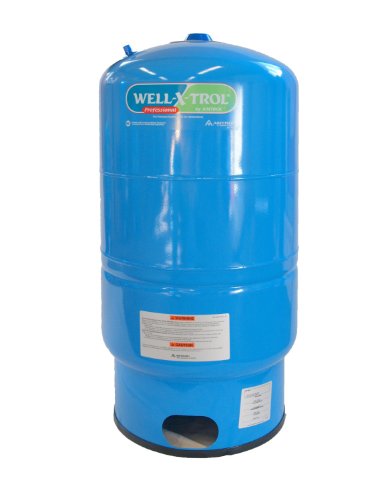
Best for: Trusted, high-strength steel tanks with durable inner liner. Amtrol WX-202 emphasizes a virgin polypropylene inner liner that resists cracking and offers strong diaphragm/liner integrity for long-term use in outdoor systems.
- High-strength steel shell with a virgin polypropylene inner liner.
- Diaphragm and liner secured by a positive hoop ring seal for added reliability.
Limitation: Specific installation details and size vary by model; ensure compatibility with your pump and piping when selecting.
WaterWorker HT-30B Vertical Pressure Tank

Best for: NSF-listed installations with clean water concerns. The HT-30B emphasizes a seamless butyl diaphragm and a polypropylene liner that resists flaking and imparts no taste or odor to the water.
- NSF/ANSI Standard 61 listing for safe use with drinking water systems.
- Butyl diaphragm design offers flexing durability without creasing like some bladder tanks.
- Polypropylene liner prevents flaking and preserves water quality.
Limitation: While suitable for drinking-water systems, ensure outdoor exposure protection to extend life in harsh environments.
Red Lion RL34A 34-Gallon Vertical Tank

Best for: Pre-charged, robust systems with reliable leak protection. This model features a heavy-duty 20-gauge steel tank and a 304 stainless steel water connection with patented leak-safe technology. It includes a high-performance butyl diaphragm and a propylene liner.
- Pre-charged to 20 PSI for transportation; recheck to match the switch setting.
- Leak-safe stainless steel connection and durable steel tank.
- NSF/ANSI/CAN 61 compliant for drinking water applications per labeling, though intended for well systems.
Limitation: Some assembly steps require careful maintenance to maintain pressure accuracy over time.
Amtrol WX-203 Well-X-Trol

Best for: Severe-duty outdoor well systems requiring a tough steel shell and a reliable inner liner. WX-203 uses a high-strength shell and a virgin polypropylene liner to resist wear and maintain water pressure consistency.
- High-strength steel shell for durability in outdoor settings.
- Virgin polypropylene inner liner to resist cracking and peeling.
- Designed to withstand aggressive water in some installations.
Limitation: Exact capacity is model-dependent; verify fit for your pump and space constraints before purchase.
Buying Guide
What should you consider when choosing an outdoor well pressure tank?
- Capacity and water demand: Choose a tank that accommodates your daily water use and irrigation needs to minimize pump cycling.
- Material and durability: Steel tanks offer strength for outdoor installations, while liners and diaphragms determine water quality and longevity.
- Pre-charge and pressure range: Ensure the pre-charge matches your system’s pressure switch settings and that the tank can handle the operating pressure range.
- Connection size: Most systems use 1-inch NPT or FNPT ports; verify compatibility with existing piping and fittings.
- Water quality considerations: If drinking water is involved, target NSF/ANSI Standards compliance and liner material that minimizes taste transfer.
- Installation environment: Outdoor exposure requires protection from freezing, weather, and physical damage; consider sheltered mounting or frost-proof placement.
- Warranty and service life: Longer-term tanks with robust liners and diaphragms reduce maintenance and replacement frequency.
FAQ
- What is a well pressure tank and why do I need one?
– It stores water under pressure to stabilize flow and reduce pump cycling, improving efficiency and extending pump life. - Which tank is best for large properties?
– A 30-34 gallon vertical tank like the VEVOR or Red Lion options offers substantial capacity for whole-house and irrigation needs. - Is a tank suitable for drinking water?
– Some models have NSF/ANSI 61 compliance; verify the liner and materials if drinking water is involved. - How important is the diaphragm material?
– Diaphragm or bladder integrity affects reliability and water quality; look for a robust butyl diaphragm or virgin polypropylene liner. - Do I need a frost-proof tank?
– Outdoor setups require protection from freezing; select models with suitable enclosure or place in a sheltered area. - How do I determine proper pre-charge?
– Match the pre-charge to the system’s switch settings; typically it is set a few PSI below the cut-in pressure.