Backflow prevention is essential to protect drinking water from contamination and to maintain system integrity in irrigation, plumbing, and commercial setups. The following selections focus on durable materials, reliable sealing, and easy installation. Each option addresses varying system pressures and installation needs, from residential to commercial environments. Explore five credible backflow preventers and related devices to help you choose a safe, compliant, and cost-effective solution.
| Product | Brand | Key Benefit |
|---|---|---|
| UPGRADED 3/4″ 720A Pressure Vacuum Breaker Assembly | LTLUO | Thickened brass, sealant-based, high-pressure tolerance |
| UPGRADED 1″ 720A Pressure Vacuum Breaker Assembly | LTLUO | Robust brass construction, high-pressure resistance |
| Basepump RB750-AVB with Back-flow Prevention Vacuum Breaker and Water Alarm | Basepump | Water-powered backup with audible alarm |
| Euluese 34-350 3/4″ Double Check Backflow Preventer | Euluese | Removable pressure vessel; corrosion-safe materials |
| Cinsda 3″ PVC Backwater Valve | Cinsda | Solvent-weldable, sturdy PVC for sewer and drainage protection |
UPGRADED 3/4″ 720A Pressure Vacuum Breaker Assembly

The 3/4″ 720A backflow preventer from LTLUO uses a thickened brass body designed for high-pressure piping systems. Its sealing method relies on sealants rather than traditional Teflon tape, which helps reduce deterioration over time. This unit has been pressure tested for stability and safety, providing effective anti-siphon protection in residential and small commercial setups. Note: The PVB seal can be damaged if the assembly is unscrewed, so installation should be completed with care.
Key considerations:
- Brass construction offers improved corrosion resistance and durability in outdoor environments.
- Sealant-based sealing emphasizes long-term integrity under high pressure.
- Suitable for systems where space is limited and a compact 3/4″ valve is needed.
UPGRADED 1″ 720A Pressure Vacuum Breaker Assembly
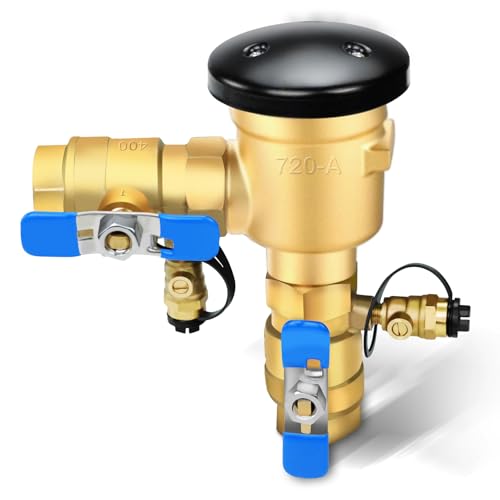
The 1″ version shares the same sealant-based approach and thickened brass construction as the 3/4″ model, with enhanced pressure resistance for larger irrigation networks. The 720A design effectively detects negative pressure and opens air inlets to prevent backflow, protecting the clean water supply. Maintenance considerations include ensuring the valve remains properly sealed after installation, as tampering can compromise the PVB seal.
Key considerations:
- Higher flow capacity suitable for bigger irrigation zones or commercial applications.
- Durable brass construction supports extended service life in demanding environments.
- Clear flow direction indicators simplify installation and troubleshooting.
Basepump RB750-AVB With Back-flow Prevention Vacuum Breaker

This Basepump model functions as a water-powered backup sump pump system with an integrated AVB (air vent vacuum breaker). It operates automatically using the municipal water supply, eliminating the need for electricity or batteries. The included 9-volt battery-powered water alarm provides audible alerts when water levels rise, adding an important layer of protection during power outages and high-water events. Installation guidance focuses on straightforward connections to standard sump configurations.
Key considerations:
- No electricity or battery power required for primary operation, increasing reliability during outages.
- Automatic operation reduces the need for manual intervention.
- Water alarm enhances situational awareness in basements and utility rooms.
Basepump HB1000-AVB Water Powered Backup Sump Pump
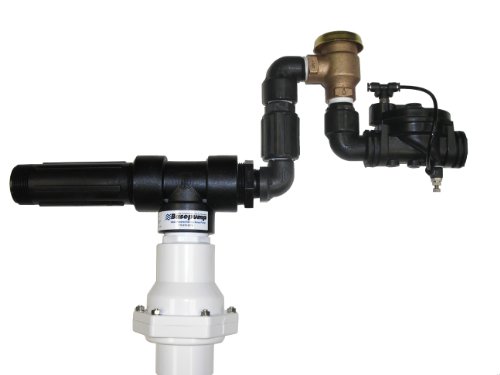
The HB1000-AVB adds a powerful water-powered backup sump pump with an AVB feature. It operates on home water pressure and requires no electricity or battery to function, making it suitable for areas prone to power outages. The kit includes detailed installation instructions and commonly used plumbing parts to facilitate setup. The design emphasizes reliability and simple maintenance, ensuring continuous operation during critical times.
Key considerations:
- Effectiveness hinges on municipal water pressure; appropriate for typical residential basements.
- Automatic sensing and pumping provide hands-free protection against flooding.
- Package content supports quicker installation and integration with existing sump systems.
Cinsda 3″ PVC Backwater Valve

The Cinsda 3″ PVC backwater valve is designed to connect to larger drainage lines, preventing backflow caused by pressure changes or blockages. Made from sturdy PVC, it provides resistance to corrosion and heat. The valve is suitable for solvent-welded installations, enabling a watertight connection with minimal leakage risk. It is ideal for basements or yard drains where backflow from municipal systems presents a nuisance or hazard.
Key considerations:
- Large-diameter design supports heavy drainage loads and high-volume backflow protection.
- PVC construction offers economical resilience to environmental exposure.
- Solvent-weld compatible for a secure, leak-free installation.
Buying Guide: Key Purchase Considerations and Comparisons
Selecting the right backflow prevention system depends on system size, water pressure, installation location, and maintenance preferences. Consider the following perspectives to guide your decision:
- Pressure tolerance and size: For small residential setups, 3/4″ to 1″ models often suffice, while larger irrigation networks may require 1″ to 3″ configurations with higher flow capacity.
- Material durability: Brass and stainless components offer superior corrosion resistance in outdoor or exposed environments. PVC is cost-effective for drainage-focused backwater protection but may be less suited for high-pressure water lines.
- Seal integrity and maintenance: Sealant-based sealing claims improved longevity; however, user care and proper installation are essential to prevent seal damage. Removable pressure vessels (as seen in some models) can reduce maintenance time and cost.
- Air vent and anti-siphon features: PVBs rely on air inlets to break vacuums, whereas double-check devices provide redundancy against back-siphonage. Evaluate the risk level of your system’s backflow potential.
- Installation complexity: Some units feature simplified installations with centerline test plugs and clear flow indicators, which can shorten setup time for DIY enthusiasts.
- Backup and safety features: Water-powered backups with alarms add safety during outages, but ensure compatibility with your sump or drain configuration and local codes.
- Code compliance: Local plumbing codes often specify acceptable backflow prevention devices for irrigation and potable water connections. Confirm compatibility with your municipality’s requirements before purchasing.
In summary, the five options discussed provide a spectrum of choices—from compact brass PVBs that suit tight spaces to larger-diameter backwater valves for sewer and drainage protection, plus water-powered backup solutions for sump systems. When evaluating products, balance flow capacity, installation ease, maintenance needs, and local code requirements to identify the best fit for your property.