Choosing the right water test kit helps households monitor drinking water quality, detect contaminants, and safeguard health. The following five kits cover a broad range of parameters—from basic hardness and chlorine to lead, pesticides, and bacteria—so you can compare options and select the kit that fits your home or well water needs. Each product includes easy-to-read results, clear instructions, and multiple parameter tests. Use this guide to understand what each kit tests for and how it delivers actionable data.
| Product | Key Capabilities | Best For |
|---|---|---|
| Varify 17in1 Complete Drinking Water Test Kit | 17 parameters, bacteria tester, lead, fluoride, chlorine, hardness, iron, copper, more | Comprehensive home testing |
| All-New 20 in 1 Drinking Water Testing Kit | 20+ substances, clear result ranges, user-friendly guide | Clear, broad screening |
| 21-in-1 Home Drinking Water Testing Kit | 120 strips, 4 bacteria tests, heavy metals, pH, lead, fluoride | Family-focused testing |
| TESPERT Water Testing Kit 125 Strips | 16 parameters, 125 strips, cost-effective repeat testing | Budget, long-term monitoring |
| HYCHEK 21 in 1 Drinking Water Testing Kit | 21 parameters, 145 strips, bacteria tests, easy 3-step testing | Versatile, easy for households |
Introduction
Water testing kits provide a practical way to verify drinking water safety without sending samples to a lab. The following selections emphasize accuracy, ease of use, and broad parameter coverage. Each kit uses color-progress indicators or simple readouts that translate complex data into actionable guidance for everyday households. While all kits aim to empower informed decisions, consider your water source (well vs municipal), local contaminants, and how often you want to test when choosing a kit. The table above highlights the core strengths of each option.
Varify 17in1 Complete Drinking Water Test Kit

The Varify 17in1 kit delivers a broad analysis of drinking water with 17 parameters, including chlorine, fluoride, lead, iron, and bacteria. Its premium quality strips are designed for reliability and repeatable results, enabling homeowners to detect contaminants and imbalances quickly. The color-coded system supports rapid interpretation, so you can assess overall water quality in minutes rather than waiting for lab results. This kit suits households seeking an extensive snapshot of drinking water safety and wants to monitor changes over time.
All-New 20 in 1 Drinking Water Testing Kit

This home kit provides a wide parameter set with clear result ranges for easy interpretation. The simple process involves adding water, timing, and reading results. The accompanying guide clarifies the color changes and acceptable ranges, making it accessible for general use. Its strength lies in presenting a broad screen for multiple contaminants in a single test, helping families understand the overall safety of their tap or well water without specialized training.
21-in-1 Home Drinking Water Testing Kit

The 21-in-1 kit includes 120 strips plus four bacteria tests, covering hardness, lead, fluoride, pH, copper, and more. It emphasizes ease of use and quick results, with a setup designed for families to perform tests without professional assistance. Reading the results is aided by a clear, user-friendly guide, making this kit suitable for households prioritizing comprehensive testing with straightforward interpretation.
TESPERT Water Testing Kit 125 Strips 16 in 1

TESPERT offers a cost-effective option with 125 strips for 16 parameters, enabling extensive testing across multiple water sources. The kit emphasizes long-term value by enabling hundreds to thousands of tests, depending on usage. It covers major contaminants that commonly concern households, providing a practical balance between depth of testing and affordability for ongoing water quality monitoring.
HYCHEK 21 in 1 Drinking Water Testing Kit
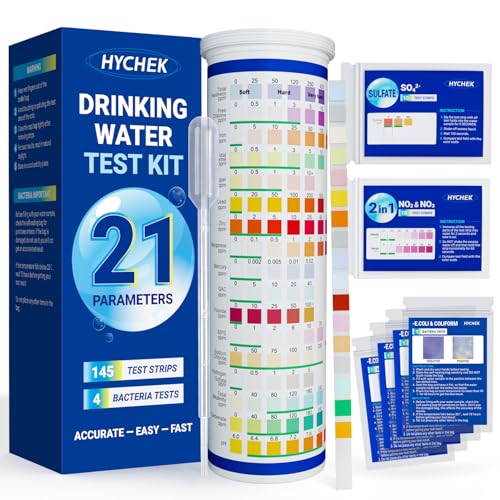
HYCHEK combines 21 parameters with 145 strips and four bacteria tests for well- and tap-water evaluation. The kit highlights an easy three-step process: dip, wait, read. Its color chart and distinct visual blocks are designed to minimize interpretation errors, supporting households in distinguishing safe ranges from potential problems. This option is well-suited for families seeking a thorough, user-friendly testing experience with reliable results.
Buying Guide: Key Purchase Considerations
- Parameter breadth: Narrow kits may cover essential metrics like pH or chlorine, while broader kits test metals, nitrates, bacteria, and organic compounds. Choose according to local water concerns and testing goals.
- Sample type and environment: Some kits are optimized for well water, others for municipal supply. Consider your water source and potential contaminants common in your area.
- Ease of use: Look for clear instructions, color-coded results, and quick read times. Kits that allow household members to test without training save time and effort.
- Volume and cost: Strips per kit and repeat-test feasibility matter for ongoing monitoring. Higher strip counts reduce per-test cost but may be more than you need initially.
- Accuracy and validation: Reputable brands emphasize consistent color matching and validated ranges. Check user reviews and any certifications or third-party validations.
- Bacteria testing: If you’re concerned about bacterial contamination, ensure the kit includes a bacteria test or options to add one. Bacteria tests add a layer of health protection to the results.
- Result interpretation: Some kits include comprehensive guides to interpret ranges, while others rely on a learning curve. Kits with straightforward charts help non-experts.
- Data actionability: Consider whether the kit tells you what steps to take if a parameter is out of range, such as retesting, contacting local water authorities, or considering filtration.
- Compatibility with lab testing: If you may want confirmation, check whether your kit’s results can be used to guide laboratory testing or if samples can be sent for official analysis.
- Maintenance and storage: Look for stable reagents, proper storage conditions, and shelf life to ensure reliable results over time.
In choosing a brew water test kit, prioritize your home’s water quality concerns, how often you plan to test, and how much detail you need to interpret safety levels. The products listed above provide a spectrum of options from broad, comprehensive testing to cost-conscious, repeatable screening. For many households, starting with a mid-range 16–21 parameter kit offers a robust baseline, then expanding to include bacteria testing or additional metals testing if local advisories or taste, odor, or staining issues arise.