If you’re tackling hard water, a cation exchange resin-based water softener is a reliable solution. This guide highlights five strong options suited for residential, commercial, and portable setups. Each product is evaluated for who it’s best for, why it’s a good fit, and any notable limitations. Use this to pick a resin that matches your water hardness, system type, and maintenance preferences.
| Product | Grain Capacity | Best For |
|---|---|---|
| iFilters Water Softener Resin Media Replacement (MED-CAT-025/2) | 16,000 grains | Residential or light commercial systems that need a reliable mid-capacity resin |
| Superior Filters Premium Resin 1 Cu Ft | 32,000 grains | Households with higher hardness or larger families seeking fewer regenerations |
| iFilters Resin Media Replacement 0.25 CuFt (MED-CAT-025) | 8,000 grains | Smaller homes, apartments, or RV setups needing quick replacement |
| Brio Water Softener Resin 1 Cu Ft | ≈48,000 grains | Homes facing challenging hard water with chlorine or iron concerns |
| USWF-8P-25lbs Ion Exchange Resin 0.5 Cu Ft | Varies by system regenerations | Residential and light commercial use; general purpose substitution resin |
iFilters Water Softener Resin Media Replacement 1/2 CuFt

Best for: Households needing solid mid-capacity resin for standard-size water softeners. Why: This 16,000-grain capacity resin uses 100% ion exchange cation beads to effectively remove calcium and magnesium, reducing scale buildup and improving appliance life. The universal compatibility makes it suitable for many residential systems, including portable or RV setups.
Caution: Some installations may require careful handling to avoid spillage during replacement. Ensure proper brine regeneration cycles after installation to maximize resin life.
Superior Filters Premium Resin 1 Cu Ft Replacement Media
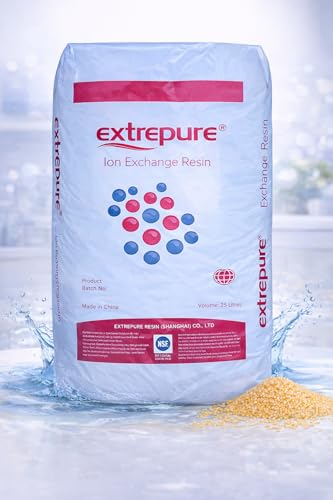
Best for: Homes that require high-capacity resin for fewer regenerations. Why: This 32,000-grain, 7% cross-link resin delivers rapid ion exchange across a wide pH range, supporting durable performance in various water conditions and system sizes. It’s compatible with most standard softeners and is designed for long life.
Caution: Higher cross-link content can influence regeneration efficiency depending on your salinity strategy. Proper sizing to your system is important to avoid under- or over-regeneration.
iFilters Resin Media Replacement 0.25 CuFt
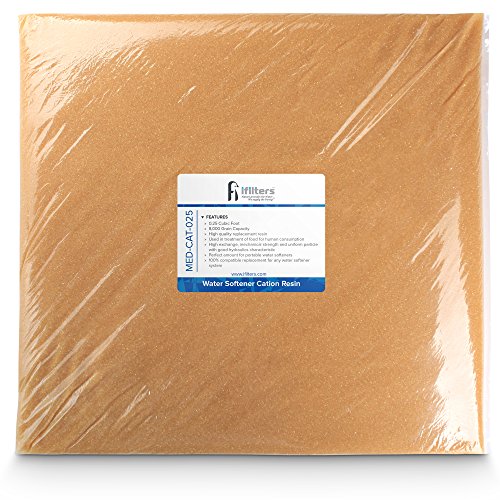
Best for: Small spaces or RVs where limited resin is acceptable. Why: The 8,000-grain capacity fits compact installations while still providing 100% ion-exchange cation resin for effective hardness removal. It’s a straightforward replacement option for micro-systems.
Limitation: Smaller capacity means more frequent regenerations in very hard water scenarios.
Brio Water Softener Resin Refill 1 Cu Ft
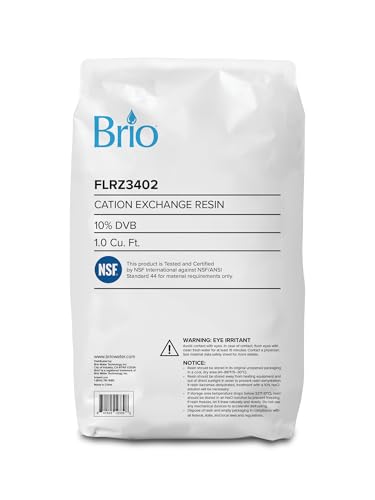
Best for: Homes with challenging water conditions and a need for robust resin life. Why: This 1 cubic foot bag uses 10% cross-linked DVB resin to deliver a high-grain capacity (up to 48,000) and strong resistance to chlorine, iron, and manganese, supporting longer resin life and dependable performance.
Caution: The resin’s durability is best realized with compatible system settings and regular maintenance to prevent premature fouling in hard water scenarios.
USWF-8P-25lbs Ion Exchange Resin 0.5 Cu Ft

Best for: Residential and light commercial setups that want a general-purpose resin with solid compatibility. Why: A half-cubic-foot bag offering reliable cation exchange performance and broad compatibility makes it a safe, versatile choice for many standard softeners.
Limitation: Depending on your water hardness, this resin may require more frequent salt regeneration to maintain soft water quality.
Buying Guide: Cation Exchange Resin Essentials
What to consider before buying a resin: grain capacity, cross-link percentage, resin type, and compatibility with your system. Greater grain capacity means fewer regenerations but higher upfront cost. Cross-link percentage affects chlorine resistance and durability. Always verify compatibility with your current softener or portable unit.
What is cation exchange resin?
Cation exchange resin uses positively charged ions to swap hardness-causing minerals (calcium and magnesium) with sodium ions. This exchange process softens water by reducing mineral content that causes scale buildup.
Rigid vs flexible resin options
Rigid DVB resins offer higher resistance to chlorine and longer lifespans in challenging water, while standard polystyrene resins provide solid performance at typically lower costs. Your choice depends on chlorine levels, iron/manganese presence, and regeneration cycles.
How to choose by household size and hardness
Smaller homes or RVs with modest hardness can rely on 8,000–16,000 grain resins. Larger households or high-hardness water benefit from 32,000 grain or higher capacity resins to reduce salt and water use over time.
Maintenance basics
Follow resin manufacturer guidelines for regeneration timing and brine concentrations. Avoid exposing resin to contaminants or incompatible cleaners. Regular inspection helps prevent fouling and ensures consistent soft water output.
Installation considerations
Ensure uniform resin particle size and proper filling to avoid channeling in the resin bed. For portable systems, verify fit and compatibility with RV hoses and standard garden connections.
Summary: quick decision tips
- Best overall for high-capacity needs: Brio Resin (1 Cu Ft) and Superior Filters 1 Cu Ft.
- Best for compact spaces: iFilters 0.25 CuFt and Rivlia portable options.
- Best all-around residential option: USWF-8P-25lbs for broad compatibility.
Frequently Asked Questions
- What is the main difference between cation exchange resins and other resin types?
Answer: Cation exchange resins specifically remove calcium and magnesium, replacing them with sodium ions to soften water. - How do I know what resin capacity I need?
Answer: Estimate daily hardness load and household size; higher grains require larger resin capacity to minimize regenerations. - Can I use these resins in RV or portable systems?
Answer: Yes, several options listed are compatible with portable and RV setups, but verify fit and connection types first. - Do all resins require salt regeneration?
Answer: Most do; the frequency depends on hardness, water usage, and resin capacity. Follow manufacturer guidelines. - Are these resins NSF certified?
Answer: Some listings indicate NSF/ANSI compliance; always confirm certification on the specific product page.