Finding the right combo hot water heater combo—point‑of‑use units, mini tanks, and tankless options—can dramatically cut wait times and save energy in busy homes. This guide reviews five strong choices that balance space, efficiency, and performance for American households. Each product focuses on delivering hot water where you need it most, whether under a sink or at a point of use, without sacrificing safety or reliability.
| Product | Brand | Key Benefit |
|---|---|---|
| BOSCH Tronic 3000 T 2.5-Gallon | Bosch | Under-sink convenience and durable glass-lined tank |
| EcoSmart ECO 11 | EcoSmart | Tankless, ultra-compact, wall-mount option |
| ORBEK 14kW Tankless | Orbek | High‑power instant hot water for multiple uses |
| Rheem 18kW Tankless | Rheem | Digital control with self‑modulation |
| ECOTINYMACH 110V Tankless | ECOTINYMACH | 110V efficiency for quick hot water at multiple points |
Below are five product sections that highlight each option’s strengths, installation notes, and what to expect in real-world use. Each section includes a quick visual reference and a concise feature pull from the manufacturer data.
BOSCH Tronic 3000 T 2.5-Gallon Mini-Tank
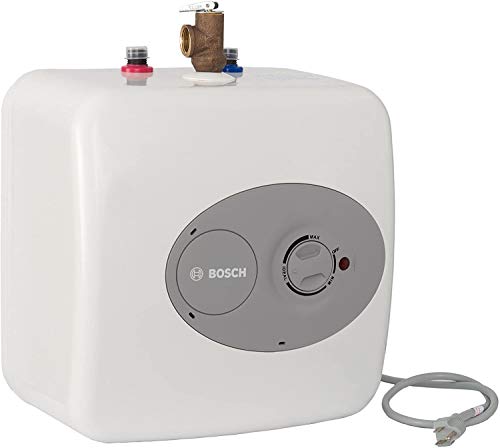
The BOSCH Tronic 3000 T 2.5-Gallon mini-tank is designed for point-of-use applications, placed under a sink to deliver hot water quickly. It features a high thermal efficiency of 98% and compact dimensions (13.75 W x 13.75 H x 10.75 D inches). This model operates at 120V with a 12A draw, and its glass-lined interior supports a long service life. A 36–37-inch cord allows flexible installation, either wall, shelf, or floor mounted, making it suitable for closets or utility spaces adjacent to demand hotspots.
Key considerations: It’s best for small hot water needs or as a supplement to a main heater. The unit is easy to maintain and efficient, but its 2.5‑gallon capacity means it won’t meet high‑demand scenarios alone. If you regularly draw hot water from multiple fixtures, plan for a second unit or a larger system upstream.
EcoSmart ECO 11 Electric Tankless Water Heater

The EcoSmart ECO 11 is a compact tankless option rated at 13 kW at 240 volts, boasting patented self-modulating technology. It provides endless on‑demand hot water and maintains temperature within one degree of the set point. With significantly smaller size than traditional heaters, it can be installed on a wall or at the point of use. Its energy efficiency stands at approximately 99% thermal energy efficiency because it only heats water when called, reducing standby heat loss.
Key considerations: Suitable for low to moderate hot water draw (often 1–2 points of use). For higher simultaneous usage, you may need a larger unit or multiple units. Proper electrical capacity and a dedicated circuit are essential for safe operation.
ORBEK 14kW Tankless Electric

Orbek’s 14kW On-Demand Electric Tankless Heater is designed for 240V/60A electrical service, with two-pole breaker and 1/2″ NPT water connections. It delivers up to 3.38 GPM, supporting hot water for 2–3 points of use simultaneously. The kit emphasizes easy integration with a high‑power circuit and notes professional electrical consultation to confirm circuit capacity. The unit focuses on rapid delivery with a quick response time, reducing waiting compared to traditional tank models.
Key considerations: Installation requires a robust electrical setup and professional assessment to ensure the circuit can support operation. It’s best for households needing reliable multi-point hot water without a storage tank, but it demands careful wiring and compliance with local codes.
Rheem 18kW 240V Tankless Electric
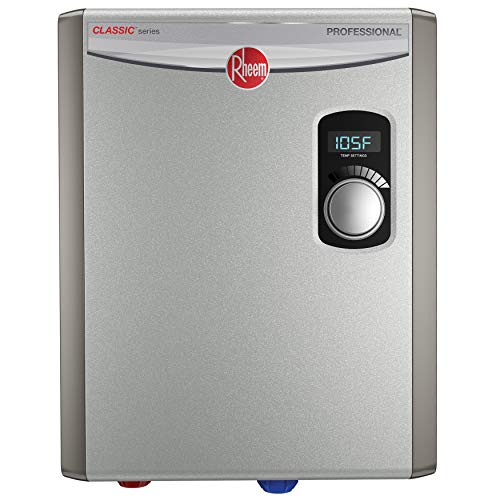
The Rheem 18kW 240V tankless electric heater features external digital thermostatic control with an LED display for precise temperature management. It uses self‑modulation to adjust power to match demand, and it includes durable copper immersion heating elements that are field serviceable. The model supports flows up to 4.4 GPM, making it suitable for modest to higher hot water requirements across multiple fixtures, depending on incoming water temperature and desired output.
Key considerations: This unit provides strong performance for households with higher hot water needs but requires a suitable electrical service and proper venting if installed near combustible spaces. Regular maintenance and filter checks help sustain efficiency and life span.
ECOTINYMACH Tankless Electric 110V

The ECOTINYMACH 110V tankless heater is designed for under-sink or point‑of‑use setups with 5000W of power and easy operation. It enables rapid hot water delivery and supports conversion between Fahrenheit and Celsius for user preference. The device emphasizes straightforward usage and flexible deployment in constrained spaces, ideal for quick hot water at specific fixtures.
Key considerations: This model is best for homes needing a compact, simple point‑of‑use solution. Check electrical availability and ensure compatibility with existing fixtures and piping. The temperature range and flow rate should align with your daily hot water requirements to avoid inefficiencies.
Buying Guide: Key Purchase Considerations
- Type and use case: Choose between mini-tank (storage), tankless (on-demand), or hybrid point‑of‑use configurations based on where you need hot water and expected draw.
- Electrical requirements: Tankless units often require 240V circuits with dedicated breakers and ample amperage. Ensure your home electrical panel supports the load, or plan a professional upgrade.
- Flow rate and temperature rise: Determine the maximum gallons per minute (GPM) you need at your incoming water temperature. Higher GPM units are better for multiple fixtures but demand more power.
- Space and installation: Under-sink and wall-mounted units save space but require proper clearance and venting (where applicable) and secure mounting.
- Efficiency and standby losses: Tankless systems are typically more energy-efficient by heating water on demand. Storage tanks can lose heat when not in use, so choose based on your usage pattern.
- Durability and maintenance: Look for units with durable materials (e.g., copper heating elements, glass-lined tanks) and accessible service parts for easier maintenance.
- Safety and certifications: Verify CE, UL, ETL, or other certifications and ensure device protections (overheat, leak detection, auto shutoff) meet local codes and safety expectations.
- Cost of ownership: Balance upfront costs with long‑term savings from reduced energy use, along with potential maintenance expenses.
Choosing the right combo hot water heater depends on your hot water demand, space constraints, and electrical readiness. For many homes, a point‑of‑use mini-tank or compact tankless unit provides the best balance of convenience, efficiency, and reliability when installed in appropriate locations and supported by proper electrical capacity.