Answering the question: which crawl space insulation products deliver real energy savings, moisture control, and easy installation for typical American homes? This guide highlights five top options, detailing who they’re best for, and how they compare. Suitable buyers include DIY homeowners tackling a crawl space retrofit, builders seeking reliable vapor barriers, and property owners aiming to reduce heating and cooling costs. The following summary table lists the five selected products and their core strengths for quick comparison.
| Product | Best For | Key Benefit |
|---|---|---|
| US Energy Products 48″ x 100′ White Double Bubble Reflective Foil Insulation | Full-space radiant blockage | High radiant reflectivity reduces heat transfer |
| Viper – Radiant Barrier Roll (4′ x 25′) | Vapor barrier + lightweight install | Insul-Barrier design integrates moisture control |
| 50sqft NASATEK Foam Reflective Insulation | Attics, crawl spaces, garages | Foam core with reflective film for strong R-value |
| Whitecap Crawl Space Encapsulation Kit | Complete encapsulation | All-in-one kit with tape, fasteners, and butyl tape |
| US Energy Products Double Bubble White/Foil Reflective Insulation (500 sq ft) | Large-area retrofit | Two reflective layers for broad coverage |
US Energy Products 48″ x 100′ White Double Bubble Reflective Insulation

Product overview: A foil bubble insulation roll with 48″ width and 100′ length. White/foil surface, about 6mm thick, designed to reflect radiant heat. It claims 99.7% radiant heat reflectivity and a 3% emissive factor, plus a Class 1 / Class A fire rating. The roll is lightweight for easy handling and can be cut with scissors or a sharp knife. Made in the USA, it aims to reduce energy use by blocking radiant heat in both summer and winter.
Best for: Homeowners seeking a straightforward radiant barrier retrofit for crawl spaces or walls. It suits basements and metal buildings where a durable, relatively thin barrier is preferred. It is chosen for its high reflective performance and broad coverage per roll.
Why selected: The product’s dual reflective layers are designed to cut radiant heat transfer, supporting energy savings without adding heavy thickness. Its fire rating and non-toxic description add a layer of safety for DIY installations.
Caution or limitation: The product’s performance depends on proper installation—gaps or folds can reduce effectiveness. This is a radiant barrier rather than a full vapor barrier, so consider pairing with a moisture-control layer in humid environments.
Viper Radiant Barrier, Insulation Roll

Product overview: Insulation roll designed for crawl spaces, attics, basements, garages, and more. Marketed as an Insul-Barrier with reflective technology and moisture-control capabilities. Rolls are lightweight, flexible, and easy to trim with scissors or a knife. The barrier is built to withstand various weather exposures with a focus on easy handling in tight spaces.
Best for: DIYers needing a combined insulation and moisture-control solution in crawl spaces or attics. It’s particularly helpful when space is tight and installer maneuverability matters.
Why selected: It blends insulating layers with a vapor barrier approach, helping to curb moisture migration alongside thermal resistance. It’s praised for being non-irritating to handle during installation.
Caution or limitation: As a barrier-focused product, it may require additional sealing or layering depending on humidity levels and room dryness. Confirm compatibility with any existing vapor barriers in the space.
50sqft NASATEK Foam Reflective Insulation
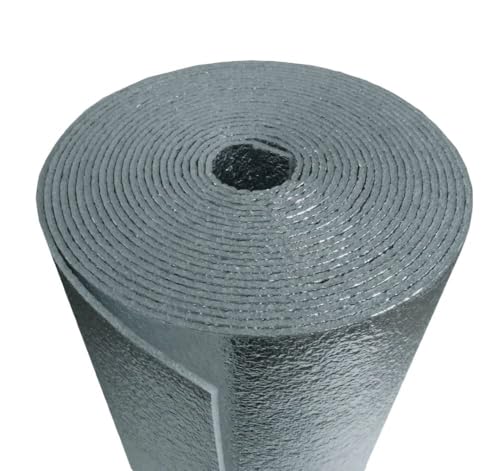
Product overview: Foam-core reflective insulation, 2ft x 25ft rolls, with two reflective film layers offering around 96% reflectivity. The foam core reduces conductive heat flow, and the inner polyethylene layer adds strength. Suited for attic, crawl space, metal buildings, or garages where a rigid, moisture-resistant option is beneficial.
Best for: Homeowners needing a compact, high-reflectivity option for tight spaces such as crawl spaces or attic gaps where a combination of reflectivity and foam insulation is advantageous.
Why selected: The foam core reduces heat transfer while the reflective layers maximize radiant heat control. It’s presented as a practical alternative to fibrous insulation in several spaces.
Caution or limitation: This product is a smaller format; larger areas may require multiple rolls. Ensure proper sealing at seams to maintain performance.
Whitecap Crawl Space Encapsulation Kit

Product overview: A complete crawl space encapsulation kit designed to seal spaces up to 1,200 sq. ft. Includes a 20 mil woven vapor barrier, two rolls of tape, one roll of butyl tape, and 100 fasteners. Built to deliver a continuous, airtight barrier with reinforced tear resistance and durability against typical crawl space conditions.
Best for: DIYers seeking a one-stop kit to achieve professional-grade encapsulation without contractor costs. Appropriate for larger crawl spaces needing durable vapor protection and sealing components.
Why selected: The kit provides all essential components in a single package, ensuring compatibility among parts and reducing missing-piece risk during installation.
Caution or limitation: The effectiveness depends on proper roll alignment and seam sealing. Read installation instructions carefully to avoid gaps that could compromise the barrier.
US Energy Products Double Bubble White/Foil Reflective Insulation (500 sq ft)
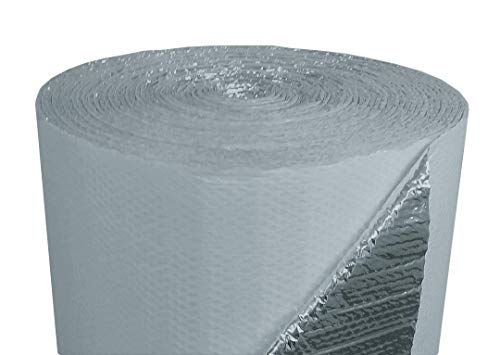
Product overview: A double-bubble reflective insulation roll with white/foil layers. Sized for larger area coverage (500 sq ft). Noted for its moisture resistance and a design suitable for walls, basements, crawl spaces, metal buildings, and under-slab radiant heating systems. The product is described as moisture-resistant and designed to inhibit condensation.
Best for: Projects requiring broader coverage and robust temperature control in crawl spaces or basements. Good fit for retrofit projects where multiple spaces can be treated in one purchase.
Why selected: The double-bubble construction enhances reflective performance across bigger areas, supporting energy-efficient improvements in multiple locations simultaneously.
Caution or limitation: As with other reflective barriers, installation accuracy impacts performance. Ensure continuous coverage without gaps to maximize effectiveness.
Buying Guide: Key Considerations For Crawl Space Insulation
What should you evaluate before buying crawl space insulation?
- Thermal performance: Look for high reflectivity and, where relevant, a foam core or multiple reflective layers to reduce radiant heat transfer.
- Moisture control: In damp environments, pair radiant barriers with a vapor barrier or moisture-resistant layer to prevent mold and wood damage.
- Durability and safety: Check fire ratings, non-toxicity, and resistance to tearing or puncture when used in tight spaces.
- Installation ease: For DIY projects, prefer lightweight, trim-friendly materials and complete kits that simplify sealing and fastening.
- Area coverage: Calculate the crawl space size to determine how many rolls or kits are needed. Larger spaces may benefit from higher-square-footage products.
- Compatibility: Consider how a reflective barrier integrates with existing insulation or vapor barriers to avoid redundancy or gaps.
Practical Tips For Best Results
- Prepare the space: Clear debris and repair any moisture issues before installing barriers.
- Seal seams: Use reinforced tape or butyl tape to seal all seams and overlaps for a continuous barrier.
- Overlap and fit: Ensure adequate overlap between panels and avoid gaps that can compromise insulation performance.
- Maintenance: Inspect barriers annually and re-seal any damaged areas to maintain effectiveness.
Frequently Asked Questions
- Q: What is the main difference between a radiant barrier and a traditional vapor barrier? A: A radiant barrier blocks radiant heat transfer, while a vapor barrier reduces moisture migration. Many projects benefit from both in combination.
- Q: Do I need a professional to install crawl space insulation? A: Some projects are DIY-friendly, especially single-room retrofits. Complex space sealing or structural concerns may require a professional.
- Q: Can I use insulation rolls in a basement or under a slab? A: Yes, many products are designed for walls, crawl spaces, and beneath slabs or radiant heating systems; verify product specs for your application.
- Q: How do I choose between reflective insulation and foam-core options? A: Reflective insulation excels at radiant heat control; foam-core options add bulk and resistance to conductive heat. The best pick depends on space, climate, and installation constraints.
- Q: How important is surface preparation before installing vapor barriers? A: Very important. Moisture sources should be addressed, and the surface should be clean and dry to ensure proper adhesion and sealing.