Direct answer: This guide highlights five reliable, user-friendly ramps that cover a range of step heights and loading needs, helping buyers choose safer, easier home access solutions. Suitable for wheelchair users, caregivers, and families, these options balance portability, weight capacity, and stability. The top picks are best for thresholds, stairs, and doorways in both indoor and outdoor settings. The following table summarizes key at-a-glance details to help compare options quickly.
| Product | Recommended Use | Ramp Length | Weight Capacity | |
|---|---|---|---|---|
| FACHNUO 2 Feet Portable Ramp | Low-height thresholds | 2 ft | 800 lbs | Small steps, doorways |
| KOLOTOOL 3FT Ramp | Doorways and porches | 3 ft | 800 lbs | Moderate rises, portable use |
| VNN 4FT Ramp | Home steps and thresholds | 4 ft | 800 lbs | Medium-height rises |
| TaiH Leo 8 Feet Ramp | Longer exterior or entryways | 8 ft | 800 lbs | Large steps, frequent travel |
| HABUTWAY 5ft Ramp | Home thresholds and stairs | 5 ft | 800 lbs | Mid-range height steps, stability |
FACHNUO 2 Feet Portable Wheelchair Ramp

The FACHNUO ramp is a compact, lightweight option designed for 2 to 6 inch thresholds. Best for small steps at home, apartment entries, or tight doorways. It folds for easy storage and includes extended rails to reduce the risk of falls. This ramp supports up to 800 lbs, making it suitable for most manual wheelchairs and scooters. A potential limitation is slight sinking under load, though rebound occurs quickly.
Best for: short door thresholds and compact living spaces with frequent transitions. Limitations: may sink slightly under heavy use; ensure full flush contact with the ground before use.
KOLOTOOL 3FT Portable Wheelchair Ramp

This 3 ft ramp is ideal for low rises and doorways. It is built from high-strength aluminum for 800 lb capacity and outdoor durability, with a folding design for transport. The size is critical—verify height fits your steps (3–6 inches ideal, up to 9 inches). It’s a strong choice for frequent entries or travel where space is a consideration.
Best for: low-height thresholds and portable use in and around the home. Limitations: not suitable for higher steps beyond the stated range.
VNN 4FT Portable Wheelchair Ramp

The VNN 4FT ramp provides a balance between length and load capacity for home steps. It features a double non-slip surface and folds for storage, with optional screws to fix it on wooden platforms. Suitable for doorways and steps with 4-inch to 12-inch rise. A note: longer ramps can sink slightly under weight, but they rebound when unloaded.
Best for: mid-range residential steps and door entrances. Limitations: watch for sinking on very soft surfaces; secure to the ground if possible.
TaiH Leo 8 Feet Portable Ramp
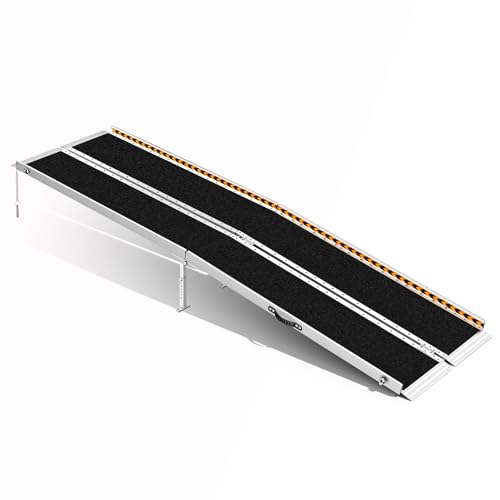
The TaiH Leo 8 ft ramp offers a long, stable solution for higher thresholds and exterior entryways. It includes two adjustable support legs to reduce sag and a textured, non-slip surface for better traction. It weighs about 55 pounds and holds up to 800 lbs, which means two people may be needed for moving and setup. This ramp suits frequent travelers or homes with multiple steps.
Best for: long or higher-entry ramps and spaces where additional middle support is needed. Limitations: heavier to lift and move; plan for two-person setup if needed.
KOLOTOOL Adjustable 7FT Telescoping Ramp (2 Pack)
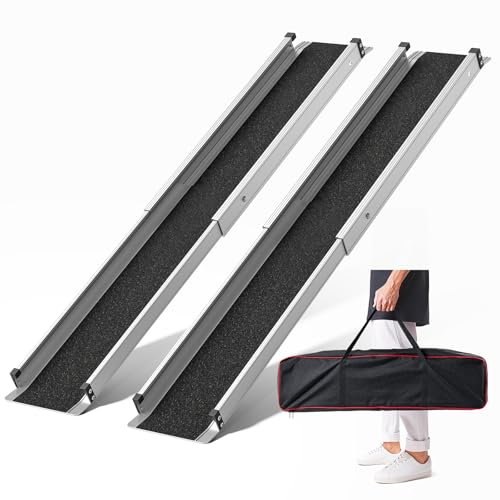
This telescoping ramp extends from 48″ to 84″ and comes as a two-pack for flexible configurations. It supports up to 600 lbs and includes a storage bag. The design is lightweight (about 20 lbs per pack) and requires no tools to deploy. It’s best for both home and travel where adjustable length is needed, but not suitable for power chairs or scooters with higher weight or width requirements.
Best for: adjustable length needs and travel-friendly setups. Limitations: lighter than some fixed ramps; ensure 600 lb capacity meets your equipment.
Buying Guide: Key Considerations For Choosing Disability Ramps
- Height range and slope: Measure the vertical rise and choose a ramp length that provides a gentle slope. Higher rises need longer ramps to maintain safety and reduce wheel-surcharge forces.
- Weight capacity: Confirm the ramp’s maximum load equals or exceeds the wheelchair plus user weight. Most options here support up to 800 lbs, which covers manual chairs and many power chairs.
- Portability and storage: If you travel or have limited storage, folding or telescoping designs are preferable. Check folded dimensions and weight.
- Surface traction: A textured or non-slip surface reduces slip risk. Double non-slip layers add extra grip, especially in wet or icy conditions.
- Stability features: Look for extended rails, side baffles, top/bottom transition plates, and the possibility to secure ramps via pins or screws when needed.
- Installation and compatibility: Some ramps require no tools, while others may need anchoring. Ensure compatibility with doorways, thresholds, and any adjacent carpeting or flooring.
- Durability and environment: Aluminum ramps are common for indoors and outdoors due to corrosion resistance. Consider weather exposure and storage conditions.
Frequently Asked Questions
- What ramp length do I need for a 6-inch step? A ramp length of about 6 to 8 feet typically provides a safe slope for a 6-inch rise, depending on wheel chair and user factors.
- Can these ramps be used for power wheelchairs? Most listed ramps are rated for manual chairs and mobility devices. Verify the specific weight and width requirements for power chairs before use.
- Are folding ramps easier to store? Yes. Folding or telescoping ramps save space and are easier to transport, but ensure the locking mechanism stays secure during use.
- Is it necessary to secure ramps to the ground? Securing with pins or screws is advised when possible to prevent shifting on uneven surfaces or high-traffic areas.
- What if a ramp sinks slightly during use? Some ramps may sink on soft surfaces or heavy loads; this is usually temporary and rebounds when unloaded. Place on firm ground whenever possible.
- How do I know which ramp is best for my home? Match the step height and doorway configuration with ramp length, weight capacity, and portability. For tight spaces, shorter, folding ramps work well; for exterior entry with multiple steps, longer, sturdier ramps are preferable.