Looking for a reliable domestic UV water filter to improve home water quality? These five options deliver ultraviolet disinfection for household systems, helping reduce microbes and contaminants in clear, faucet-ready water. Best for whole-house protection, under-sink filtration, or retrofits to existing RO setups, these units target common concerns like bacteria, viruses, and taste or odor changes. This guide contrasts top models by flow rate, installation style, and maintenance needs to help you choose what fits your home best.
| Product | Best For | Key Benefit | Limitations |
|---|---|---|---|
| iSpring UVF20 | Whole-house filtration | Up to 12 GPM, long-life LED, automatic flow sensor | Requires 3/4″ connections |
| HQUA-TWS-12 | Under-sink/compact setups | 12 GPM, newer compact design | May need compatible plumbing |
| iSpring UVF50 | High-demand homes | Up to 13.2 GPM, long-life LED | 1-inch inlet/outlet standard |
| HQUA WF3-03 | Whole-house with PFAS concerns | 3-stage filtration, PFAS reduction | Floor-standing or wall-mount options |
| HQUA-TWS-121 | Retrofits and renovations | 1″ MNPT, additional bulb/sleeve included | Similar footprint to other 12 GPM units |
iSpring UVF20 Whole House LED UV Water Filter System
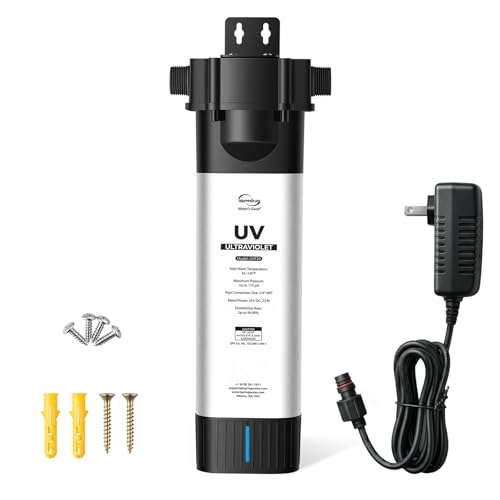
The iSpring UVF20 is designed for whole-house use with a long-life LED UV module rated for up to 8,000 hours and an estimated 11-year life without bulb replacement under typical daily use. It features a built-in automatic flow sensor that activates only when water runs, helping save energy and extend component life. It supports up to 12 GPM with a 3/4-inch MNPT inlet/outlet, making it a solid choice for mid-sized homes. Best for households seeking a maintenance-light, residential-wide disinfection solution.
Best for: homes needing reliable whole-house disinfection with low maintenance. Choose this if you want automatic flow control and a mercury-free LED solution. Caution: ensure your plumbing uses 3/4″ connections to match the unit’s size.
HQUA-TWS-12 Ultraviolet Water Purifier

The HQUA-TWS-12 offers a compact 12 GPM UV purification solution rated at 55W with a 21-inch length and 3.5-inch diameter. It uses 3/4″ MNPT fittings and emphasizes a design inspired by industry leaders, aimed at easier installation. It provides no secondary contamination and preserves water chemistry, making it suitable when taste and odor stability are critical. Best for: households needing strong disinfection with straightforward integration into existing pipes. Caution: ensure compatibility with space for a longer unit in tight installations.
iSpring UVF50 LED UV Water Filter System
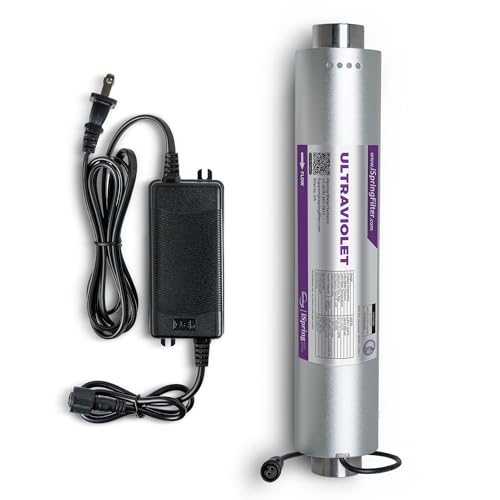
The UVF50 uses LED-based UV technology to minimize heat and avoid mercury or odors. It supports up to 13.2 GPM with a standard 1-inch FNPT inlet and outlet, making it well-suited for larger households or higher water usage. It includes a smart flow sensor that turns the system on only when water is flowing, aiding energy efficiency and reducing wear. Best for: homes needing high flow and low-maintenance LED disinfection. Caution: ensure your plumbing can accommodate a 1-inch connection if upgrading from smaller fittings.
HQUA-TWS-121 1″ UV Water Purifier
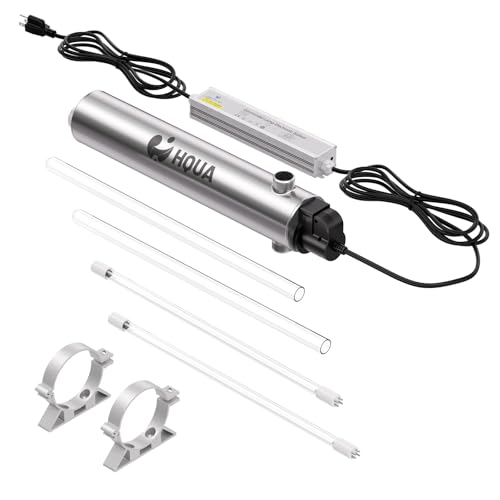
This 12 GPM purifier uses a 1″ MNPT inlet/outlet and offers a slightly larger footprint with a straightforward installation. It includes an extra UV bulb and quartz sleeve for maintenance readiness. Best for: renovations or new installs where a robust, easy-to-service indoor unit is desirable. Caution: larger size may require more space and suitable mounting options.
HQUA WF3-03 3-Stage Whole House Filter with UV
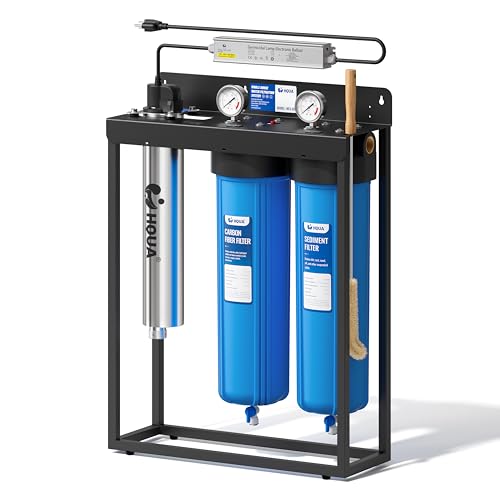
The HQUA WF3-03 combines a 3-stage filtration approach with a tailored UV purifier to reduce heavy metals and a broad range of contaminants. It describes PFAS reduction capabilities and improves water clarity and taste while targeting lead, mercury, arsenic, and other compounds. Best for: households facing diverse contaminants and PFAS concerns. Caution: verify PFAS claims with local water testing and compatibility with your plumbing layout.
Buying Guide: Key Considerations for Domestic UV Water Filters
What should you assess before buying a domestic UV water filter?
- Flow rate vs. home size: Choose a unit that matches your expected household water usage in GPM (gallons per minute).
- Connection size: Confirm inlet/outlet fittings (3/4″ vs 1″) align with your existing pipes to avoid extra adapters.
- UV source technology: LED-based UV systems often last longer with lower heat; traditional UV lamps may require bulb replacement.
- Maintenance needs: Consider units with built-in flow sensors to minimize energy use and extend life.
- Contaminant scope: If PFAS or heavy metals are a concern, select a model that explicitly addresses these contaminants.
- Installation style: Decide between free-standing, wall-mount, or under-sink configurations based on space and access.
Practical guidance: For whole-house protection with minimal ongoing maintenance, prefer LED-based UV systems with a flow sensor. If space is tight or you’re upgrading an existing under-sink RO system, a compact 12 GPM model with easy integration may be best. When PFAS or a broad contaminant profile is a priority, consider a 3-stage filtration plus UV setup that targets these compounds.
FAQ
- Do UV water filters remove chemical contaminants? UV systems primarily disinfect microorganisms; they do not remove most chemicals. Some multi-stage filters accompanying UV can address contaminants like PFAS.
- How long do LED UV modules last? LED UV modules commonly last up to 8,000 hours in nominal use, equating to many years with moderate daily usage.
- Is a flow sensor necessary? A flow sensor helps conserve energy and extend system life by activating UV only when water flows.
- Can I install UV filters myself? Many units are designed for DIY installation, but ensure you follow wiring and plumbing guidelines and local codes.
- Will UV water affect taste or odor? UV disinfection itself does not alter taste or odor; other filtration stages may influence these characteristics.
- Should I test my water before choosing a UV system? Water testing helps identify contaminants and informs whether you also need PFAS or heavy-metal filtration in addition to UV disinfection.