Looking for a drop ceiling vent fan that blends powerful airflow with low noise and easy installation? This guide highlights five top options ideal for offices, kitchens, classrooms, and small workshops. Each pick balances energy efficiency, ease of use, and durability. Best for spaces needing quiet operation, flexible installation, or integrated lighting. The buyer’s notes below explain who each product suits best and why it stands out.
| Product | Best For | Key Benefit |
|---|---|---|
| ecoCalm Drop Ceiling Fan | Offices and classrooms | Low noise, timer, LED lighting |
| SPT SF-1691C DC-Motor 16″ | Home offices | Remote control, 9 speeds |
| WELLY WL-12 | Versatile ceilings | 15 speeds, ultra-quiet |
| REEPLAR 8-Inch Exhaust | Bathrooms and kitchens | High airflow, compact |
| Broan-NuTone 505 | Quiet, general ventilation | 8.5 Sones, easy install |
ecoCalm Drop Ceiling Fan With LED Lights

Best for: small and medium spaces that need integrated lighting and quiet operation. This flush-mount design uses a full copper wind motor with double ball bearings and 6 wind speed settings. The unit operates at a low 48 dB, suitable for offices, meeting rooms, or study areas. A timer with three durations adds convenience for scheduling cooling and lighting together.
Why selected: It combines a modern grille design with 360-degree air distribution, ensuring even cooling. The LED lighting adds room illumination without extra fixtures. The timer function helps manage energy use in spaces with variable occupancy. A potential limitation is that higher wind speeds may create noticeable airflow in very small rooms.
Who should choose this: buyers seeking a low-noise ceiling fan with built-in lighting and a timer for added energy savings. The design suits flush-mount ceilings where space is at a premium.
SPT SF-1691CA: DC-Motor Drop Ceiling Fan, 16″

Best for: rooms needing precise airflow control without sacrificing energy efficiency. This 16″ fan features a DC motor and 9 speeds plus an off-timer from 1 to 7 hours, making it suitable for living rooms, home offices, or studios where you want customizable cooling without humming noise from a traditional AC motor.
Why selected: DC motors deliver better efficiency and smoother speed transitions. The 9-speed range and timer add flexibility for different activities and times of day. A caveat: the product data emphasizes performance over ultra-quiet operation, so it may be more noticeable in very quiet bedrooms.
Who should choose this: buyers prioritizing energy savings and fine-grained speed control, especially for larger rooms or spaces with variable occupancy.
SPT SF-1691C DC-Motor 16″
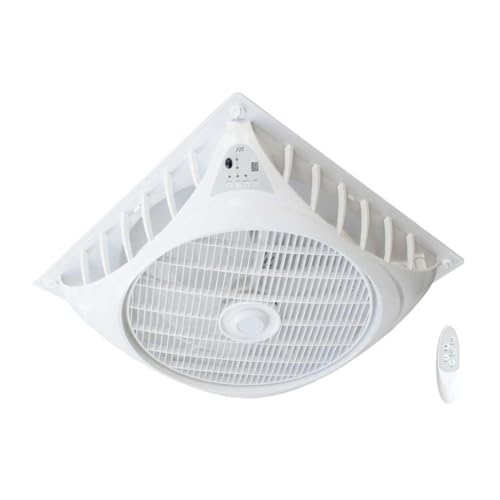
Best for: users who want a compact 16″ fan with remote control and a modern DC motor. This model provides 9 fan speeds and a 1–7 hour off-timer, making it a good fit for spaces that require adjustable cooling with minimal manual interaction.
Why selected: Remote control simplifies adjustments from across a room, and the 9-speed range aligns with different comfort levels and occupancy patterns. Limitation: remote control reliability can vary by installation and distance, so keep the receiver and batteries handy.
Who should choose this: buyers seeking hands-free adjustments and reliable remote operation in a mid-size room.
WELLY Taiwan Drop Ceiling Tile Fan, WL-12

Best for: versatile installations that require quiet operation and a wide wind-speed range. The WL-12 fits concrete, wood, and drop ceilings, making it suitable for offices, clinics, classrooms, and outdoor-covered spaces. The unit offers 15 adjustable wind speeds and a DC motor with a claimed low-noise profile.
Why selected: Energy efficiency is enhanced by the DC motor, and the wide speed range accommodates both gentle comfort and strong cooling. A caveat: actual sound levels vary by installation and room acoustics, so test in the intended space.
Who should choose this: buyers who want a flexible ceiling fan that works across different ceiling types and prefers a very quiet operation at the lower speed settings.
REEPLAR 8-Inch Ceiling Mount Exhaust Fan

Best for: high-velocity exhaust in kitchens, bathrooms, or laundry rooms where moisture and odors require rapid removal. This 8-inch model delivers up to 200 CFM and is designed for vertical ducting with an 8-inch duct system.
Why selected: It provides strong airflow for small-to-medium spaces and is compact for retrofit installations. A limitation is that it can be relatively loud (not ideal for bedrooms or quiet zones); owners should test sound levels during commissioning.
Who should choose this: buyers needing powerful ventilation in small spaces where wall or ceiling vents are not suitable, and where negative pressure can be managed with open doors or windows.
Broan-NuTone 505 Exhaust Fan
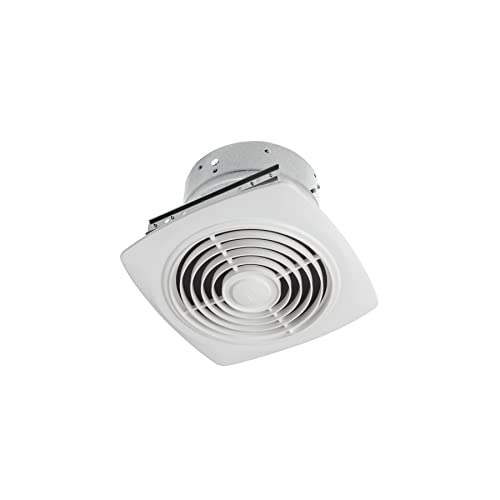
Best for: straightforward, dependable ventilation in ceilings where space is constrained. The 8″ unit delivers 200 CFM with 8.5 sones, making it a solid option for kitchens or bathrooms that require steady airflow without complex controls.
Why selected: Straightforward installation with standard mounting brackets supports quick retrofits. A limitation is the higher noise level compared to ultra-quiet options, which may affect use in quiet bedrooms or study areas.
Who should choose this: buyers wanting a reliable, easy-to-install exhaust solution that balances airflow with simple operation in general-purpose ventilation tasks.
Buying Guide
What size should you pick? Measure the space to match the fan diameter (commonly 8″ to 16″). Larger rooms benefit from bigger blades or multiple fans; smaller rooms can use compact, flush-mount designs for a discreet look.
DC motors vs AC motors: DC motors typically offer energy efficiency, slower start-up, and a broad speed range. They are often quieter at lower speeds and can save energy over time. AC motors tend to be simpler, with robust performance but higher energy use and less precise speed control.
Noise level considerations: If a quiet environment is essential (sleeping areas, study rooms), prefer fans with low dB ratings at the intended speed. Always test in the actual space since room acoustics affect perceived noise.
Installation notes: Flush-mount and tile-ceiling compatible units save space but may require precise ceiling cutouts. For remodels, ensure compatibility with existing ducting or ceiling structures. Remote controls add convenience but require reliable line-of-sight and battery maintenance.
Lighting needs: If integrated lighting is important, choose models with LED fixtures to minimize energy use and heat output. Confirm compatibility with existing lighting circuits and dimming if needed.
Energy use and maintenance: Look for DC motors with high efficiency ratings and consider models with thermal protection and built-in safety features. Inspect components like the grille, motor casing, and mounting hardware for durability and ease of cleaning.
FAQ
- What is a drop ceiling vent fan? A fan designed to be flush-mounted in a drop or suspended ceiling to move air through the space without protruding.
- Do these fans require professional installation? Some installations are DIY-friendly, especially flush-mount models. Others may need professional help if ducting or heavy mounting is involved.
- Are DC motor fans quieter than AC motor fans? Often yes, especially at lower speeds, because DC motors offer smoother speed control and better efficiency.
- Can I mix a fan with a ceiling light? Yes, many models integrate LED lighting. Ensure electrical compatibility and proper wiring when combining functions.
- What should I test before finalizing installation? Check airflow in the intended space, noise at operating speeds, and confirm that ducting paths are clear to maximize efficiency.
- How do I choose between 8″ and 16″ fans? Smaller rooms typically need 8″ to 12″ units, while larger rooms benefit from 16″ blades or multiple units for balanced airflow.