Choosing the right water heater involves balancing fuel type, flow rate, installation space, and efficiency. This guide highlights five top options—mixing gas-powered tankless units and a compact electric model—to help American homeowners find dependable hot water without sacrificing efficiency or comfort. Each product is selected for performance, durability, and value, with practical notes on installation and usage to aid comparison.
| Product | Brand | Type | Approx. GPM | BTU / Power |
|---|---|---|---|---|
| Rheem RTGH84DVLN3701171 | Rheem | Gas Tankless | 8.4 | 157,000 BTU |
| Rheem RTG-70XLN-3 | Rheem | Gas Tankless Outdoor | 7.0 | 160,000 BTU |
| Rinnai RX199iN | Rinnai | Gas Tankless Condensing | 11.1 | 199,000 BTU |
| Rheem RTG-95DVLN-3 | Rheem | Gas Tankless Indoor | 9.5 | 199,900 BTU |
| EcoSmart ECO 11 | EcoSmart | Electric Tankless | 11 (typical 1-2 fixtures) | 13 kW at 240V |
Rheem RTGH Series 8.4 GPM Indoor Gas Tankless
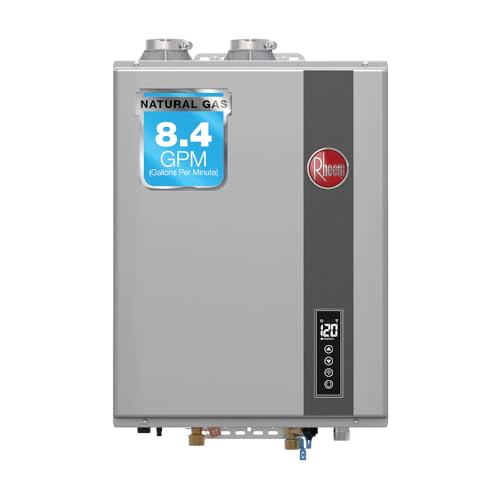
The Rheem RTGH84DVLN3701171 is a high-capacity gas-powered tankless unit designed for indoor installation. It supports a flow rate from roughly 0.4 to 8.4 GPM and provides hot water across common household needs, including showers and laundry. Temperature settings range from 100 to 140°F, with a default around 120°F for comfortable use. An electric ignition simplifies startup and reduces standby energy use, while the compact design allows for flexible installation in conditioned spaces. Pros include consistent supply during peak demand and the ability to integrate with existing natural gas lines. Consider the venting requirements and electrical supply when planning indoor installation.
Rheem RTG-70XLN-3 Outdoor Tankless Gas Water Heater
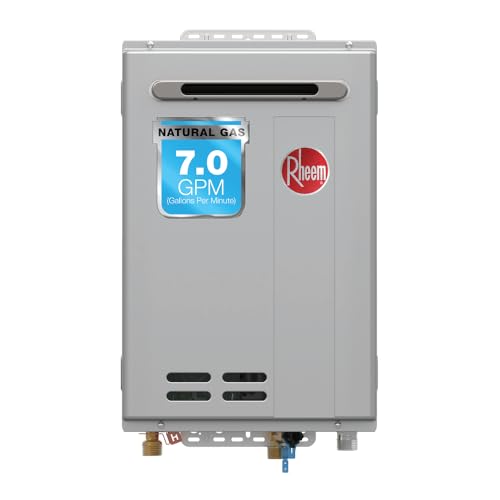
This outdoor model delivers up to 7.0 GPM and uses natural gas with 160,000 BTUs. It is well-suited for 2–3 bathroom homes that demand multiple hot water events simultaneously, such as concurrent showers and laundry. Its outdoor design minimizes indoor venting challenges, and a rugged metal cabinet supports easy mounting by a qualified installer. Efficiency is enhanced by the non-condensing design, though colder climates may require supplemental heating capacity or insulation strategies for extended cold seasons.
Rinnai RX199iN Condensing Tankless Water Heater

The Rinnai RX199iN offers versatile indoor or outdoor installation with Versa Vent compatibility and Smart Sense gas control. It supports propane or natural gas and delivers up to 11.1 GPM, capable of supplying hot water to multiple fixtures simultaneously. The compact footprint is paired with high energy efficiency (UEF around 0.98), and features like Quick Flush simplify maintenance. A controlR module enables WiFi control, though the model notes that WiFi control is not included. Outdoor installation requires a vent cap (RX-OVC). This unit is ideal for homes seeking robust performance with modern digital controls.
Rheem RTG-95DVLN-3 Indoor Tankless Gas Water Heater

This indoor model delivers up to 9.5 GPM, making it suitable for mid-sized homes with multiple simultaneous hot water needs. It uses natural gas with 199,900 BTUs to ensure quick recovery during peak demand. The robust, compact cabinet is designed for easy wall mounting by a qualified installer, and the unit is optimized for indoor environments where space efficiency matters. Installation considerations include adequate ventilation, pipe sizing for the high flow rates, and electrical service requirements for ignition and control systems.
EcoSmart ECO 11 Electric Tankless Water Heater

The EcoSmart ECO 11 is a compact electric tankless model rated at 13 kW at 240V, ideal for point-of-use or small residences with modest hot water needs. It provides endless on-demand hot water and maintains temperature within about one degree of the set point due to continuous monitoring and self-modulating technology. The unit is notably space-saving—about the size of a small briefcase—and can be mounted on a wall. Energy efficiency is highlighted by 99% thermal efficiency, which minimizes standby losses and energy waste when not in use. Cooking and showering simultaneously may require a larger or multiple EcoSmart units depending on demand.
Buying Guide
- Fuel type and availability: Gas tankless models deliver high flow and fast recovery but require proper venting and gas line sizing. Electric models save on venting but may require higher electrical service and multiple units for larger homes.
- Flow needs and fixtures: Estimate your peak hot-water load (shower, faucet, dishwasher) in GPM. Choose a unit with a comfortable margin above your calculated demand to avoid temperature fluctuations.
- Space and installation: Indoor units usually need venting and electrical connections. Outdoor units simplify interior space but require weatherproofing and additional clearances.
- Efficiency and operating cost: Condensing gas units are generally more efficient than non-condensing, but installation costs and venting complexity can offset savings. Electric models with self-modulating technology optimize energy use by matching heat output to demand.
- Maintenance and serviceability: Look for units with easy access for flushing and descaling, especially in hard-water areas. Some units offer quick flush features or service-friendly designs.
- Controls and connectivity: Smart controls or WiFi-enabled modules can help monitor performance, energy use, and maintenance reminders. Ensure compatibility with your home network and the availability of control modules.
- Space, noise, and aesthetics: Tankless systems are compact, but outdoor models may generate more ambient noise. Consider placement relative to bedrooms and living spaces.
- Warranty and support: Check manufacturer warranties, parts availability, and service networks. Longer warranties typically reflect durability and confidence in performance.