Organizing footwear in a hall closet, entryway, or mudroom can feel overwhelming. This guide highlights practical, space-saving shoe racks that fit tight hallways, keep shoes accessible, and reduce clutter. The top picks below are ideal for households with varying needs—whether you’re managing sneakers, boots, high heels, or a mix of family footwear. Each option is chosen for durability, ease of assembly, and how well it prevents shoes from slipping or getting scuffed.
Summary table of selected products
| Product | Best For | Capacity | Notes |
|---|---|---|---|
| Kitsure Shoe Rack for Closet, 3-Tier | Small to medium hall spaces, quick setup | Up to multiple pairs per tier (3 tiers) | Non-woven fabric shelves protect shoes; tool-free assembly |
| SNTD Expandable Two-Tier Shoe Rack | Medium spaces needing adjustable width | Up to 8 pairs on two tiers, expandable to more tiers | Height-adjustable, stackable; mesh shelves for stability |
| KEETDY 3-Tier Long Shoe Rack | Racks that fit boots and tall shoes | 24 pairs (roughly) | Sturdy metal with tall clearance; supports boots well |
| VASAGLE 5-Tier Shoe Rack | Medium-to-large entryways needing more height | 16–20 pairs | Adjustable, stylish rustic/industrial look |
| SONGMICS 3-Tier Metal Shoe Rack | Flexible placement, upside-down or upright use | Up to 16–20 pairs depending on orientation | Stacks or reverses for extra space; robust construction |
Kitsure Shoe Rack for Closet, 3-Tier

This 27.5″ wide, 3-tier rack uses metal tubes with plastic frames and non-woven fabric shelves. It offers spacious storage for sneakers, heels, and slippers while protecting footwear from scuffs and dust. The design supports tool-free assembly with clear instructions and a short setup time. Best for small to medium hall closets where you want quick access and easy maintenance. Limitation: fabric shelves may wear over time with heavy use.
SNTD Expandable 2-Tier Shoe Rack

The SNTD model expands from 18.6″ to 30.5″ and holds up to eight pairs on the shelves. It is height-adjustable and stackable, allowing configurations from 4-tier to 10-tier as space allows. Its mesh shelves reduce heel teetering and provide better stability than flimsy racks. Best for compact spaces that need adjustable width, longer footwear like boots, or future expansion. Caution: the base supports may require careful placement to avoid tipping when heavily loaded.
KEETDY 3-Tier Long Shoe Rack
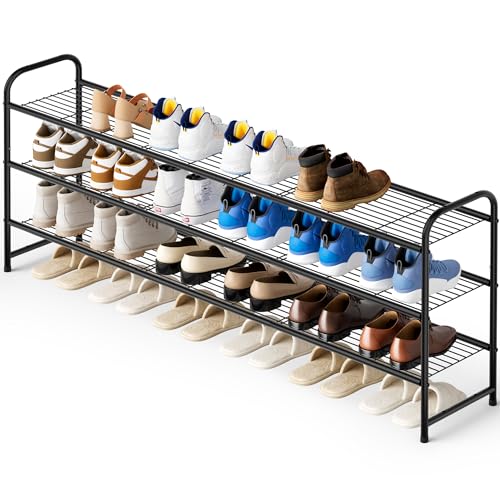
KEETDY’s long three-tier rack is designed to store up to 24 pairs with tall clearance for boots. It uses sturdy metal shelving and offers a wide footprint, ideal for entryways or larger closets. Best for families with multiple shoe types, including boots, flats, and sneakers. The main limitation is its larger footprint, which may not suit very narrow hallways.
VASAGLE 5-Tier Shoe Rack
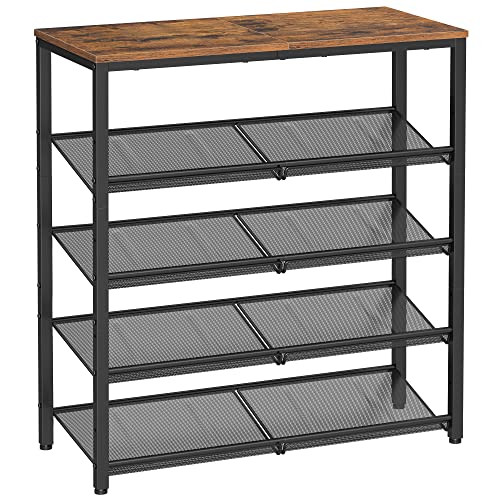
This freestanding rack combines particleboard with steel, delivering a sturdy, stylish storage solution. With five adjustable tiers, it can hold 16–20 pairs, and the design supports easy assembly with clearly labeled parts. Best for those seeking a balance of aesthetics and function in a mid-sized entryway. Caution: ensure the surface can handle moisture in humid climates, as exposed wood components may react to humidity over time.
SONGMICS 3-Tier Shoe Rack

This versatile rack can stand upright or be inverted to gain extra storage space. It accommodates up to 16–20 pairs depending on orientation and uses robust plastic connectors with thick metal tubes for durability. Best for hall closets that require flexible placement or occasional reconfiguration. Limitation: maximum load per tier may limit heavier footwear.
Buying Guide: Key Considerations For Hall Closet Shoe Storage
- Space and footprint: Measure hallway width, closet depth, and door clearance to choose a rack that fits without blocking movement.
- Capacity needs: Consider current footwear plus expected growth. If you store boots, opt for higher clearances and adjustable shelves.
- Material and durability: Metal frames with sturdy connectors typically outperform fabric-only systems in high-traffic entryways.
- Assembly effort: Tool-free designs save time; check if instructions include photos or video tutorials for quick setup.
- Protection and cleanliness: Non-woven shelves or mesh grids reduce scuffing and keep dust off shoes.
- Flexibility: Expandable or stackable models offer future-proofing as your space changes or needs grow.
- Aesthetics and compatibility: Choose finishes (rustic, black, industrial) that match your entryway style and existing furniture.
Frequently Asked Questions
- What is the best material for a hall closet shoe rack? Metal frames with durable shelves or non-woven fabric shelves offer a balance of strength and protection against dust and scuffs.
- How tall should a shoe rack be for boots? Look for a model with at least 8 inches of clearance between tiers to accommodate tall boots.
- Are expandable shoe racks worth it? Yes, they adapt to available space and can grow as your shoe collection changes or room becomes available.
- Can I stack shoe racks in a closet? Stacking designs maximize vertical space but ensure stability and weight capacity before adding more tiers.
- How do I prevent shoes from slipping in mesh shelves? Mesh or grid shelves provide even support and reduce shifting; ensure the mesh is taut and properly aligned.
- What maintenance helps prolong a shoe rack’s life? Wipe metal frames to prevent rust, keep fabric shelves dry, and check connections periodically for tightness.