Gas-powered propane heaters offer versatile warmth without relying on electricity, making them ideal for patios, garages, camping, and emergency use. This guide highlights five reliable options that balance heating capacity, safety features, and portability for both indoor and outdoor environments. Each model includes safety protections such as low oxygen shut-off and tip-over sensors, along with multiple heat settings to tailor warmth to your space. Read on to compare key features, find practical use cases, and discover what matters most when selecting a propane heater for varied conditions.
| Product | Brand | BTU Range | Use Case |
|---|---|---|---|
| 9,000 BTU Portable Buddy Radiant Heater | Mr. Heater | 4,000–9,000 | Indoor/Outdoor versatility |
| MOZODAWN 15000 BTU Propane Heater | MOZODAWN | 5,000–15,000 | Outdoor spaces and ventilated indoor areas |
| Propane Patio Heater 18,000 BTU | Haoteey | 6,000–18,000 | Outdoor patios, garages, workshops |
| PAULINN Propane Heater 6,000–18,000 BTU | PAULINN | 6,000–18,000 | Patios, garages, camping |
| Gasland MHA18BN Propane Radiant Heater | GASLAND | 9,000–18,000 | Garages, workshops, construction sites |
Mr. Heater 9,000 BTU Portable Buddy Radiant Heater

This compact radiant heater delivers 4,000 or 9,000 BTU per hour, providing flexible warmth for spaces up to about 225 square feet. It is designed and approved for both indoor and outdoor use, making it a practical choice for garages, basements, or chilly patios. A built-in regulator and safety shut-off features help manage heat output and reduce fuel consumption. The unit’s portability supports quick, targeted heating where you need it most.
MOZODAWN 15000 BTU Propane Heater

With three heating modes, this heater offers 5,000, 10,000, and 15,000 BTU options, heating up to 400 square feet. It includes low oxygen shut-off and tip-over protection for safety in both outdoor and ventilated indoor spaces. Designed for versatile use, it is suitable for garages, patios, yards, hunting camps, and other outdoor activities, while still functioning in enclosed spaces with adequate ventilation.
Haoteey 18,000 BTU Propane Patio Heater

This outdoor heater provides 6,000–18,000 BTU with heat lasting up to 69 hours on low. It’s designed for wind resistance with a ceramic front panel windscreen and includes Oxygen Depletion Sensor (ODS) and tip-over protection. It operates without electricity, making it an excellent option for patios, garages, or camping setups where power access is limited. A 20 lb propane tank sits on a stable bottom base for steady heating.
PAULINN 6,000–18,000 BTU Propane Heater
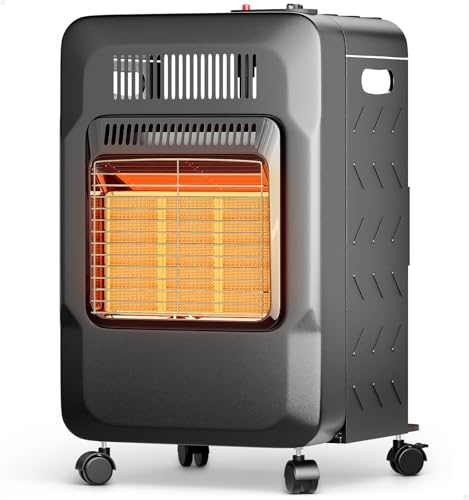
Offering rapid radiant heat, this heater delivers 6,000/12,000/18,000 BTU and warms areas up to 450 square feet. It emphasizes energy efficiency and includes dual safeguards: low oxygen protection and tip-over shut-off. The unit is designed for indoor or outdoor use, with a gas regulator and hose for easy connection to a standard 20 lb propane tank. It is suitable for patios, garages, shops, and emergency heating during power outages.
Gasland MHA18BN Propane Radiant Heater

The GASLAND MHA18BN offers up to 18,000 BTU and is designed for portable radiant heating in garages, workshops, and construction sites. It features tip-over and low-oxygen shut-off protections to enhance safety in ventilated spaces. The heater can operate with a standard 20 lb propane cylinder, and its compact cabinet integrates the tank for a cleaner look while maintaining mobility for site-to-site use.
CAMPLUX Propane Heater Indoor Outdoor 6K–18K BTU

CAMPLUX units provide 6,000–18,000 BTU with three heating modes, suitable for up to 450 square feet. They run without electricity and include dual safeguards, including low oxygen protection and tip-over shut-off. The design often features a windscreen to reduce outdoor wind disruption and a hose/regulator setup for 20 lb tanks, making it a practical option for patios, garages, and emergency scenarios.
Cuisinart 11,000 BTU Tabletop Patio Heater
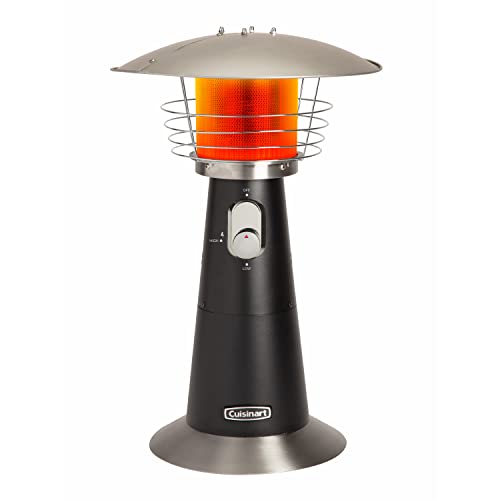
This tabletop heater provides 11,000 BTU for compact spaces up to about 30 square feet. It comes with safety features like a tilt switch and a burner screen guard, making it a portable option for small decks, camping tables, or tailgating environments. Its compact footprint makes it easy to move between indoor and outdoor settings where supplemental warmth is needed without a large setup.
Buying Guide
- BTU range and space size: Choose a heater with BTU output appropriate for the area you intend to heat. Larger spaces may require 12,000–18,000 BTU or more, while smaller patios can be comfortable with 6,000–9,000 BTU.
- Indoor vs. outdoor ventilation: Propane heaters burn fuel and release combustion byproducts. Only use in well-ventilated areas or outdoors, and heed manufacturer guidance about indoor use as some models are designed for ventilated indoor spaces.
- Safety features: Look for oxygen depletion sensors (ODS), tip-over switches, automatic shut-off, and heat shields. These features improve safety in high-traffic or mixed-use spaces.
- Portability and setup: If you plan to move heat around a property, consider models with integrated handles, wheels, or compact profiles. For emergency use, a self-contained cabinet design with the tank integrated can simplify storage.
- Fuel source and tank compatibility: Ensure you have access to standard 20 lb propane tanks and that hoses and regulators are included or readily available. Some units include regulator hoses, while others require separate purchases.
- Run time and fuel efficiency: Check listed run times at different BTU settings. Longer runtimes are beneficial during outdoor gatherings or power outages when refueling opportunities may be limited.
- Durability and weather resistance: Outdoor units should withstand wind, rain, and cold temperatures. Look for weather-resistant coatings and secure bases to prevent tipping in breezy conditions.
- Noise and comfort: Some models operate quietly, while others produce noticeable fan-like sounds or burner noise. Consider the environment and tolerance for noise in occupied spaces.
- Maintenance: Regularly inspect hoses and regulators for signs of wear. Clean the vents and ensure the ODS sensor functions correctly to maintain safe operation over time.