Direct answer: choose a pellet stove ash vacuum with strong suction, a metal canister, and heat-resistant components for safe, efficient cleanup around fireplaces, pellet stoves, and grills. This guide highlights five top options, each best for different needs—from compact, portable tasks to heavy-duty, professional-grade cleaning. Read on to match your space, budget, and usage style with the right pick.
The following table compares key details to help you decide at a glance:
| Product | Capacity | Power | Best For | Notable Feature |
|---|---|---|---|---|
| SIPPON Ash Vacuum Cleaner (800W) | 2.6 Gallon | 800W | Small to mid-size fireplaces and pellet stoves | Blower function and heat-resistant components |
| DEWALT Ash Vacuum DXV04A | 4 Gallon | 4 HP motor | Versatile use around stoves, grills, and workshops | Durable metal canister, long reach |
| SIPPON Ash Vacuum Cleaner (1000W) | 4 Gallon | 1000W | Heavy-duty pellet stoves and fireplaces | Blower option and robust suction |
| STANLEY Ash Vacuum Cleaner | 4 Gallon | 4 HP motor | Workshop and multi-use ash cleanup | Rugged metal canister, long reach |
| BACOENG Ash Vacuum | 4 Gallon | 800W | Pellet stoves and fireplaces with tight spaces | Flexible metal-lined hose |
SIPPON Ash Vacuum Cleaner (800W)

The SIPPON 800W model offers strong suction for ash, dust, and debris from fireplaces, pellet stoves, and grills. Its 2.6-gallon metal canister provides adequate capacity for home cleaning sessions, while a HEPA-like filtration design helps contain dust. The unit can convert to a blower by attaching the hose to the air outlet, increasing versatility for clearing debris from hard-to-reach areas. Best for: small- to mid-sized cleanup tasks where portability and dual-function use matter. Caution: suction may drop if the filter needs cleaning or replacement.
DEWALT Ash Vacuum DXV04A

DEWALT’s DXV04A provides robust 4 HP motor power and a metal canister designed for durability. It’s suitable for heavy ash cleanup around pellet stoves, fireplaces, grills, and even car interiors as a multi-use vacuum. It includes an aluminum wand and long hose to reach corners, with a 12-foot cleaning range. Best for: those needing a reliable, high-suction option for frequent or demanding ash cleanup. Caution: heavier unit, may be less portable for tight spaces.
SIPPON Ash Vacuum Cleaner (1000W)

This higher-powered SIPPON model offers 1000W of suction and a 4-gallon canister for larger jobs. It similarly features a blower function and flame-retardant components for safer operation around heat sources. Best for: households with larger fireplaces or frequent pellet-stove cleanups where faster debris removal is beneficial. Caution: higher wattage can mean louder operation and higher energy use.
STANLEY Ash Vacuum Cleaner (4 Gallon)

STANLEY’s 4-gallon ash vacuum emphasizes durability with a heat-resistant metal canister and reinforced hose. It’s designed to tackle cold ashes, fine dust, and debris from pellet grills, wood stoves, and fire pits. Best for: workshop-style cleanup where a rugged, long-reach tool is preferred. Caution: non-removable parts may limit some configurations for tiny nooks.
BACOENG Ash Vacuum (4 Gallon)
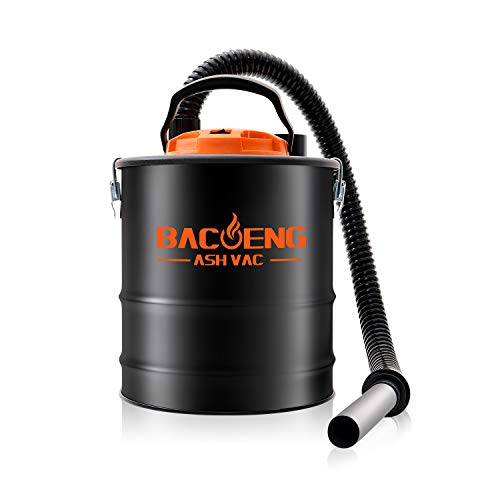
The BACOENG 4-gallon unit pairs an 800W motor with 18-kPa suction for embedded cold ash. It features a 1-meter flexible hose with a metal-lined construction to resist heat and improve reach. Best for: users needing a balance of power and flexibility in tight spaces around stoves and grills. Caution: slightly lower capacity limits lengthy cleaning sessions without emptying the canister.
Buying Guide: Key Purchase Considerations
How much capacity do you need?
Smaller spaces like compact pellet stoves benefit from 2.6-gallon models, while larger fireplaces or frequent use may justify 4-gallon canisters. Consider how often you’ll empty the canister during a cleaning session.
Is suction power a priority?
Higher wattage or horsepower generally means stronger suction. For heavy ash or dense debris, 1000W or 4 HP motors can improve cleanup speed but may increase weight and noise.
Do you need a blower function?
Blower capability helps clear leftover ash from grills, vents, or corners. If you plan to use the vacuum for more than ash, ensure the model supports safe blower operation with heat-resistant features.
What about durability and heat resistance?
Metal canisters and heat-resistant hoses improve safety and longevity when handling hot embers. Aluminum wands and flame-retardant filters are notable advantages in higher-heat tasks.
How important is portability?
Wheeled bases and lighter weights simplify movement around a workspace or yard. If you frequently move between stations, prioritize models with robust wheels and manageable weight.
Are there any safety and filtration considerations?
Look for sealed HEPA-like filtration to prevent dust from re-entering the air. Reusable filters save cost over time but require regular cleaning or replacement to maintain suction.
Maintenance and accessories
Check for easily replaceable filters, hoses, and wands. A model with spare parts readily available reduces downtime and keeps cleaning efficient.
FAQ
- What should I use to clean ash safely? Use an ash vacuum with a metal canister, heat-resistant hose, and sealed filtration to minimize dust exposure.
- Can I use these vacuums for wet ash? Most ash vacs are designed for dry ash; check product specs to confirm suitability for wet ash before use.
- Is blower mode optional or essential? Blower mode is optional but useful for removing ash from grills and hard-to-reach areas.
- Will a larger canister delay cleaning? A larger canister reduces frequent emptying but increases weight; balance capacity with maneuverability.
- Do these vacuums require special filters? Many models use washable or reusable filters; follow manufacturer guidance for maintenance to preserve suction.