Radiant heating and modern plumbing often rely on PEX-AL-PEX tubes for durability, oxygen barriers, and reliable temperature resistance. This guide highlights five prominent options that combine aluminum layers with PEX for superior strength and flexible installation. Each product competently handles radiant floor systems, glycol loops, and conventional water supply lines. Review the features, compatibility, and installation considerations to choose the right PEX-AL-PEX solution for your project.
| Product | Brand | Key Benefit |
|---|---|---|
| VEVOR PEX-AL-PEX Tube, 984ft | VEVOR | Long length, wide temperature range |
| 1/2″ PEXworx Oxygen-Barrier Pex-Al-Pex | PEXworx | 100% oxygen barrier, versatile installs |
| VEVOR 656ft Aluminum-Plastic Composite | VEVOR | Balanced length and thickness, robust performance |
| Duda Energy pexo34 320′ Roll | Duda Energy | Compact roll, high-grade insulation layer |
| EFIELD 1/2 inch 2 x100 ft Pex-b | EFIELD | NSF-certified, dual-color for hot/cold |
Below is a concise selection of five PEX-AL-PEX products that are well-suited for radiant floor systems and standard plumbing in American homes. The descriptions reference official specifications and typical applications to help buyers compare suitability, installation ease, and long-term performance.
VEVOR PEX-AL-PEX Tube, 984ft, 5/8” Diameter

The VEVOR AL PEX tube emphasizes durability through an aluminum-PEXa blend that reduces cracking, leaks, and corrosion. The tube is designed to operate across a broad temperature spectrum from -40°F to 203°F (-40°C to 95°C), making it suitable for both hot and cold installations. Its 5/8″ exterior diameter and 0.08″ (2 mm) wall thickness contribute to a strong bend radius while maintaining a smooth inner wall for reliable flow. The product is described as compatible with various connection systems, enabling flexible integration in residential and commercial radiant floor projects. The combination of materials aims to support long-term performance with relatively low maintenance, particularly in demanding environments.
Users should plan careful routing around tight corners to maximize the pipe’s bend capability without overstressing joints. The supplied features highlight resistance to weather-related wear and suitability for tight spaces, which can be advantageous in retrofit work where space is constrained. As with all aluminum-plastic composites, proper handling during bending and support placement is recommended to preserve the integrity of the aluminum layer.
1/2″ PEXworx Oxygen-Barrier Pex-Al-Pex Radiant Heat Tubing

This product from PEXworx features an aluminum layer that provides a robust oxygen barrier, preventing diffusion into the water and protecting radiant heating loops. It is positioned as versatile for radiant heating installations, including concrete slabs, sub-floors, engineered floors, and snow-melting systems. The PEX material is noted for UV resistance, which can be beneficial for indoor use where sunlight exposure exists. The combination of oxygen barrier and UV resistance supports long-term system efficiency and minimizes oxygen-related corrosion in hydronic loops. Installation flexibility is enhanced by the tubing’s compatibility with standard PEX fittings and manifolds.
Prospective buyers should consider the cumulative length needed for a project and ensure compatible connectors exist in their tool chest. The product’s inner design aims to balance ease of bending with structural rigidity, a common challenge in tight installations or multi-floor layouts. While it offers UV resistance, it is recommended to check local code requirements for radiant systems to ensure full compliance with heating specifications.
VEVOR Aluminum-Plastic Composite Pipe – 656ft
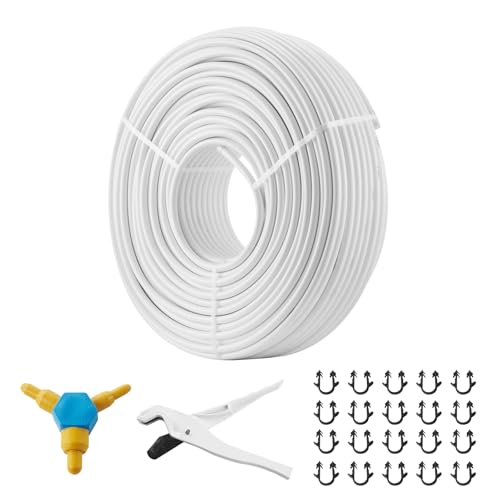
The 656-foot VEVOR AL PEX pipe sits between very long and compact options, offering a practical balance of length and thickness. It uses an aluminum inner layer to bolster strength and an outer PEX layer to provide flexibility and corrosion resistance. The tube is rated for cold and hot temperatures within the same broad spectrum (-40°F to 203°F). Its 5/8″ exterior diameter and 0.08″ wall thickness translate to a considerable bend radius while sustaining high-pressure performance. The product’s compatibility with different connection systems supports multi-brand plumbing networks, which can streamline installation in homes with existing fittings.
For installers, the pipe’s rigidity versus flexibility trade-off is a consideration: more bends may require careful pre-planning or additional elbows. The aluminum layer also necessitates careful handling to avoid deformation during cutting and bending. The product is positioned as reliable for radiant floors and general water supply lines, making it a strong all-around choice for mid-range projects.
Duda Energy Pexo34 320′ Roll

Duda Energy offers a compact 320-foot roll of PEX-AL-PEX tubing with a 20 mm inner diameter and a 25 mm outer diameter, totaling 3 mm wall thickness. The aluminum layer is specified at 0.28 mm, contributing to structural strength and oxygen barrier functionality. This tubing is designed for radiant floors, glycol loops, and related heating applications, with an operational temperature range from -40°C to 95°C. The construction aims to deliver stable flow characteristics and long-term performance in embedded or underfloor systems. The roll format makes it convenient for smaller projects or for stocking in limited workshop spaces.
Engineers should verify compatibility with the chosen manifold and fitting systems, particularly given the larger outer diameter and the need for appropriate routing in limited spaces. The oxygen barrier helps minimize corrosion and oxygen diffusion, which is beneficial for hydronic loops carrying glycol or other additives. This product suits renovation work or smaller installations where full-length runs are impractical.
EFIELD 1/2 inch 2 x100 ft Pex-b Pipe

EFIELD presents a NSF-certified Pex-B tubing bundle that totals 200 feet (split into two 100-foot runs) in a blue and red color-coding scheme for hot and cold water lines. While not explicitly PEX-AL-PEX, the product is a widely used PEX option in potable water and heating applications, with NSF certification ensuring compatibility with drinking water safety standards. The dual-color design simplifies installation and identification in complex plumbing networks. The 1/2 inch diameter aligns with standard fixtures and fittings, enabling straightforward integration with existing systems.
For projects demanding strict potable water compliance, this product offers a straightforward, certified option. Installers should confirm whether an aluminum layer is required for their radiant floor project, as this particular item emphasizes PEX-B characteristics rather than PEX-AL-PEX structural benefits. When used in radiant heating loops, ensure system specifications align with the tubing’s rated temperature and pressure limits.
Buying Guide: Key Considerations for PEX-AL-PEX Tubing
- Oxygen barrier: Look for an explicit aluminum or barrier layer to prevent oxygen diffusion and protect glycol loops and heating systems from corrosion.
- Temperature range: Ensure the tubing supports the operating temperatures of your project, including hot-water supply and radiant floor heating.
- Diameter and wall thickness: Larger exterior diameters and thicker walls increase strength but reduce flexibility; plan bends and routes accordingly.
- Installation compatibility: Confirm connectors, fittings, and manifolds are compatible with your chosen PEX-AL-PEX brand and model.
- UV resistance: For indoor projects with sunlight exposure, UV resistance can extend tubing life; verify manufacturer specifications.
- Length and packaging: Choose an appropriate length for your project scope (e.g., rolls for long runs, shorter coils for retrofit work) to minimize waste and joints.
- Standards and certifications: NSF/ANSI certifications and local codes ensure safety and suitability for potable water and heating applications.
- Pressure rating and material compatibility: Verify that the tubing materials are compatible with the fluid (water, glycol mixtures) and the system’s pressure requirements.
- Handling and installation: Aluminum layers require careful bending, supported runs, and avoidance of kinking to preserve integrity over time.
- Cost vs. longevity: While higher upfront cost can reflect higher durability and longer service life, calculate total cost of ownership considering maintenance and potential replacements.