Choosing a reliable hot water heater involves balancing demand, space, efficiency, and installation needs. This guide highlights five top options that cover point-of-use mini-tanks, compact tank-in-tank solutions, and efficient tankless systems. Each product plays a distinct role—from delivering instant hot water at a sink to providing on-demand heating for multiple fixtures. Review the featured models to find the best fit for your home, apartment, or RV setup.
| Product | Type | Approx. Capacity | Key Benefit |
|---|---|---|---|
| BOSCH Electric Mini-Tank Tronic 3000 T ES2.5 | Mini-Tank | 2.5 gal | Under-sink hot water at point of use |
| EcoSmart ECO 11 Electric Tankless | Tankless | On-demand | Space-saving, self-modulating for efficiency |
| Orbek 14kW Tankless Electric | Tankless | On-demand | High flow for multiple uses, compact footprint |
| ThermoMate 18 Gallon Tank Water Heater | Small Tank | 18 gal | Point-of-use with adjustable thermostat |
| Rheem 18kW 240V Tankless Electric | Tankless | On-demand | Self-modulating, reliable for several fixtures |
BOSCH Electric Mini-Tank Tronic 3000 T ES2.5
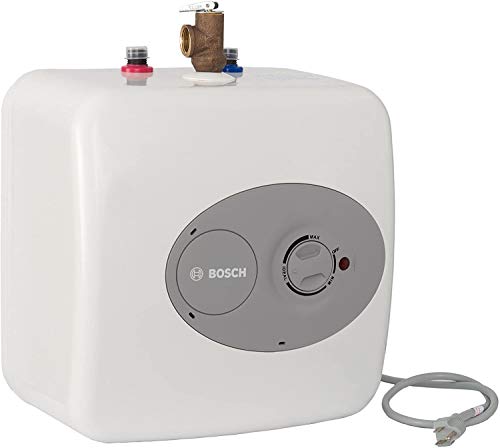
The BOSCH Tronic 3000 T ES2.5 provides 2.5 gallons of hot water at the point of use, ideal under sinks or in compact spaces. It delivers high thermal efficiency at 98% and features a glass-lined tank for long service life. With a 12-amp, 120-volt setup, this unit is designed for independent installation or inline with a larger system. Its slim footprint (13.75 W x 13.75 H x 10.75 D inches) enables flexible positioning in kitchens or bathrooms, reducing wait time for hot water at the faucet.
EcoSmart ECO 11 Electric Tankless Water Heater

The EcoSmart ECO 11 is a compact, 13 kW tankless model designed for smaller homes or point-of-use installations. It uses patented self-modulating technology to adjust energy use based on demand, which helps minimize energy waste. With a small footprint (about 11.5 x 8 x 3.75 inches) and a rating of 99% thermal energy efficiency, it heats water only when needed, delivering reliable hot water to one or two fixtures at a time while saving space and energy.
Orbek 14kW Tankless Electric On-Demand

Orbek’s 14kW electric tankless heater provides up to 3.38 GPM of hot water for 2–3 points of use. It requires a 240V/60A circuit and careful electrical planning, including a two-pole breaker and appropriately sized wiring. This model emphasizes instant hot water with minimal delay and improved efficiency through water-electricity separation, helping to reduce electricity costs while maintaining steady temperatures for multiple outlets.
ThermoMate 18 Gallon Tank Water Heater

This 18-gallon point-of-use tank from ThermoMate fits compact spaces while providing enough hot water for sinks, dishwashers, and showers. It features a factory-set temperature of 125°F with an adjustable range from 90°F to 150°F. The 120-volt design supports independent installation or inline booster configurations, and its INCOLOY-800 element offers improved corrosion resistance and longer life in higher-temperature operation.
Rheem 18kW 240V Tankless Electric
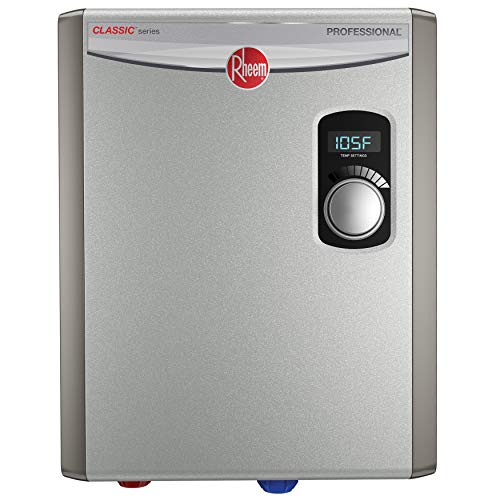
The Rheem 18kW model features an external digital thermostat with LED display and advanced self-modulation, allowing the unit to adjust power to meet hot water demand efficiently. It uses durable copper immersion heating elements and offers a flow rate up to 4.4 GPM. This setup is suited for households with moderate hot water needs across multiple fixtures, providing reliable performance with adjustable output to maintain desired temperatures.
Corro-Protec Powered Anode Rod (Optional Reference)

While not a heater itself, a powered anode rod like Corro-Protec is a maintenance option designed to extend the life of water heaters by protecting against corrosion and reducing odors. It serves as a proactive measure to preserve hot water equipment over time, particularly in hard or softened water environments, and can complement primary heating systems.
Buying Guide: Key Purchase Considerations
- Hot water demand: Assess simultaneous usage across sinks, showers, and appliances. Tankless units excel for high-demand households where space is limited, while small tanks are ideal for single fixtures or under-sink needs.
- Space and installation: Measure available wall or shelf space. Mini-tanks and compact tanks fit tight areas, while tankless models require proper electrical capacity and venting considerations.
- Electrical requirements: Tankless heaters often need 240V circuits and substantial amperage. Confirm panel capacity and wiring (gauge, breakers) before purchase or hire a pro for installation.
- Energy efficiency: Self-modulating tankless systems adjust power to demand, reducing standby losses. For small spaces, high-efficiency point-of-use models can yield meaningful energy savings.
- Water chemistry and longevity: Corrosion protection (e.g., advanced anode rods, stainless or coated components) can extend life in challenging water conditions. Consider maintenance options and service availability.
- Temperature control: Look for precise thermostats and easy-to-read displays. Adjustable ranges (e.g., 90–150°F) help tailor comfort and reduce scald risk.
- Professional guidance: For high-powered tankless units, consult a licensed electrician to evaluate circuit capacity and wiring runs. Improper installation can affect performance and safety.
- Installation flexibility: Point-of-use options minimize water waste by delivering hot water closer to fixtures, while whole-home systems prioritize supply across multiple outlets.
In selecting a hot water heater, consider both immediate needs and future demand. The models showcased here provide a spectrum of choices—from compact point-of-use heaters to on-demand tankless systems—that accommodate various living spaces and energy goals. Always verify compatibility with your home’s electrical setup and water supply conditions before purchasing.