Answer: Radiant barrier foil rolls are designed to reflect radiant heat away from living spaces, helping to keep attics cooler in summer and retain warmth in winter. They are best for homeowners seeking DIY installation, cost-effective temperature control, and versatile applications in attics, garages, and saunas. The top picks below cover perforated and non-perforated options, single- or double-sided reflectivity, and rolls sized for typical 1,000 square feet coverage. Read on to find the best fit for your climate, building type, and installation preferences.
This guide highlights five strong choices, with a quick comparison table to help you choose at a glance. Each product is evaluated for heat reflectivity, ease of installation, durability, and suitability for different spaces.
| Product | Best For | Key Benefit |
|---|---|---|
| ZXQDRE Radiant Barrier Insulation Roll | General attic cooling | High reflectivity up to 95% |
| AES Radiant Barrier Insulation | Budget-friendly upgrades | 1,000 sq ft coverage; easy cuts |
| Houseables Radiant Barrier Roll | DIY enthusiast projects | High reflectivity; straightforward install |
| ZXQDRE Sauna Foil Vapor Barrier (500 sq ft) | Saunas and steam rooms | Moisture vapor barrier plus heat reflectivity |
| VEVOR Double Reflective Insulation Roll (48 in × 250 ft) | Perforated, breathable design | Ventilated protection with 95%+ reflectivity |
ZXQDRE Radiant Barrier Insulation Roll

This roll covers 1,000 sq ft and is designed for attic use beneath the roof deck. It reflects up to 95% of radiant heat, contributing to cooler attic temperatures and energy savings for the home overall. The perforated design promotes airflow, supporting ventilation while providing a thermal barrier. It is sold as a heavy-duty, tear-resistant, double-sided aluminum foil suitable for long-term home protection. The DIY installation is straightforward—cut with scissors and staple to rafters or insulation walls.
Best for: Homeowners seeking a straightforward attic upgrade and a good balance of reflectivity and breathability. It’s well-suited for hot climates with summer heat exposure and the potential for improved comfort year-round. Caution: Perforation supports air movement but may be less effective in ultra-dense insulation assemblies if not installed with complementary materials.
AES Radiant Barrier Insulation 1000 Sq Ft
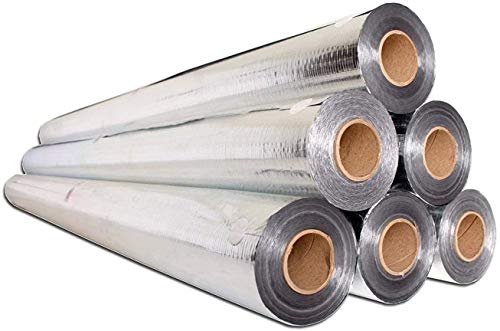
The AES roll provides 1,000 square feet of reflective insulation in a four-foot-wide format. It claims a 99.7% reflective value, with a double-sided, tear-resistant surface designed to withstand handling without significant wrinkling. The material is described as easy to cut with standard utility scissors and compatible with common DIY methods, requiring no special tools. It is marketed as a strong alternative to bulkier insulation and is suitable for new or existing structures, with low maintenance post-installation.
Best for: Builders or DIYers seeking a lightweight, highly reflective option that’s simple to cut and install, especially where a robust 1,000 sq ft roll is desired. Caution: While highly reflective, thinner profiles may require careful seam management to maintain consistent performance in larger assemblies.
Houseables Radiant Barrier Roll

The Houseables roll also covers 1,000 square feet and features a >97% reflective value on a double-sided, tear-resistant foil. The product emphasizes a thin, easy-to-handle material that resists tearing and puncturing during installation. It is advertised as suitable for new or pre-existing buildings and claims low maintenance because it is non-toxic and not prone to fungal or bacterial growth. The perforated, breathable design aids airflow and helps manage condensation risk when installed correctly.
Best for: Homeowners who want a durable, easy-to-cut option with strong reflectivity and a breathable structure. Choose this if you value a non-toxic profile and straightforward maintenance. Avoid this if you operate in areas with unique moisture challenges and need a fully sealed vapor barrier in all spaces.
ZXQDRE Sauna Foil Vapor Barrier (500 sq ft)

This product doubles as a radiant barrier and a moisture vapor barrier designed for saunas, steam rooms, and related spaces. The foil reflects up to 96% of radiant heat and simultaneously shields walls from steam and condensation. It offers a DIY-friendly installation with tear-resistant material that can be stapled to studs or rafters. The single-layer, non-perforated design makes it ideal for high-moisture environments where vapor control is essential.
Best for: Saunas or steam-heavy spaces where both heat retention and vapor control are critical. Caution: Non-perforated material can limit airflow, so ensure proper installation to avoid moisture buildup in poorly ventilated areas.
ZXQDRE Sauna Foil Vapor Barrier (250 sq ft)
This 250 sq ft sauna insulation roll mirrors the 500 sq ft version in reflectivity and vapor-barrier function. It is also non-perforated, designed for compact installations in smaller saunas or confined spaces. It stays lightweight for easy handling while providing the essential barrier against steam and heat loss. It remains a solid choice for smaller projects or budget-focused purchases where a full-room treatment isn’t required.
Best for: Smaller saunas or rooms where a compact vapor barrier with high reflectivity is needed. Caution: The smaller roll size can require more joint seams, which may slightly reduce seamless performance if not properly sealed.
VEVOR Double Reflective Insulation Roll (Perforated)

This roll uses perforated woven fabric with double-sided aluminum foil, combining airflow with high reflectivity. The 0.15 mm thickness and 48-inch width offer robust heat blocking while facilitating ventilation to minimize condensation risks. It claims ≥95% reflectivity, helping to keep spaces cooler in summer and warmer in winter. It’s designed for windows, RV roofs, and other applications where breathable insulation is beneficial.
Best for: Projects requiring breathable insulation with a high reflectivity rating, such as attic spaces with moisture considerations or RV/boat applications. Caution: Perforation and fabric layers can introduce more installation seams; ensure proper sealing for best performance.
Buying Guide: Key Considerations For Radiant Barrier Foil Rolls
- What climate and space will you insulate? Attics in hot climates benefit most from high reflectivity and airflow.
- Perforated vs non-perforated: Perforated rolls promote air movement and reduce condensation, while non-perforated options can provide a more airtight vapor barrier where needed.
- Roll size and coverage: Most rolls cover about 1,000 sq ft; verify your area to minimize seams and waste.
- Reflectivity level: Look for 95% or higher reflective values for stronger heat rejection in summer.
- Durability and handling: Tear resistance and thickness affect long-term performance and ease of DIY installation.
- Moisture considerations: In damp spaces like crawl spaces or saunas, vapor barriers may be essential to protect walls and wood.
- Installation method: Determine whether staples, tape, or mechanical fasteners are compatible with your project and local code requirements.
- Maintenance expectations: Some foils are designed to resist mold and fungi; others emphasize easy cleaning and low upkeep.
- Compatibility: If used alongside other insulation types, ensure the combination maintains effective air flow and avoids trapping moisture.
FAQ
- What is a radiant barrier foil roll best used for?
It is best used to reflect radiant heat away from living spaces, reducing attic temperatures and cooling costs in summer while helping maintain warmth in winter.
- Should I choose perforated or non-perforated foil?
Perforated foil improves airflow and reduces condensation, making it suitable for humid spaces. Non-perforated foil provides a tighter vapor barrier for moisture-sensitive areas.
- How large should the roll be for my attic?
Rolls commonly cover about 1,000 sq ft. Measure your attic or space and plan seams to minimize gaps for optimal performance.
- Can radiant barrier foil be used in saunas?
Yes, some products are designed as vapor barriers for saunas or steam rooms, combining heat reflectivity with moisture control.
- Is installation difficult for a DIYer?
Most options are DIY-friendly—cut with scissors and staple to framing. Use proper ventilation and sealing methods where needed.
- Will radiant barrier foil replace traditional insulation?
No; it complements insulation by reducing radiant heat transfer. For best results, use in combination with suitable insulation materials.