When selecting a reliable hot water heater, look for steady performance, adequate capacity, and solid safety features. This guide spotlights five dependable options suitable for different living situations—from small apartments to larger households and under-sink installations. Each product is evaluated for who it’s best for, along with practical pros and a clear caveat.
Summary table of chosen products:
| Product | Best For | Key Benefit | Capacity |
|---|---|---|---|
| CAMPLUX 18 Gallon Electric Water Heater | Small homes, shared bathrooms | On-demand heating with built-in thermostat | 18 gallons |
| VEVOR 12 Gallon Electric Tank Water Heater | Single or couple apartments | Fast heating, LED display | 12 gallons |
| VEVOR 30 Gallon Electric Tank Water Heater | Small families, multiple outlets | Large capacity with solid insulation | 30 gallons |
| DOYXC Tankless Electric 110V Under Sink | Kitchens, RVs, camping spaces | Instant hot water at point of use | On-demand (0.3–0.5 GPM) |
| Rheem 18kW 240V Tankless Electric | Homes needing scalable hot water | Adjustable power for variable demand | Up to 4.4 GPM |
Below, select five products are examined in detail. Each entry explains who benefits most, why it’s a solid choice, and a practical caveat to consider before purchase.
CAMPLUX 18 Gallon Electric Water Heater

This 18-gallon electric water heater is designed for households with moderate hot water needs. Its built-in thermostat supports 91°F to 150°F, enabling personalized comfort and reduced heat loss. The 1500W heating element and a submerged heating tube deliver quicker heat recovery, making it better for homes that experience intermittent demand throughout the day. A T&P relief valve and an anode rod improve tank protection, contributing to longer life if properly maintained.
Best for: Small homes or shared bathrooms that require a reliable, ready supply of hot water within a reasonable wait time. It’s well-suited for households that don’t need continuous, high-flow hot water but want predictable, on-demand warmth.
Caution: The 18-gallon capacity may run short during simultaneous showers and faucet use in larger households. Ensure venting or installation space complies with local codes.
VEVOR Electric Tank Water Heater, 12 Gallon

This compact 12-gallon model is ideal for small apartments or studios with limited space. It features fast heating via a 1600W element and a 20 mm foam insulation layer to maintain temperature, reducing energy waste. The unit includes a T&P valve and an enamel interior for corrosion resistance, plus protections against dry heating and overpressure for safer operation.
Best for: Singles or couples in small living spaces who need a dependable supply of hot water for showers, dishes, and handwashing without occupying much closet or cabinet space.
Caution: Its smaller capacity may be insufficient for heavier simultaneous use, such as multiple outlets at once. Consider pairing with limited fixtures or choosing a higher-capacity model if needed.
VEVOR 30 Gallon Electric Tank Water Heater

This 30-gallon model offers a larger storage capacity for households with higher hot water demand. A 20 mm insulation layer minimizes heat loss, supporting energy efficiency. The enamel interior and safety protections—such as dry heating and overheat protection—enhance durability and safe operation across multiple outlets.
Best for: Families or small homes with several water outlets needing reliable simultaneous hot water, like showers, sinks, and dishwashing. Choose this if you frequently hit hot water limits with smaller tanks.
Caution: Larger tank size requires more installation space and heavier venting considerations. Verify accessibility for maintenance and serviceability.
DOYXC Tankless Electric 110V Under Sink

This under-sink tankless heater provides on-demand hot water at point-of-use. It can heat water quickly to 82°F–131°F (0.3–0.5 GPM), reducing wait times at the faucet and saving space with a compact wall-mounted design. Safety features include IPX4 waterproofing and leakage protection, with an LCD display for status and temperature control.
Best for: Kitchens, RVs, or camping setups where space is at a premium and you need instant hot water at a specific fixture. It’s a strong choice for those who want to avoid a bulky storage tank.
Caution: Not suitable for shower use with high flow; flow rates are modest, and multiple fixtures can dilute water temperature. Vertical installation is recommended to avoid heating element issues.
Rheem 18kW 240V Tankless Electric Water Heater
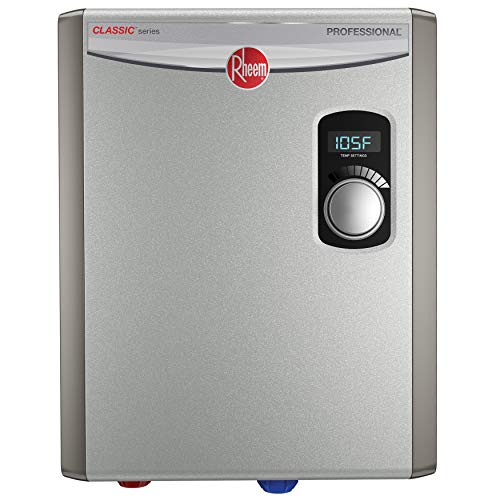
This Rheem tankless unit uses external digital thermostatic control with an LED display and self-modulation to match hot water demand. It supports higher flow rates with two copper immersion elements for rapid heating and is field serviceable for maintenance, making it suitable for homes where hot water demand can vary and repair access matters. Flow rate reaches up to 4.4 GPM.
Best for: Homes requiring scalable hot water with adjustable output to handle varied daily usage. Better for mid-to-large households where reliable, continuous supply is important and professional installation can be arranged.
Caution: Tankless systems require proper ventilation and correct sizing to avoid cold-water sandwich effects at high flow. Installation complexity and electrical requirements should be evaluated.
Buying Guide: Key Considerations For Reliable Hot Water Heaters
- Capacity vs. Demand: Choose based on how many outlets you plan to serve simultaneously. Larger households benefit from bigger tanks or higher-flow tankless options.
- Heat-Up Time and Efficiency: Look for insulation quality and heat recovery efficiency to minimize standby losses and energy usage.
- Power Requirements: Tank-style heaters demand sufficient circuit capacity. Tankless units require appropriate amperage and venting considerations for safe operation.
- Safety Features: T&P relief valves, dry-fire protection, overheat protection, and IP ratings contribute to safer use in homes, apartments, or outdoor setups.
- Space and Installation: Wall-mounted or under-sink options save space in tight areas. Tank models need space for the tank and service access.
- Maintenance and Longevity: Enamel interiors and anode rods extend tank life. Consider ease of service and availability of spare parts.
- Temperature Control: Look for precise thermostats or digital displays to dial in exact temperatures, reducing energy waste and ensuring comfort.
- Budget and Local Codes: Some installations require professional permits or electrical upgrades. Evaluate total cost beyond the unit price.
Frequently Asked Questions
- What size hot water heater do I need for a family of four? A: A 30–40 gallon storage tank or a high-capacity tankless option is typically appropriate, depending on simultaneous hot water use and fixture types.
- Are electric tankless heaters suitable for showers? A: Yes, but flow rates matter. Most 110–240V models provide lower GPM; verify the expected flow at your faucet temperatures.
- Is a tankless heater more energy-efficient than a storage tank? A: Tankless models can be more energy-efficient by eliminating standby heat loss, but proper sizing and installation are essential for true efficiency.
- Do I need professional installation for these heaters? A: For tank models, ensure proper electrical connections and safety compliance. Tankless units often require professional installation due to electrical and venting needs.
- What maintenance improves tank longevity? A: Regular inspection of T&P valves, flushing to remove mineral buildup, and replacing anode rods as recommended by the manufacturer.
- Can I use any heater for all fixtures in a home? A: No. Fixture demand, pipe size, and return temperatures affect suitability. Match the unit’s GPM or BTU rating to your home’s hot water profile.