Choosing a reverse osmosis (RO) system involves balancing price, performance, and long-term value. This guide focuses on common RO options that American households consider when budgeting for clean, great-tasting water. Below, five top picks are analyzed for features like filtration stages, certifications, and compatibility with under-sink or countertop configurations. A concise buying guide follows to help you compare systems beyond sticker price and understand long-term costs, maintenance, and efficiency.
Summary of chosen products
| Product | Brand | Type | Key Strength | Certifications |
|---|---|---|---|---|
| iSpring RCC7AK | iSpring | Under-sink 6-stage RO | NSF Certified | |
| Waterdrop G3P600 | Waterdrop | Under-sink 8-stage | Tankless, smart display, lead-free | NSF/ANSI 58, 42, 372 |
| APEC ROES-50 Essence | APEC | Under-sink 5-stage | High impurity removal and reliability | WQA Certified |
| APEC ROES-PH75 Essence | APEC | Under-sink 6-stage with alkaline remineralization | Mineral-enhanced pH+ water | WQA Certified |
| Waterdrop G3P800 | Waterdrop | Under-sink 10-stage | High capacity (800 GPD) and efficient filtration | NSF/ANSI 58, 42, 53, 372 |
iSpring RCC7AK: 6-Stage RO With Mineral pH+

The iSpring RCC7AK combines a comprehensive six-stage filtration process with a pH+ remineralization stage to balance acidity and restore minerals. Its top-mounted fastener design simplifies installation above the sink, reducing the need to reach under the cabinet. The system features a transparent first-stage housing to easily monitor filter buildup and schedule replacements before performance declines. This model emphasizes ease of maintenance and overall drinking water quality, aligning with home setups that value straightforward setup and visible filtration status.
Key features include a patent-pending mineral AK stage that produces water with a balanced pH and essential minerals, and a design that allows for quick countertop installation from above. With NSF certification, it is built to meet standard contaminant reduction expectations while offering a user-friendly filter-change experience. Typical upkeep involves replacing pre- and post-filters on schedule to preserve taste and impurity removal efficiency.
Waterdrop G3P600: Tankless RO With Smart Faucet

The Waterdrop G3P600 is a tankless, eight-stage RO system designed for compact under-sink installation with a smart display faucet. Certification covers NSF/ANSI 58 for TDS reduction, NSF/ANSI 42 for chlorine and taste/odor reduction, and NSF/ANSI 372 for lead-free materials, along with FCC and EU/UKCA considerations. Third-party testing confirms broad contaminant removal, including PFAS, heavy metals, and salts. The smart display tracks remaining filter life and overall system performance, helping homeowners plan replacements without guesswork.
Highlights include a 2:1 pure-to-drain ratio, meaning less wastewater than traditional RO setups, and a push toward sustainability with clear indicators of water quality. The system’s modular filtration reduces waiting times for clean water and supports households needing dependable, high-capacity filtration. Maintenance consists of swapping out stage-specific filters per schedule and using the smart faucet for quick status checks.
APEC ROES-50 Essence: Core 5-Stage Ultra Safe

The APEC ROES-50 Essence is a trusted 5-stage RO system known for robust contaminant removal and reliability. It targets common pollutants such as chlorine, lead, and other impurities, delivering crisp, purified water for daily use. The unit is designed to be straightforward to install and maintain, with premium filtration components intended for long service life. APEC emphasizes safety and performance, making this a practical choice for households seeking proven filtration with predictable maintenance cycles.
Key selling points include durable pre- and post-filters and a design that supports a consistent flow rate while meeting regulatory expectations. The system is well-regarded for reducing common safeguards—arising from unknown tap water sources—while keeping installation relatively simple for typical kitchen plumbing. Regular filter changes ensure continued efficiency and water quality over time.
APEC ROES-PH75: Alkaline Mineral pH+ 75 GPD
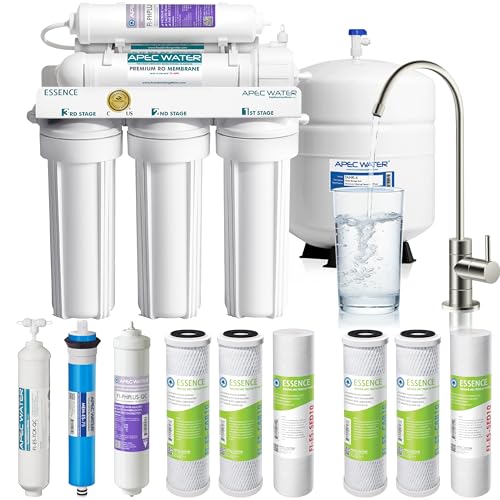
The ROES-PH75 Essence Series adds an alkaline remineralization layer to a standard RO process, delivering minerals that promote a more balanced pH and improved taste. With 75 GPD capacity and six filtration stages, this system offers a structured approach to reducing chlorine, VOCs, fluoride, and heavy metals while preserving essential minerals. It holds WQA certification, reinforcing its compliance with water-quality standards and long-term durability under regular use.
Considerations include the potential preference for mineral-enhanced water and the need for space under the sink to accommodate the slightly taller assembly. Users should plan for filter replacements at recommended intervals to maintain pH and mineral levels. For households prioritizing mineral-rich purified water, this model offers a clear value proposition without sacrificing filtration performance.
Waterdrop G3P800: High-Capacity Tankless RO System
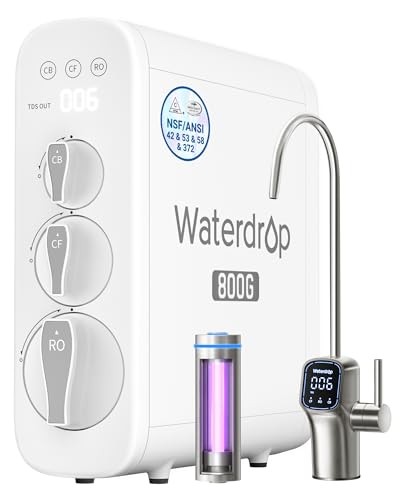
The Waterdrop G3P800 delivers an 800 GPD capacity in a tankless configuration, appealing to larger households or homes with higher daily water needs. It is certified against NSF/ANSI 58 for TDS reduction, plus 42/53 for chlorine removal, and 372 for lead-free materials. The system employs a 10-stage filtration process, including PFAS and nitrate reductions, with a 3:1 pure-to-drain ratio to minimize wastewater. A smart faucet and LED indicators provide real-time insights into water quality and filter status, making maintenance predictable and straightforward.
This model emphasizes throughput and efficiency, accommodating higher-volume usage while maintaining compact under-sink footprint. Potential considerations include ensuring sufficient electrical access for the system’s control features and the need to manage filter life across multiple stages. For families seeking maximum filtration depth with high daily output, the G3P800 offers a strong combination of performance and user-friendly monitoring.
Buying Guide: Key Purchase Considerations
When evaluating RO systems, consider several factors that influence long-term value beyond the initial price tag:
- Filtration stages and mineralization: More stages can remove a wider range of contaminants and, in alkaline models, improve taste and pH balance. Decide whether mineral restoration is essential for your water goals.
- Capacity and flow: Higher GPD ratings suit larger households or high-demand kitchens. Tankless designs reduce storage needs but may require robust water pressure for optimal performance.
- Certifications and testing: Look for NSF/ANSI or WQA certifications verifying impurity removal and material safety. These benchmarks help ensure reliable performance over time.
- Wastewater ratio: Systems with favorable pure-to-drain ratios save water and reduce utility costs. Tankless models often advertise efficient ratios, but actual performance varies with usage patterns.
- Installation and maintenance: Top-mount designs can simplify installation, while under-sink units require more cabinet space. Regular filter replacements are essential to maintain taste and purity.
- Electricity requirements: Some systems, especially those with LED displays or auto-flush features, need a power source. Factor in outlet availability under the sink or countertop.
- Space and aesthetics: Consider the faucet style, display panels, and the physical footprint under the sink to ensure compatibility with your kitchen layout.
- Long-term costs: Account for filter cartridge pricing and replacement frequency. Systems with longer-lasting filters may reduce ongoing expenses even if upfront costs are higher.
In summary, the best RO system for a given household depends on balancing daily water needs, desired mineral content, installation ease, and total cost of ownership. The selections above illustrate a range of configurations—from simple, dependable 5-stage models to advanced tankless and mineral-enhanced options—so you can align your choice with your budget and water-quality goals.