Answering the common buyer question: which 5-gallon roof coating options provide strong waterproofing, heat reflection, and long-lasting protection? This guide highlights five top choices, focusing on applications for flat or low-slope roofs, RVs, or commercial structures. Each product is described with who it’s best for, plus practical pros and limits to help you compare quickly.
Summary table (top picks at a glance):
| Product | Best For | Key Benefit | Notable Limitation |
|---|---|---|---|
| Rust-Oleum 710 Elastomeric Roof Coating | Residential flat roofs | High reflectivity, quick rain resistance | White finish may require re-coating for aging roofs |
| Gardner Sta-Kool 15-Year Turbo-Dri | Roofing projects needing fast recoat | Rain-safe in 30 minutes, cool-core technology | Higher price; may require proper ventilation |
| White Siliconized Roof Coating (Rubbertop) | Low-slope, RVs, metal | Waterproof with silicone/ acrylic blend | May require multiple coats for extreme leaks |
| Ames Maximum Stretch | Roof repairs with movement | 650% elongation, 88% reflectivity | Not a universal primer substitute on all substrates |
| Liquid Rubber RV Roof Sealant | Travel trailers and RVs | Flexible, solar-reflective membrane | Better as part of a broader system with EpDM/TPO |
Rust-Oleum 710 Elastomeric Roof Coating, 5 Gallon, White

Best for: homeowners seeking a straightforward white coating with strong initial reflectivity. The formula delivers about 84% initial reflectivity and 74% weathered reflectivity, with rain resistance within six hours. This makes it suitable for mid-season roof projects where quick rain readiness is helpful.
Why selected: Rust-Oleum is a trusted brand for DIY roof coatings, offering a durable elastomeric layer that expands and contracts with temperature shifts. The high reflectivity helps reduce interior cooling loads in sunny climates.
Limitations: While effective for many flat roofs, performance can vary with substrate condition and surface preparation. Plan for even application and consider a primer on aged or highly porous surfaces if needed.
Gardner-Gibson Sta-Kool 15-Year Turbo-Dri Elastomeric Roof Coating
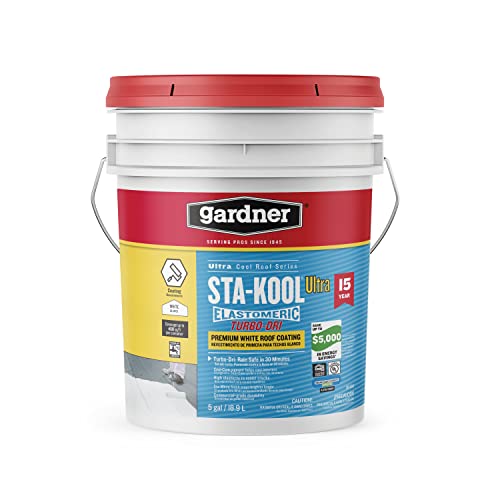
Best for: projects requiring rapid protection against rain and a cool, reflective finish. Sta-Kool 15-Year Turbo-Dri features “cool-core” technology and is touted as rain-safe in 30 minutes, enabling faster scheduling and reduced downtime.
Why selected: The combination of accelerated rain resistance and long-term durability makes this a strong choice for commercial or RV applications where time is a critical factor.
Limitations: The advanced formulation may come at a higher upfront cost, and proper ventilation and surface preparation are important for best results on larger roofs.
White Siliconized Roof Coating (Rubbertop USA), 4.75 Gallon

Best for: flat roofs, RVs, and metal surfaces needing a waterproof silicone/ acrylic blend with silicone advantages. The coat is designed to lower interior temperatures and offers easy application by spray, roller, or brush.
Why selected: The combination of silicone’s water resistance and reflectivity provides durable weatherproofing with a relatively quick dry time, useful for re-roofing projects that must withstand heat.
Limitations: Silicone-based coatings may have adhesion considerations on certain substrates; confirm compatibility and prepare properly to ensure a solid bond across the entire roof area.
Ames Maximum Stretch – White Roof Coating

Best for: roofs with movement or cracking, including RVs and lightweight structures. Ames Maximum Stretch offers up to 650% elongation and 88% light reflectivity to help reduce cooling costs.
Why selected: Its high elasticity makes it a strong option for surfaces that experience expansion and contraction, helping prevent cracking and failure over time.
Caution: While versatile, it may not replace all substrate- or primer-specific requirements on specialized roofs; verify substrate compatibility and follow coating instructions for best adhesion.
Gacoroof GACSRCG5

Best for: commercial and industrial roofing projects that demand reliable waterproofing and UV resistance. Gacoroof GACSRCG5 is marketed as a durable, professional-grade roofing solution.
Why selected: This product is positioned for large-scale applications where consistent results and weather protection are essential across extended roof areas.
Limitation: As a commercial-grade solution, it may be less convenient for simple DIY projects and could require more precise application planning and labor resources.
Liquid Rubber RV Roof Sealant – 5 Gallon, White

Best for: travel trailers and RVs needing a flexible, solar-reflective membrane. This product emphasizes a complete roof protection system with extended interior temperature relief.
Why selected: It’s designed to maintain flexibility across temperature changes and to work well with EPDM, TPO, fiberglass, and aluminum roofs, making it a versatile RV solution.
Limitation: For non-RV flat roofs, consider pairing with additional coatings or primers when applying to other roof types to ensure optimal adhesion and performance.
Liquid Rubber Waterproof Sealant – DIY Coating, 5 Gallon

Best for: flat and low-slope roofs, foundations, gutters, and other surfaces needing a tough, rubbery membrane. The product showcases 950% elongation for durability under movement and temperature shifts.
Why selected: This versatile sealant provides robust resistance to cracking and UV damage, making it a practical component of a long-term roof maintenance plan.
Limitation: The coverage can vary with application method; consult its coating guidance for heavy coats to achieve the intended membrane thickness.
Countryman Coatings 100% Silicone Roof Coating for RVs

Best for: silicone-based roofs on RVs and flat roofs needing high reflectivity and resistance to ponding water. The coating claims nearly 90% UV reflection and reduced energy usage.
Why selected: Its no-primer adhesion claim and energy efficiency focus make it appealing for aging or heat-prone structures where you want to minimize cooling costs.
Limitation: Silicone coatings can require careful surface preparation and may have specific substrate compatibility considerations; verify compatibility with your roof materials before application.
Buying Guide: Key Considerations For 5-Gallon Roof Coatings
- Roof type and slope: Flat, low-slope, EPDM, TPO, metal, and concrete surfaces each respond differently to elastomeric and silicone coatings. Choose a formula designed for your substrate.
- Reflectivity and heat load: Higher reflectivity reduces surface temperatures; this is important in hot American climates and for RVs where interior cooling matters.
- Drying and rainfall tolerance: Some products advertise “rain-safe” or fast recoat times. Plan installations around weather windows to avoid wash-off or surface defects.
- Elongation and movement: Roofs that flex or crack need high elongation to maintain a continuous seal and prevent peeling.
- Application method: Consider whether brush, roller, or spray application suits your project scale, access, and equipment availability.
- Primer and adhesion: Some coatings claim no-primer adhesion on common substrates, while others may require surface prep or primers for certain materials.
- Durability and warranty expectations: Look for products designed to withstand UV exposure, temperature changes, and standing water for the intended roof lifespan.
Frequently Asked Questions
- Q: What is the typical coverage for a 5-gallon roof coating?
- A: Coverage depends on the product and surface texture, but most cans provide enough material for multiple coats on low-slope roofs; always follow the manufacturer’s coverage guidelines.
- Q: Is a white coating better for heat management?
- A: Yes, white and light-colored coatings reflect more sunlight, helping reduce roof surface temperatures and cooling costs.
- Q: Can I apply coatings over or beside existing coatings?
- A: Surface compatibility matters. In many cases, you can apply a compatible elastomeric or silicone coating over existing coatings after proper cleaning and preparation; consult the product’s instructions.
- Q: Do these coatings require special safety gear?
- A: Use standard protective gear, including gloves and eye protection. Some formulations may require ventilation considerations for enclosed spaces.
- Q: Are silicone-based roof coatings compatible with all substrates?
- A: Most silicone roof coatings work well on metal, modified-bitumen, and many single-pply surfaces; verify compatibility with your roof materials before application.