Choosing the right RV tankless water heater means balancing fuel type, installation space, heat output, and control features. This article spotlights five top choices that cover electric, propane, and hybrid options. Each product is evaluated on efficiency, high-altitude performance, and ease of retrofit for common RV setups. Use the buying guide at the end to compare key considerations and tailor a choice to your travel style and power availability.
| Product | Fuel Type | GPM | Altitude Ready |
|---|---|---|---|
| KingRVER KingRVER RV Hybrid Water Heater | Electric & Gas | Depends on mode | Yes |
| Ranein 2025 GEN II On-Demand | Gas (Propane) | Up to 3.9 | Up to 9,800 ft |
| APUS RV Tankless Water Heater | Propane | 3.9 | High Altitude Available |
| FOGATTI InstaShower 8 Plus | Propane | 2.9 | High Altitude suitable |
| Furrion RV Tankless Gas Heater (60K BTU) | Propane | 2.4 | Yes |
Below are five hand-picked models that provide strong performance across common RV layouts—from electric/gas hybrids to pure gas flow for remote boondocking. Each entry includes a quick overview, key features, and installation considerations to help you compare options quickly.
KingRVER Hybrid RV Water Heater
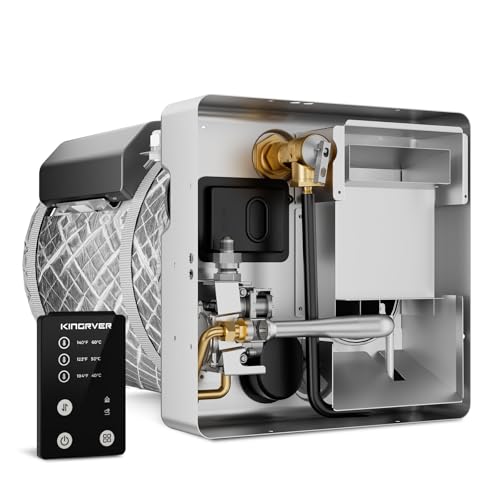
The KingRVER offers dual fueling flexibility with electric and propane options. You can operate electric mode for safety and plug-in hookups, or run propane alone when off-grid. A combined gas/electric mode accelerates hot-water recovery when needed. The porcelain-lined steel tank resists corrosion, extending the heater’s lifespan. Easy presets at 104°F, 122°F, and 140°F let users quickly set temperatures for various shower lengths and water usage scenarios. This model supports seamless switching among gas, electric, or a hybrid to maximize efficiency.
Ranein 2025 GEN II On-Demand RV Water Heater
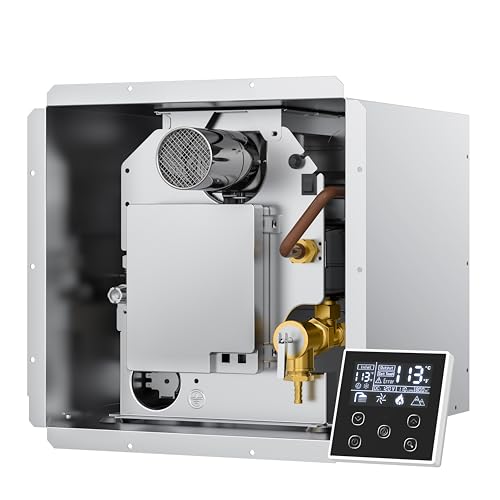
Ranein’s GEN II model delivers up to 3.9 GPM at 65,000 BTU, aimed at endless hot water even in cold weather. It’s designed for straightforward replacement in many RVs, including popular Suburban and Atwood 6/10/12-gallon configurations, with a standardized 12.8″ by 12.8″ opening. An upgraded remote provides real-time gas usage, system voltage, water flow (GPM), and antifreeze activation status. This heater is built to handle high-altitude operation up to 9,800 feet, helping maintain stable performance while traveling through mountains.
APUS RV Tankless Water Heater
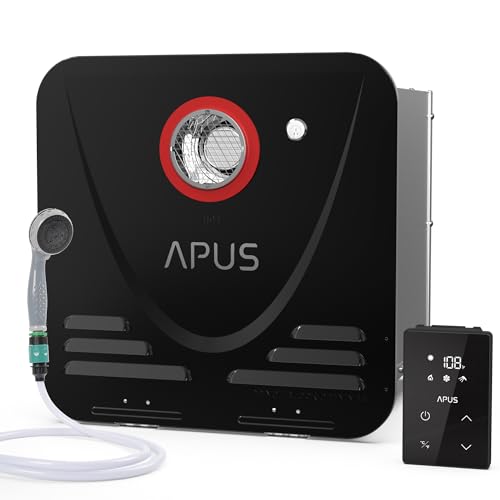
APUS provides 68,000 BTU propane heating with 3.9 GPM, delivering instant hot water on demand. Its compact design fits many RV installations and can replace several older tank setups. The unit uses 12V DC power and standard NPT fittings, simplifying installation. Temperature control ranges from 95°F to 124°F for stable comfort, with thermostatic control for consistent hot water. A smart remote control is included for convenient adjustments, and the system is designed to optimize energy efficiency by rapidly heating water while reducing propane use.
FOGATTI InstaShower 8 Plus RV Tankless

FOGATTI InstaShower 8 Plus delivers 2.9 GPM with 55,000 BTU output. It’s designed for quick, on-demand hot water without the long heating wait associated with tank heaters. The unit is built for high-altitude use, with staged combustion to minimize temperature fluctuations. It offers multiple door options to retrofit into different RV configurations and can be operated via a remote controller. This model is a practical option for families that need reliable hot water while keeping energy use in check.
Furrion RV Tankless Gas Water Heater (60K BTU)
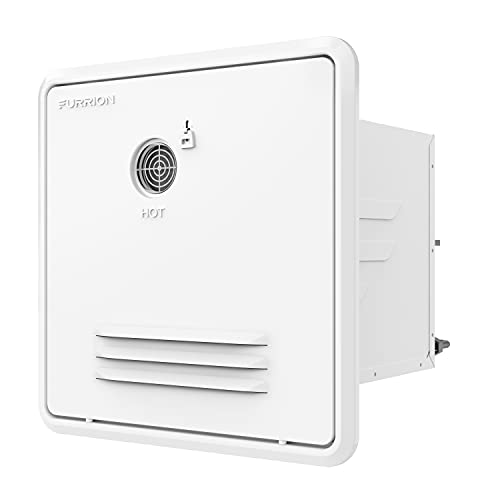
Furrion’s gas water heater delivers 60,000 BTU with a 2.4 GPM flow and Vortex technology to steady temperatures. Dual-sensor safety features automatically shut power if temperatures reach unsafe limits. It’s designed for retrofit installations, including compatibility with replacement doors for Atwood or Suburban models. The system maintains a consistent hot-water experience even as outdoor temperatures drop, making it suitable for use in varied camping climates and seasons.
Each of these options addresses different RV lifestyles—from electric-hybrid needs for sites with hookups to high-altitude gas models for mountain trips. When selecting, consider your typical power availability, desired GPM, altitude you’ll encounter, and whether you prefer quick install retrofits or a unit built for off-grid reliability.
Buying Guide: Key Purchase Considerations
- Fuel source and compatibility: Determine whether your RV has reliable electric power, propane access, or a need for a hybrid solution. Hybrids offer flexibility but may require more complex wiring.
- Flow rate (GPM) and BTU: Match the expected hot-water demand (showers, kitchen, and other uses) with the unit’s heating capacity. Higher GPM is beneficial for simultaneous use, but may consume more fuel.
- Altitude performance: If you travel in mountainous regions, choose models explicitly rated for high altitude to reduce cold-water shocks and temperature fluctuations.
- Roaming vs fixed installation: Consider whether a model is a straightforward retrofit replacement or requires additional door adaptations and mounting considerations.
- Control features and reliability: Remote controls, real-time measurements, and thermostatic regulation help maintain comfortable water temperatures and efficiency in varied climates.
- Maintenance and durability: Look for corrosion-resistant tanks, components designed for RV vibration, and ease of access for routine checks.
- Installation footprint: Measure the interior space and check door-opening dimensions to ensure your chosen model fits within the allotted enclosure.
- Warranty and service availability: Verify the manufacturer’s warranty terms and whether replacement parts are readily available in your region.
In general, electric-propelled or hybrid units excel in sites with steady power access, while propane-only or high-altitude gas models shine in remote boondocking scenarios where electrical hookups are sparse. Retrofit-friendly options simplify installation for older RVs, while more compact units conserve space for smaller floorplans. Evaluating your travel patterns and fuel access will help pinpoint the best fit for consistent, on-demand hot water without sacrificing energy efficiency.