Self leveling vinyl flooring requires an even concrete or subfloor surface for best results. This guide highlights top products that smooth, fill, and create a stable base, helping you choose the right underlayment or leveling compound for residential, commercial, or DIY projects. The best picks favor durability, fast curing, and compatibility with common floor coverings like vinyl, tile, and laminate. Use this overview to match your subfloor type and installation timeline with the right product. The buyer-friendly table below summarizes key options for quick reference.
| Product | Best For | Key Benefit |
|---|---|---|
| ARDEX TL 2000 Fiber Reinforced Self-Leveling Floor Underlayment | Durable commercial or institutional spaces | Fiber reinforcement for strength |
| Custom BLDG 21018 Floor-Leveling-Compounds | Budget projects | Made in the USA, compact packaging |
| ARDEX K 15 Premium Self-Leveling Underlayment | Mixed-use floors | Fast-setting, wide compatibility |
| Self Leveling Cement Tool Kit | DIY and pro projects | Complete kit for leveling and finishing |
| ARDEX K 60 Arditex | Moisture-prone areas | Rapid setting, strong adhesion |
ARDEX TL 2000 Fiber Reinforced Underlayment

ARDEX TL 2000 is a cement-based, polymer-modified self-leveling underlayment designed for interior subfloors. It is fiber-reinforced to improve tensile and flexural strength, making it a solid choice for high-traffic areas. This product smooths concrete, plywood, OSB, radiant heat systems, existing tile, terrazzo, and other approved subfloors, delivering a ready-to-cover surface for residential, commercial, and institutional settings. Best for projects where durability and a quick return to service matter most.
Best for: contractors and installers who need a strong, long-lasting base on varied substrates, including radiant heat. Choose this if you expect heavy foot traffic or require extra structural performance. Be aware that surface prep and mixing accuracy influence final results, so follow the manufacturer’s guidelines closely.
Limitation: It requires proper curing time and precise mixing to maximize strength; failure to mix or cure correctly can affect flatness and bond strength.
Custom BLDG 21018 Floor-Leveling-Compounds
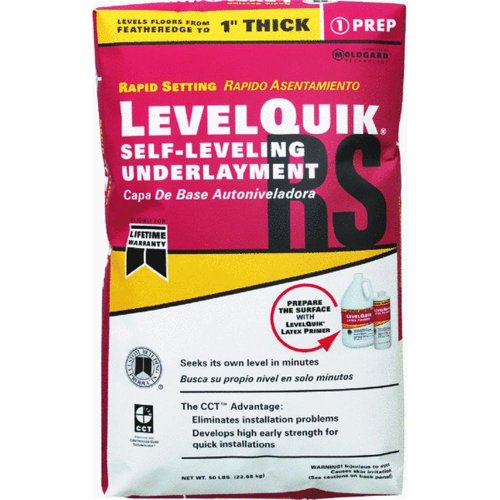
Custom BLDG 21018 is a readily available floor-leveling compound made in the United States. The product emphasizes practical package dimensions and domestic origin, appealing to buyers seeking straightforward, off-the-shelf leveling material for standard interior applications. It suits smaller projects or renovations where a simple, reliable underlayment is sufficient to prepare a floor for tile, vinyl, or laminate coverings.
Best for: DIY enthusiasts or small projects with budget-conscious planning. The product’s size and origin support convenient staging for typical home or light commercial work. A limitation is that detailed technical specs beyond packaging dimensions may be less comprehensive than premium leveling compounds, so verify surface prep requirements with the supplier.
ARDEX K 15 Premium Self-Leveling Underlayment

ARDEX K 15 is a premium self-leveling underlayment designed for smooth interior concrete floors. It offers excellent compressive strength and adhesion, with a fast walkable time of 2-3 hours and the ability to install final flooring within about 16 hours. This product is compatible with a wide range of floor coverings, including tile, vinyl, LVT, VCT, carpet, and engineered wood, making it a versatile option for mixed-use spaces.
Best for: projects requiring rapid turnaround and compatibility with many floor finishes. It’s especially suitable for commercially oriented installations where a quick return to service is important. Caution: ensure correct preparation and priming are followed if specified by newer or mixed substrate guidelines.
Self Leveling Cement Tool Kit

The Self Leveling Cement Tool Kit by Kerty provides a complete set for leveling, smoothing, and finishing cement-based floors. It includes a self-leveling rake, spiked rollers, flooring construction rollers, telescopic poles, epoxy spike shoes, and gloves. The all-metal components offer durability and rust resistance, making it suitable for professional or DIY flooring projects. Best for: users who want an integrated toolkit to manage leveling tasks and achieve consistent surfaces.
Limitation: Some users may prefer additional accessories or extensions beyond the included kit, depending on project size. The kit focuses on essential tools rather than specialized primers or admixtures.
ARDEX K 60 Arditex

ARDEX K 60 Arditex is a rapid-setting latex smoothing and leveling compound designed for moisture-prone areas. The product blends Portland cement with latex additives to provide flexibility and adhesion, smoothing interior concrete, wood, terrazzo, ceramic and quarry tile, and more. It’s trowelable and can level at around 1/8 inch (3 mm) or less, with the convenience of not requiring priming in many cases. Best for: spaces with moisture exposure or where quick readiness for final flooring is needed. Caution: verify substrate compatibility and ambient cure conditions for best results in humidity-rich environments.
ARDEX Feather Finish

ARDEX Feather Finish is a quick-setting, self-drying cement-based underlayment that bonds to concrete, plywood, OSB, masonry, terrazzo, gypsum, and adhesive residues. It requires only water for mixing and sets rapidly, enabling floor coverings like vinyl or tile to be installed in as little as 15 minutes. Best for: projects that demand a fast turnaround and strong bond for tile, vinyl, or laminate. Limitation: extremely thin applications may require precise pouring or troweling to avoid laitance or feathering near edges.
ARDEX V 1200 Self-Leveling Underlayment

ARDEX V 1200 is a versatile 50 lb bag underlayment designed for interior concrete, terrazzo, ceramic, and quarry tile substrates. It offers excellent flow and healing to create a truly level surface with minimal effort. This product is well-suited for projects that require a smooth, durable base prior to installing resilient or tile flooring. Best for: surfaces needing a reliable, easy-flow leveling compound with good surface finish. Limitation: ensure proper mixing and curing to achieve the intended levelness and adhesion results.
Buying Guide: Key Purchase Considerations
- Subfloor compatibility: Verify whether the product supports concrete, wood, terrazzo, or tile substrates and whether moisture considerations exist in the installation area.
- Setting time: If you need a quick turnaround, prioritize fast-setting formulas and walkable times that align with your installation schedule.
- Adhesion and strength: Select fiber-reinforced or latex-modified blends for higher tensile strength and better long-term performance under heavy loads.
- Floor covering compatibility: Ensure the leveling compound is compatible with your intended final floor, such as vinyl, laminate, tile, or engineered wood.
- Application tools: Consider whether you need a complete tool kit or individual products to suit your workflow and project size.
- Curing conditions: Pay attention to temperature, humidity, and ventilation requirements that influence cure time and surface hardness.
Frequently Asked Questions
- What is self-leveling underlayment used for? It creates a flat, smooth base on uneven subfloors to improve adhesion for final floor coverings.
- How long does it take to walk on self-leveling concrete? Many products allow light foot traffic within 2-3 hours, but full curing can take longer depending on product and conditions.
- Can I use self-leveling compounds over existing tile? Yes, if the surface is properly prepared and the tile is secure and sound, many leveling products will bond well.
- Do I need primer for self-leveling underlayment? Some products require primers; follow the manufacturer’s instructions for best results.
- Which product is best for moisture-prone environments? Look for formulations designed for moisture resistance and adhesion to concrete, such as latex-modified blends.
- Is fiber reinforcement important? Fiber reinforcement adds tensile strength and reduces cracking in high-traffic or large-area applications.