Silicate and siliconate sealers offer durable, penetrating protection for concrete and masonry surfaces. This guide compares five top options, highlighting how they harden surfaces, resist moisture, and survive freeze–thaw cycles. Whether you’re sealing countertops, driveways, or foundations, these products provide varying balances of penetration, durability, and ease of use. Read on to understand differences in chemistry, application, and long-term performance to help you choose the right sealer for your project.
| Product | Brand | Key Benefit | Typical Use |
|---|---|---|---|
| PS101 Siliconate Water Repellent WB Penetrating Sealer (PS1015G) | Concrete Sealers USA | Zero VOC, water-based, deep penetration | Unsealed concrete and masonry surfaces |
| S2000 Ready-to-Use Sodium Silicate Sealer Densifier | Foundation Armor | Strengthens concrete, forms CSH crystals | New or aged concrete needing densification |
| PS101 Siliconate Water Repellent WB Penetrating Sealer (PS1011G) | Concrete Sealers USA | Zero VOC, water-based, moisture resistance | Unsealed concrete and masonry surfaces |
| Duracon Water-Based Siliconate Sealer, 16 oz Spray | Generic | Low-odor, spray application, deep penetration | Concrete, brick, stone surfaces |
| SC25 Penetrating Concrete Sealer, 16 OZ | Foundation Armor | Below-surface protection, non-yellowing | Unsealed white or light-colored concrete |
PS101 Siliconate Water Repellent WB Sealer (PS1015G) — Concrete Sealers USA

PS1015G is a zero-VOC, water-based siliconate sealer designed for unsealed concrete and masonry. It penetrates to reduce moisture absorption, impart water repellence, and help resist freeze–thaw damage, scaling, and spalling. The formula aims to preserve the natural appearance while extending surface life, making it suitable for driveways, patios, and walls where breathability is important.
Key considerations: application on dry, clean surfaces; compatibility with unsealed materials; reapplication intervals depend on traffic and weather exposure. This sealer emphasizes moisture control without forming a surface film, supporting long-term surface health in outdoor and indoor contexts.
S2000 Ready-to-Use Sodium Silicate Sealer Densifier

The S2000 product is a professional-grade densifier and surface hardener that chemically reacts with free lime to form calcium silicate hydrate crystals. This densification process increases concrete strength and density, which can reduce dusting and surface deterioration. The result is a harder, more abrasion-resistant surface suitable for high-traffic areas like garages or shop floors.
Key considerations: it chemically alters the pore structure, so bond with coatings might differ after treatment. It is best applied to properly prepared, clean concrete and may require precise mixing or application to achieve the desired 45% strength gain potential.
PS101 Siliconate Water Repellent WB Sealer (PS1011G) — Concrete Sealers USA
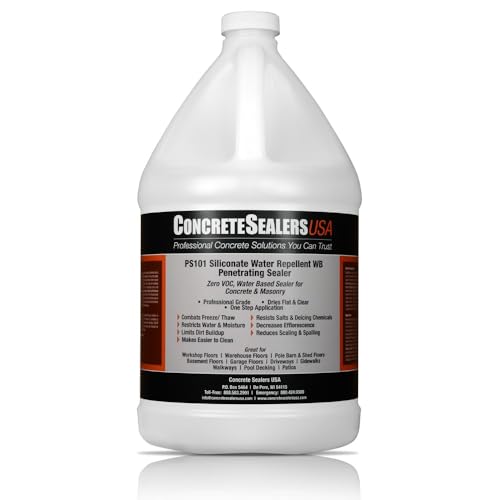
This PS1011G variant mirrors the PS1015G with zero VOC and a water-based formula for unsealed concrete and masonry. It focuses on limiting moisture absorption and providing lasting repellency against freeze–thaw cycles while maintaining a natural look. It is commonly chosen for indoor or sheltered outdoor applications where low odor is important.
Key considerations: compare surface porosity and climate exposure. Wetting and curing times can vary, so follow manufacturer guidelines for best penetration and performance in high-humidity environments.
Duracon Water-Based Siliconate Sealer — 16 Oz Spray

Duracon’s water-based siliconate sealer is designed for easy spray application, providing deep penetration into porous concrete, brick, and stone. It offers low odor and VOC compliance, making it suitable for indoor use and projects where indoor air quality is a concern. The protective barrier helps resist water, salt, and oils while allowing surfaces to breathe.
Key considerations: spray equipment cleanliness and even coverage ensure consistent protection. Reapplication intervals depend on traffic, weather, and surface wear. This option balances convenience with durable water repellency for multiple exterior and interior surfaces.
SC25 Penetrating Concrete Sealer Water Based Siliconate Sealer

SC25 is a penetrating sealer designed for unsealed white or very light concrete. It’s marketed for fast, easy application with a single coat that penetrates beneath the surface without altering color or appearance. This makes it attractive for light-colored decorative concrete and areas where color retention is important.
Key considerations: performance depends on proper surface preparation and ambient conditions. Because it targets below-surface protection, users should assess whether breathability and long-term hydrophobicity meet project needs, especially on high-traffic exterior surfaces.
Buying Guide: Key Purchase Considerations And Comparisons
- Type and chemistry: Siliconate/B bond-forming sealers form hydrophobic barriers with concrete pores, improving moisture resistance, while silicate densifiers chemically react to densify the concrete matrix. Choose based on whether you need surface protection (sealant) or pore-hardening (densifier).
- Breathability: For exterior orインternalBackuparded surfaces, ensure the sealer allows the substrate to breathe to prevent moisture buildup. Water-based formulas generally offer better odor control and lower VOCs.
- Penetration depth vs. appearance: Penetrating sealers aim to preserve natural look; some may impart a subtle sheen. Densifiers often change surface hardness more than appearance.
- Surface compatibility: Verify compatibility with unsealed concrete, existing coatings, or countertops. Some sealers may interact with sealers or coatings applied later, affecting adhesion or cure.
- Application method: Sprays vs. wipes vs. rollers affect coverage and ease. Sprays are convenient for large areas but require masking and safety considerations.
- Maintenance and reapplication: Some products offer long-lasting protection with occasional reapplication, while others require more frequent refreshment depending on wear and exposure.
- Climate and use-case: Outdoor driveways face freeze–thaw, salt, and abrasion; indoor surfaces require low odor and food-safe options where applicable.
Across these options, assess the surface you’re protecting, the expected exposure, and whether you prioritize deep densification or moisture repellency. For kitchens, countertops, or food prep areas, confirm food-safety claims and curing guidance. For outdoor paving, frosty climates, and high-traffic floors, durability and breathability are critical factors. Always follow the manufacturer’s application instructions for best results.