| Product | Best For | Key Feature |
|---|---|---|
| Nidovzen 56-60″ W x 72″ H Double Sliding Shower Door | Most adjustable fit for irregular walls | Up to 3/8″ wall adjustment |
| Bathlink 42″ W x 78″ H 3-Panel Sliding Shower Door | Widest entry in compact spaces | Three-panel synchronized sliding |
| Botwinkle 44-48″ W x 72″ H Semi-Frameless | Small bathrooms needing flexible width | Adjustable 44-48″ width |
| GETPRO Shower Door Double Sliding 57-60″ W x 72″ H | Reversible, flexible installation | 60″ max width with cuttable rail |
| ENSO SENKA Corner Enclosure 34″ D x 34″ W x 72″ H | Corner showers with tight spaces | 34″ corner configuration |
Find the right sliding shower door for tight spaces with options that maximize entry width, adapt to imperfect walls, and minimize water leakage. This guide highlights compact, adjustable doors suited for small bathrooms, apartments, or powder-room basins. It is ideal for buyers wanting easy installation, durable materials, and quiet operation. Top picks include reversible designs, frameless or semi-frameless profiles, and corrosion-resistant finishes.
Who should consider these products? – Homeowners upgrading a tight walk-in shower, renters seeking easy installs, and DIYers needing adjustable widths. The products below emphasize adjustable fit, safety glass, and smooth gliding action. The summary table above helps quickly compare fit, style, and key benefits across five strong options.
Nidovzen 56-60″ Double Sliding Shower Door

Nidovzen offers a 56-60 inch adjustable opening with a 72 inch height. The design accepts up to 3/8 inch wall variance, supporting walls that are not perfectly plumb. It uses 1/4 inch SGCC tempered glass and adds a top frame 20% thicker for steadier operation. This option is best for buyers who want a robust, easy-to-adjust system for walk-in showers and value stability during daily use.
Best for: Bathrooms with uneven walls or minor wall deviations; households seeking a more solid glide and solid feel. Limitation: Slightly heavier frame may require proper support during installation.
Bathlink 3-Panel Sliding Shower Door

This 42″ wide by 78″ tall three-panel setup provides a broad entry in compact footprints. Its wide water-guard strips and magnetic seal minimize leaks, while a durable aluminum structure supports 6 mm tempered glass with an easy-clean coating. The design is best for small bathrooms needing a wider opening without sacrificing containment.
Best for: Small baths that still require easy access and splash control. Limitation: Three panels may require more clearance during door opening in tight enclosures.
Botwinkle Semi-Frameless Shower Door

Botwinkle offers an adjustable 44-48 inch width with a 72 inch height, featuring 1/4 inch SGCC tempered glass and a matte black finish with 304 stainless steel hardware. The semi-frameless design saves space while maintaining a modern look. It is best for bathrooms that need a compact width range and a stylish appearance.
Best for: Smaller openings needing a flexible width range and a contemporary matte finish. Limitation: Slightly narrower range than some other adjustable doors.
KisaTub Sliding Bathtub Shower Door
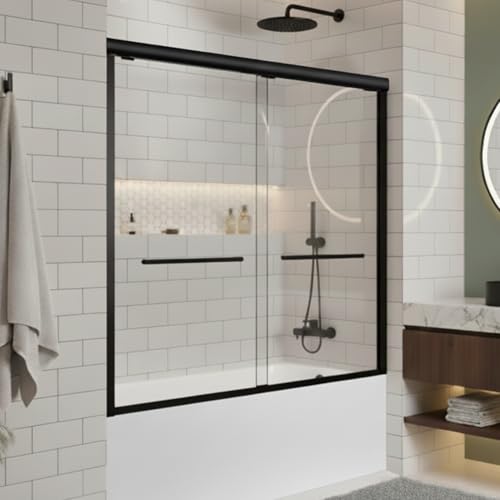
This 56–60 inch wide door fits openings with a cuttable guide rail for a precise fit and uses tempering with shatterproof film. The aluminum frame plus 304 stainless steel towel bar adds durability, while soft-close bumpers reduce noise. It suits bath showers where a sturdy, easy-to-clean door is desired in moderate to tight spaces.
Best for: Users seeking a robust, safe sliding door with quiet operation in moderate-sized bathrooms. Limitation: Requires careful measurement for rail trimming to avoid misfit.
ENSO SENKA Corner Enclosure

Designed for corners, this 34″ D x 34″ W x 72″ H enclosure uses 1/4″ SGCC tempered glass with a durable corner configuration. The magnetic and seal strips between panels provide a watertight seal. It is best for tight corner showers needing a compact, efficient solution with a seamless entry.
Best for: Corner shower renovations or bathrooms with limited wall space. Limitation: Smaller footprint may limit entry width compared to larger units.
Buying Guide: Key Purchase Considerations
- Space and layout: Measure door width, wall angles, and available clearance for door swing or slide. Opt for adjustable rails or cuttable rails when walls are not perfectly plumb.
- Glass and safety: Look for 1/4″ (6 mm) tempered glass or SGCC glass with safety coatings. Tempered glass reduces injury risk if broken and aids cleaning.
- Frame and hardware: Aluminum frames resist corrosion; stainless steel components offer durability. Matte or painted finishes should align with your bathroom style and resist corrosion in humid environments.
- Water containment: Magnetic closures and water-guard strips help prevent leaks. Corner enclosures require precise seals to keep moisture contained.
- Installation considerations: Reversible designs help in awkward bathroom layouts. In some cases, professional installation ensures proper alignment and stability.
- Maintenance: Surfaces with easy-clean coatings simplify cleaning. Avoid designs with intricate gaps that trap soap scum.
Frequently Asked Questions
- What is the best sliding shower door for an irregular wall?
- Are frameless or semi-frameless doors more space-saving?
- How important is tempered glass for safety?
- Can I install these doors myself?
- Will a corner enclosure fit a small shower?
- What should I avoid when selecting a sliding door?
Doors with adjustable rails or wider wall adjustment ranges, like Nidovzen models, help accommodate wall deviations for a better fit.
Semi-frameless doors generally save space while offering a contemporary look and easier maintenance compared to full frameless panels.
Tempered glass (1/4″ or 6 mm) with SGCC certification is standard for safety; it withstands daily use and reduces injury risk if shattered.
Many doors offer cuttable rails and reversible installation, which eases DIY setup. Complex corners or improper alignment may require professional help.
Corners are ideal for compact spaces. Ensure the door dimensions align with the corner layout and door swing options to maximize entry and minimize leaks.
Avoid doors with narrow adjustment ranges, poor sealing, or heavy hardware that may cause noise, misalignment, or warping over time.