Finding an energy-efficient, off-grid way to vent your attic can cut cooling costs and protect roof integrity. The following selection highlights five solar-powered attic fans that balance power, reliability, and smart features. Each product takes advantage of sun-driven operation, with options ranging from basic off-grid airflow to thermostat-controlled cooling. The list is designed for American homes, garages, and other structures where attic heat and moisture are concerns.
| Product | Brand | Key Benefit | Approx. CFM |
|---|---|---|---|
| DC House Solar Attic Fan 32W | DC HOUSE | High airflow with off-grid operation | 1600 |
| iLiving Hybrid Ready Solar Roof Attic Exhaust Fan | iLiving | Smart thermostat control, adjustable solar panel | 1150 |
| GROWNEER 40W Solar Attic Fan | GROWNEER | Smart thermostat with 24/7 operation and remote | 2000 |
| Remington Solar Builder Series 40W | Remington Solar | Night-time auto-run option with humidistat & thermostat | 40W panel (CFM varies by model) |
| ECO-WORTHY 50W Solar Attic Fan Kit | ECO-WORTHY | All-in-one kit with foldable panel and DC fan | 50W panel, 14″ fan |
Introduction note: This article focuses on five well-rounded options suitable for typical American homes. Each entry includes a concise feature snapshot to help you compare at a glance, followed by a deeper look at performance, installation, and operating considerations. The buying guide at the end covers sizing, weather resilience, wiring concerns, and long-term maintenance to help you select the best match for your attic’s climate and construction.
DC House Solar Attic Fan 32W 1600CFM
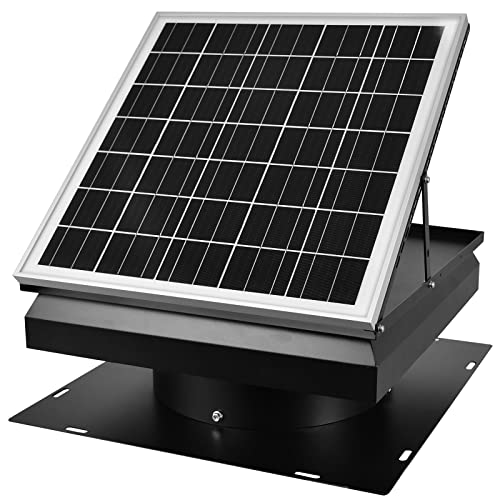
Engineered for off-grid operation, this fan harnesses premium monocrystalline solar panels to power a 1600 CFM airflow, efficiently exhausting hot air and reducing attic temperatures. It activates at sunrise and powers down at dusk, with no wiring required beyond a shaded mounting location. The design is built to withstand high wind and broad temperature extremes, enabling installation on home attics, garages, RV rooftops, or greenhouses. Pro tip: pairing with existing vents can optimize overall house airflow and cooling efficiency.
iLiving Hybrid Ready Solar Roof Attic Exhaust Fan

This 14-inch unit combines solar power with smart thermostat controls and a robust IP68-brushless motor, offering up to 1150 CFM and coverage for up to 2900 square feet. An adjustable solar panel allows tilt settings of 0°, 15°, 30°, or 45° to capture maximum sunlight across seasons. The system emphasizes long-term reliability, with a 15-year warranty and remote-adjustable convenience. A 40W solar input provides steady performance across a wide range of climates and attic sizes.
GROWNEER 40W Solar Attic Fan with Smart Thermostat
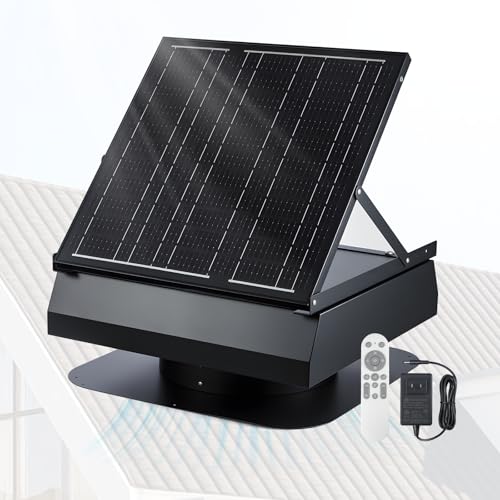
GROWNEER’s 40W solar attic fan features a smart thermostat that triggers operation based on temperature and humidity, helping regulate attic conditions efficiently. The kit includes remote control with a 6.56-foot extension and a 24/7 operation capability for non-stop ventilation. Activation occurs automatically when humidity passes 60% or temperature rises above 26°C (78.8°F), promoting consistent comfort and protecting roofing materials from moisture-related issues. The system is designed for attics, sunrooms, and other ventilated spaces such as warehouses and greenhouses.
Remington Solar Builder Series 40 Watt

This builder-series unit emphasizes moisture control with built-in humidistat and thermostat, plus an adapter option to run at night. Powered by free solar energy, it’s designed to keep attics cooler and reduce the load on HVAC systems. The hybrid night-running capability helps balance daytime cooling with energy-conscious operation while maintaining attic health during peak moisture periods. This model is well-suited for homes seeking a dependable, low-maintenance solution with optional night-time autonomy.
Remington Solar Builder Series 30 Watt with Night Auto-Run
This variant combines the two core strengths of Remington Solar: solar-powered attic cooling and automatic nighttime operation. It includes a humidistat and thermostat to modulate airflow according to attic needs and can be paired with a night-time adapter to extend cooling hours when external temperatures drop. The design prioritizes energy efficiency while maintaining a stable attic environment to support HVAC performance and moisture mitigation.
ECO-WORTHY 50W Solar Attic Fan Kit

All-in-one practicality defines this kit, which pairs a 50W foldable solar panel with a 14″ DC fan. Its IP54-rated weather resistance makes it suitable for various climates and outdoor installations, including roofs and sunproof spaces. The compact DC fan begins automatically when solar input is sufficient and stops when not, simplifying maintenance. The package is especially appealing for DIY installations and environments where a complete solar solution in one purchase is preferred.
Buying Guide: Key Purchase Considerations
Sizing and airflow are central to selecting a solar attic vent. Aim for an attic CFM that roughly matches your attic volume and the level of heat you experience. Larger spaces typically benefit from higher CFM units, but you must balance with available solar input and panel area. If you live in hot, sunny regions, a higher-CFM fan with a robust solar panel can keep temperatures in check without relying on the AC system.
Weather resilience matters. Look for IP ratings, wind resistance, and temperature tolerance. Attic environments see heat, moisture, and occasional gusts; fans engineered to withstand -40°F to 150°F and 130 mph winds are more reliable across seasons. Weatherproof cabling and protective housings also extend longevity in harsh climates.
Automation and control options vary. Thermostats, humidistats, and remote controls help tailor operation to indoor conditions and humidity. Night-time or 24/7 modes can help regulate moisture and temperature, protecting insulation and roofing materials while easing HVAC burden.
Installation considerations should include mounting surface compatibility, wiring needs, and available roof clearance. While many solar attic fans operate off-grid, some models offer hybrid adapters for nighttime operation using stored energy or a connected power source. If you’re upgrading an older system, verify compatibility with existing attic vents and roof framing to avoid airflow bottlenecks.
Maintenance and warranties are valuable signals of long-term performance. Check motor types (brushless vs brushed), solar panel durability, and the warranty period. A longer warranty generally reflects confidence in the product’s durability and can save cost over time on repairs or replacements.
Energy savings and environmental impact: Solar attic fans reduce dependence on grid electricity, lowering energy bills and reducing heat load during peak sun hours. While initial costs can be higher than basic vent solutions, the long-term savings on cooling costs and reduced HVAC strain can justify the investment for many homes and small commercial spaces.
Accessibility and support: Consider the availability of spare parts, customer support, and installation guidance. A well-supported product line with accessible replacement fans, panels, and adapters reduces long-term maintenance friction and ensures you can keep the system performing optimally.