Looking for durable, low-maintenance decking that’s ideal for poolside areas and outdoor living spaces? This guide highlights top pool-ready composite decking tiles and mats. Each option suits different needs—from easy DIY installations and lightweight tiles to heavy-load wooden-appearance decks. Best for: homeowners wanting quick-install, low-maintenance outdoor flooring; renters seeking removable tiles; and poolside areas that require good drainage and slip resistance.
The following table summarizes the selected products to help you compare at a glance.
| Product | Best For | Material | Notes |
|---|---|---|---|
| ToLanbbt Plastic Interlocking Deck Tiles (9 Pack) | Lightweight setups & poolside patios | Plastic composite | Open drainage, easy cleaning |
| Ongniong 36pcs Wood Floor Tiles Interlocking | Stronger stakes & heavy furniture loads | Wood/plastic composite | 32 support points, good drainage |
| KWHXJ 36Pcs Interlocking Deck Tile | Customizable layouts & DIY projects | Wood-based composite | High load-bearing, 32 support points |
| ShunHong Polymer Composite Interlocking Tiles | Durable, all-weather installations | HDPE & recycled wood fibers | Thicker, low maintenance |
| INPAITOO 36 Pcs Patio Tiles | Courtyard & poolside dry-to-wet areas | Camphor pine with PE base | Stable, easy assembly |
ToLanbbt Plastic Interlocking Deck Tiles 9 Pack

Best for lightweight, removable poolside flooring. These 12″ x 12″ tiles interlock for a quick, tool-free installation. They are described as durable, odorless, and resistant to fading or warping, making them suitable for patios, porches, balconies, and pool decks with high foot traffic. The open drainage design helps prevent standing water, which is essential around wet areas.
Who it’s best for: homeowners seeking a simple DIY setup, renters needing portable outdoor flooring, and small patio zones near water features. Limitations include that plastic tiles may feel less like traditional wood underfoot and may be less insulated against cold weather.
- Lightweight, high-hardness plastic construction
- 12″ x 12″ tiles; total 9 tiles (9 square feet)
- Open drainage with four planes and three drains
Ongniong 36pcs Wood Floor Tiles Interlocking

Best for higher load scenarios and spaces where furniture and people frequently move. This set uses thickened PE backing with 32 support points to distribute pressure, improving stability and reducing deformation. It features good drainage due to raised tile design, which helps keep surfaces dry around pools and wet areas.
Who it’s best for: decks needing stable, heavy-duty flooring, such as near outdoor dining areas or pool equipment zones. Caution: assembly requires aligning snaps; while designed for tool-free setup, precise snapping ensures a flush finish.
- 32 support points; can bear substantial loads
- Good drainage to keep dry surfaces
- Easy snap-together installation
KWHXJ 36Pcs Interlocking Deck Tile
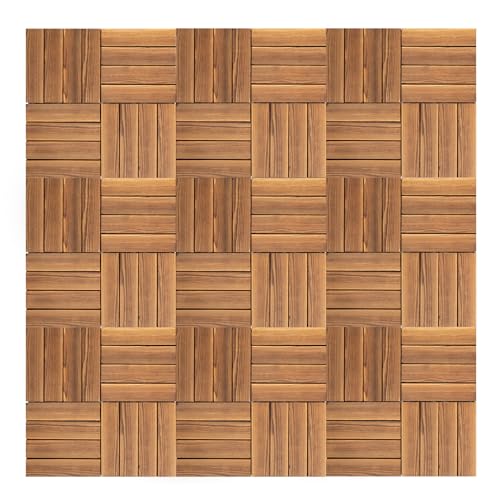
Best for customizable layouts and DIY enthusiasts who want a strong, load-bearing surface. These 12″ x 12″ tiles use camphor pine wood with a carbonization process for hardness and environmental considerations. The thick PE backing with 32 support points distributes weight effectively, resisting deformation and providing a sturdy deck underfoot.
Who it’s best for: users aiming for a wood-appearance deck with dependable support. Better for: spaces where varied shapes and patterns are desired. Caution: real wood components may require occasional maintenance to preserve color and finish.
- Camphor pine wood with carbonization
- High load-bearing capacity (6,613 pounds total)
- DIY-friendly with clip-based locking
ShunHong Polymer Composite Interlocking Tiles
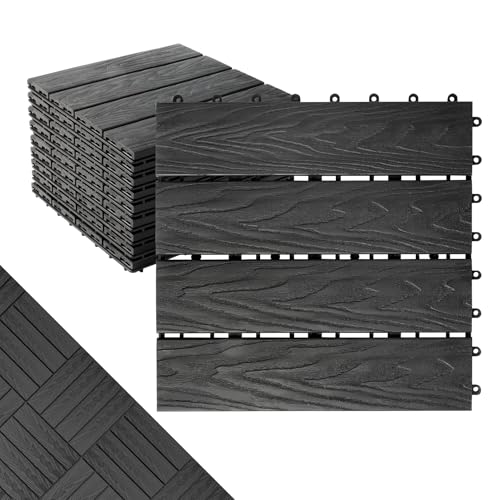
Best for all-weather performance and minimal maintenance. These 9-piece tiles use a solid polymer composite made of high-density polyethylene and recycled wood fibers. They are designed to be thicker for durability, waterproof, and resistant to cracking—ideal for poolside and patio installations that experience sun and rain. They are easy to assemble with a tool-free interlocking design and cut-to-fit capability.
Who it’s best for: homes needing a robust, weather-resistant deck that remains low-maintenance over years. Limitation: heavier tiles may be less convenient for temporary setups, and cutting requires care to maintain a seamless look.
- Durable, waterproof polymer composite
- Interlocking design; simple assembly
- Low maintenance; no annual painting required
INPAITOO 36 Pcs Patio Tiles

Best for versatile outdoor areas including living rooms with a garden vibe and poolside zones. These camphor pine wood tiles use a carbonized process for durability, with a thickened PE backing to minimize deformation. They are designed for easy assembly and can be laid out to fit irregular spaces. Good drainage helps prevent standing water after rain or cleaning.
Who it’s best for: users seeking a warm wood appearance with straightforward installation and reliable drainage. Caution: wood tiles may require occasional maintenance to maintain color and protect against the elements.
- Campфор pine with carbonization
- Stable, easy to assemble; 36 pieces
- Good drainage for wet areas
Buying Guide: Pool Decking Essentials
What material should I choose for poolside decking?
Material choice affects slip resistance, drainage, maintenance, and longevity. Plastic and polymer composites offer excellent drainage and low maintenance, while wood-based composites provide a natural look. For wet areas, prioritize tiles with open drainage and anti-slip surfaces.
How important is drainage and slip resistance?
Crucial for safety around pools. Look for tiles with patterned surfaces, micro-textured finishes, and gaps that prevent water buildup. Interlocking designs should also ensure a flush surface to minimize tripping hazards.
Can I install these tiles myself?
Yes. Most options are DIY-friendly with snap-locked pieces that require no tools. Some sets may benefit from a basic measurement plan and a helper for alignment, especially around irregular pool edges.
Are there maintenance considerations I should expect?
Maintenance varies by material. Plastic tiles are easy to clean with a broom or hose. Wood-based tiles may require periodic sealing or oiling to preserve color and prevent weathering. Polymer composites generally need minimal upkeep beyond routine cleaning.
How should I plan the layout?
Start with a central area near the pool and build outward with consistent tile sizes. For uneven spaces, mark edges and cut tiles to fit while preserving the interlock system. Consider patterns that maximize drainage and reduce slipping.
What should I avoid?
Avoid tiles with solid surfaces that trap water or have tight seams that hinder drainage. Avoid cheap, thin tiles near high-traffic pool zones, as they may warp or crack with exposure to sun and water over time.
Frequently Asked Questions
- Are pool decking tiles safe for kids and pets? Most options feature anti-slip surfaces and open drainage, reducing slip risk. Always verify material safety and choose products with proven water resilience for kids and pets.
- Do these tiles require sealing or varnish? Wood-based tiles may benefit from occasional sealants or wax finishes. Plastic and polymer composites typically do not require sealing.
- Will tiles crack in freeze-thaw conditions? High-quality composites are designed for varying climates, but extremely harsh winters may affect some materials. Check product specifics for climate suitability.
- How do I cut tiles to fit pool edges? Most interlocking tiles can be cut with standard tools; follow manufacturer guidance to maintain interlock integrity and a clean edge.
- Can I remove and re-use these tiles? Yes. Interlocking tiles are designed for removal and reinstallation, making them suitable for renters or seasonal use.
- What is the typical load-bearing capacity? Many sets advertise high load-bearing ratings (often several thousand pounds total per tile set) to accommodate furniture and foot traffic. Check exact figures in product specs for critical layouts.