Answering the need for durable, water-friendly bathroom flooring, these teak- and teak-inspired interlocking tiles offer moisture resistance, easy DIY installation, and a natural look. Best for homeowners who want a spa-like, warm aesthetic with simple upkeep. The top picks include solid teak options for indoor use, plus versatile wood-look vinyl and acacia tiles that perform well in wet zones. This guide highlights five products well-suited for bathrooms, comparing installation, maintenance, and suitability for high humidity environments.
| Product | Best For | Key Benefit | Notes |
|---|---|---|---|
| Bare Decor EZ-Floor Interlocking Flooring Tiles in Solid Teak Wood Oiled Finish | Traditional teak lovers | Solid teak with oil finish; easy interlock | Indoor/outdoor use; no tools needed |
| Bare Decor BARE-WF2009 Solid Teak Wood Interlocking Tiles | Classic teak installs | Solid teak; simple installation | 12″ x 12″; indoor/outdoor |
| THYOI Premium Acacia Wood Interlocking Deck Tiles | Outdoor-to-indoor transitions | 100% natural acacia with deep-oil finish | Crossed pattern; versatile for bathrooms |
| DECKIFY Premium Acacia Wood Interlocking Patio Deck Tiles | All-weather versatility | Acacia with natural linseed oil; grooved slips | Supports up to 490 lbs; raised base |
| Art3d Interlocking Luxury Vinyl Flooring Tile, Bali Teak | Wet-room friendly vinyl option | Interlocking; 100% waterproof; reusable | No glue; easy disassembly |
Bare Decor EZ-Floor Interlocking Flooring Tiles in Solid Teak Wood Oiled Finish

Product type: Solid Teak wood interlocking tiles finished in oil. Best for buyers seeking authentic teak with a natural oil sheen and a straightforward, tool-free install. Designed for indoor use, but suitable for sheltered outdoor spaces, this option appeals to purists who prefer genuine wood over composites. Caution: teak can darken with age; oil finish requires periodic maintenance to preserve color and water resistance.
Bare Decor BARE-WF2009 Solid Teak Wood Interlocking Tiles
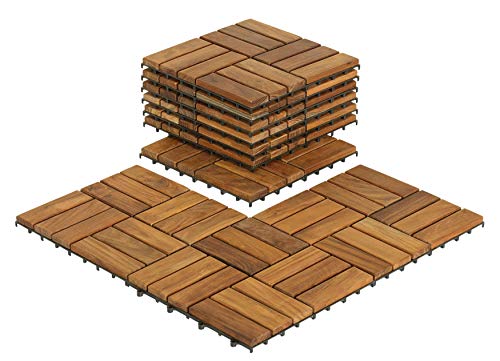
Product type: 12″ x 12″ solid teak tiles with an interlocking system. Best for: traditional teak installations where a robust, natural wood surface is desired. The absence of adhesives keeps installation simple, and the teak’s natural oils help resist moisture. Limitation: natural wood requires ongoing maintenance to retain color and moisture resistance.
THYOI Premium Acacia Wood Interlocking Deck Tiles

Product type: Interlocking acacia deck tiles with a deep-oil finish. Best for: spaces that require a resilient, water-shedding surface and easy customization. Selection reason: versatile for bathrooms and outdoor transitions due to drainage-friendly design. Caution: fits irregular layouts with a capability to cut; ensure flat, stable subfloors for best results.
DECKIFY Premium Acacia Wood Interlocking Patio Deck Tiles

Product type: Interlocking acacia wood tiles with a natural linseed oil finish. Best for: wet, all-weather spaces like bathrooms, pool surrounds, and outdoors. The raised base improves drainage, reducing surface moisture. Limitation: heavy tiles may require assistance during installation on elevated platforms.
Art3d Interlocking Luxury Vinyl Flooring Tile, Bali Teak
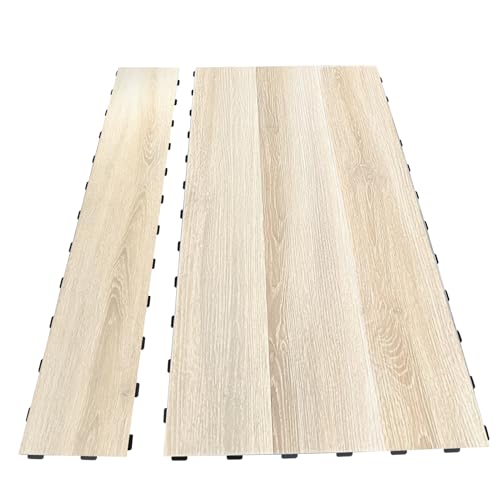
Product type: Interlocking vinyl tiles with wood-look finish. Best for: bathrooms needing water resistance, easy maintenance, and reusability. The interlocking design eliminates glue, and the surface is 100% waterproof and wear resistant. Caution: vinyl may not offer the same tactile warmth as real wood and can feel less premium to wood purists.
Buying Guide: Key Considerations For Teak Floor Tiles In Bathrooms
What should I consider when choosing teak or teak-look bathroom tiles? Look for moisture resistance, installation method, and subfloor compatibility. Real teak offers natural beauty and long-term durability but requires maintenance. Teak-look vinyl provides waterproof performance with easier installation and lower cost.
- Material and moisture handling: Real teak handles humidity but needs sealant maintenance. Engineered wood or vinyl variants offer superior moisture resistance with less upkeep.
- Installation method: Interlocking tiles enable tool-free setup and quick replacements. Peel-and-stick or interlocking designs are common in bathrooms for minimal disruption.
- Subfloor compatibility: Ensure a flat, clean surface. Raised-base tiles improve drainage but may require stability checks on older floors.
- Safety and grip: Look for non-slip textures or grooved patterns, especially around showers or tubs.
- Maintenance: Oil-finished teak requires regular oiling to maintain color and water resistance. Vinyl and certain woods are easier to wipe clean.
- Aesthetic and warmth: Real teak provides a warm, natural tone. Acacia and teak-look vinyl mimic wood but differ in texture and depth.
Practical Buying Tips
- Measure the bathroom area and calculate tile coverage including waste, rounding up to the nearest box.
- Check tile thickness and weight; heavier tiles may require floor reinforcement in some setups.
- Consider color and grain variation; consistent looks may require purchasing additional matching sets.
- Plan for expansion gaps around fixed fixtures and transitions to other flooring types.
Common Questions
- Are teak tiles suitable for bathrooms? Yes, especially if they are treated for moisture resistance and installed with proper drainage considerations.
- Can I install these tiles over concrete or plywood? Most interlocking tiles work over flat, clean subfloors; check product guidelines for subfloor compatibility.
- Do real teak tiles require sealant? Real teak often benefits from oil or sealant to protect color and moisture resistance.
- Do vinyl teak-look tiles feel as durable as wood? They are highly water-resistant and low maintenance but may feel less premium than solid wood.
- Is professional installation necessary? Most interlocking tiles are DIY-friendly, but very uneven subfloors may need preparation by a pro.
- Which tile is best for a high-traffic bathroom? Look for thicker tiles with robust wear layers or solid wood with durable finishes.
Summary: For hands-on buyers who want authentic wood in a bathroom, Bare Decor’s teak options deliver real wood aesthetics with simple interlocking. For all-weather installations or larger wet areas, THYOI and DECKIFY offer durable acacia options with drainage-friendly features. If you prefer a no-fuss, fully waterproof solution, Art3d’s Bali Teak vinyl tiles provide a dependable, reusable option that’s easy to install and maintain.