Answering the search for durable, weather-ready vertical roof carports, this guide highlights five top options ideal for American buyers. These structures excel at shedding rain and snow, offering ample overhead clearance, and supporting heavy loads. Best for: homes needing sturdy equipment shelters, owners with tall vehicles, and those seeking year-round outdoor protection. The table below summarizes the five picks to help you compare at a glance.
| Product | Best For | Key Benefit |
|---|---|---|
| Garveelife 11x20x9 Vertical Roof | Trucks, Boats, Small Farm Equipment | High load capacity; steep vertical design |
| GarveeLife 20×20 Vertical Roof | Two Cars, Taller Vehicles | Extra headroom and wide footprint |
| GarveeLife 12×20 Vertical Roof Carport | Sedans, SUVs | Fully enclosed option with doors |
| Quictent 12×21 Vertical Roof | Boats, RVs, Trucks | Industry-strength framing and drainage |
| ADVANCE OUTDOOR 12×21 Vertical Roof | Heavy use, winter climates | Durable hardware, fast drainage |
Garvealife 11 ft x 20 ft x 9 ft Vertical Roof Carport

The Garvealife 11×20 vertical-roof carport combines a steep 120° pitch with vertical paneling to boost load capacity by up to 50%, supporting up to 7,700 lbs. This design naturally reduces snow buildup and offers reinforced stability against strong winds. Best for: owners with mid-size trucks, boats, or tractors needing tall clearance and durable framing. Limitations: heavy structure requires solid anchoring and level ground. Materials include 1.6″ 19-gauge steel poles and 27-gauge decking, triple rust protection, and broad coverage of 239″ x 133″ x 108″.
Why choose this: optimal for heavy weather zones and vehicles that benefit from a high, sloped roof to minimize ice damming and snow accumulation. It’s a strong, all-weather shelter with robust bracing for long-term use.
GarveeLife 20×20 Vertical Roof Metal Carport

Designed with a 120° roof angle, this 20×20 structure yields a peak height well above most standard carports, offering 173 inches of overhead clearance. It excels for “high-profile” equipment like tractors with cabs, Class A RVs, and tall machinery. Best for: households with multiple tall vehicles or equipment that require extra vertical space. Better for: vehicles that require greater entry clearance. Caution: ensure adequate surrounding ground space for safe operation. Construction uses 2″ / 19 Ga steel components and 10 roof purlins to distribute loads and improve rigidity.
GarveeLife 12×20 Enclosed Carport With Vertical Roof

This fully enclosed carport adds a hinged door and a separate man door for secure access. It uses 19-Ga steel poles and 27-Ga steel roof with double galvanization to resist rust. Best for: sedans and SUVs that benefit from full enclosure against weather. Choose this if you want weatherproof protection and a secure interior. Limitation: enclosure adds weight and may require more anchoring and clearance during installation.
Quictent Heavy Duty 12×21 Vertical Roof Carport
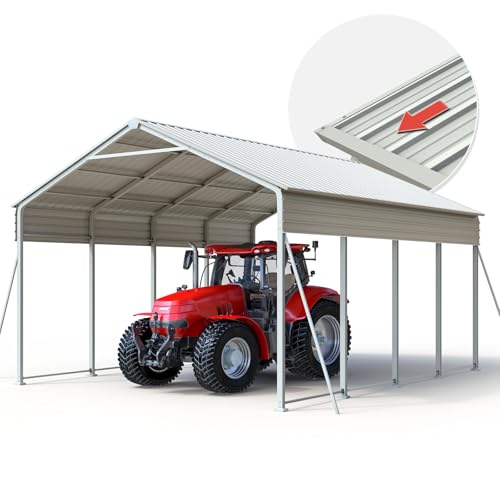
Quictent offers an 12×21 ft vertical-roof shelter featuring 3X faster drainage and reinforced crossbars. The design prioritizes leak-proof durability with anti-corrosion screws and rubber gaskets, making it suitable for areas with heavy snowfall. Best for: boat, vehicle, or farm equipment protection in wet climates. Limitations: assembly may require multiple people and careful alignment of components for best stability. The roof uses triple-layer rustproof materials, ensuring long-term protection against rust and weathering.
ADVANCE OUTDOOR 12×21 Vertical Roof Carport

ADVANCE OUTDOOR pairs 8 top reinforced crossbars with 8 ground bars and 4 legs to deliver a stout frame. The vertical roof supports 3X faster drainage, preventing pooling and roof strain, while three-layer rustproof materials resist rust and fading. Best for: homeowners in winter-prone regions needing dependable, year-round shelter. Limitation: like other metal carports, proper anchoring and level installation are essential for peak performance and wind resistance.
Buying Guide: Key Considerations
- Roof pitch and drainage: Vertical roofs with steep pitches drain efficiently and reduce water pooling and ice damming. Look for 120° angles when possible.
- Materials and rust resistance: Choose triple-r rustproof coatings and galvanized steel components for longevity in varying climates.
- Clearance and footprint: Assess overhead height and footprint to ensure compatibility with your tallest vehicle and storage needs.
- Enclosed vs open designs: Enclosures add weather resistance and security but increase installation complexity and cost.
- Installation and anchoring: Ensure level ground and appropriate anchors; some models include expansion bolts for solid mounting.
- Warranty and service: Consider manufacturers offering warranties and accessible customer support for parts and repairs.
Frequently Asked Questions
- What is the advantage of a vertical roof carport? Answer: It improves drainage, reduces water buildup, and often increases load capacity for heavy snow and wind.
- Are vertical roof carports suitable for tall vehicles? Answer: Yes, many vertical roof designs provide higher peak clearance than standard flat-topped sheds.
- Do enclosed carports offer better protection? Answer: Yes, they shield against wind-driven rain, debris, and provide security for stored items.
- What maintenance is required? Answer: Regular cleaning, rust prevention, and inspecting anchors and bracing ensures long-term stability.
- Can these be moved later if needed? Answer: Some models are semi-permanent; modular or portable designs exist but may require disassembly.
- How to decide between aluminum and steel frames? Answer: Steel frames offer higher strength and durability at a lower cost, while aluminum is lighter and resistant to corrosion.