Answering the search for a wake up light clock that smooths mornings, these models use sunrise simulations, soothing sounds, and bedtime features to suit different sleepers. The top picks below range from heavy sleepers needing full-screen illumination to parents seeking kid-friendly training clocks. Best for different routines, each option helps minimize abrupt wake-ups and supports healthy sleep patterns.
Quick Buyer’s Summary
| Product | Best For | ||
|---|---|---|---|
| JALL Full-Screen Wake Up Light | Heavy sleepers, Bluetooth-enabled homes | Full-screen sunrise, 25 sounds, dual alarms | Excellent light coverage for deep sleepers |
| Philips SmartSleep Wake-up Light | Medical-backed routines, adults | Sunrise/Sunset, 5 sounds, Tap Snooze | Clinically recommended design for steady routines |
| ANNNGUL Kids Alarm Clock | Toddler sleep training | Green/Red Ok To Wake signals, simple controls | Easy for kids to grasp sleep/wake cues |
| Odokee Sunrise Light With Bluetooth | Bedroom Bluetooth audio fans | Sunrise simulation, 25 sounds, 5W speaker | Good balance of light and audio features |
| LittleHippo Mella | Kids ages 2-6, cute design lovers | Color-changing wake cues, night light, 3 sounds | Fun, design-forward sleep trainer for toddlers |
Each product below is presented with a clear description, who it’s best for, and practical considerations. Use these sections to compare features, ease of use, and how they fit into your sleep routine.
JALL Full-Screen Wake Up Light Alarm Clock

This model uses a front full-screen sunrise panel that gradually brightens over 10-60 minutes before your alarm. It’s designed to wake heavy sleepers without jarring effects. Best for bedrooms where even subtle dawn cues are needed. The presence of 25 natural sounds and FM radio adds versatile sleep options, while Bluetooth keeps timekeeping accurate through connected devices.
- Best for heavy sleepers seeking broad light coverage
- Better with Bluetooth sync to avoid manual resets
- Caution: screen blackout mode is available, but not ideal if you want ambient light at night
Philips SmartSleep Wake-up Light

Clinically recommended for establishing regular sleep and wake routines, this lamp supports personalized sunrise and sunset simulations plus five natural sounds. It features a dimmable display and a tap snooze option for quick, gentle interruptions. The Philips branding emphasizes sleep health support, making it a strong choice for adults aiming to improve morning consistency.
- Best for adults seeking clinically aligned wake routines
- Better with automatic dimming for late-night use
- Caution: fewer light color options than some competitors
ANNNGUL Kids Alarm Clock Ok To Wake

Designed for child sleep training, this clock uses green and red lights to signal when it’s time to wake or stay in bed. It is simple to operate and includes a color night light with adjustable brightness. Best for parents teaching toddlers the rules of wake times, with a straightforward interface that reduces confusion during morning routines.
- Best for toddler sleep training and consistency
- Better for parents seeking simple controls
- Caution: color cues may require explanation for very young children
Sunrise Alarm Clock With Bluetooth Speaker

Combines a gentle sunrise with a 5W Bluetooth speaker. The 25 sleep sounds provide versatile options for adults and kids alike. This model supports an immersive audio experience while aiding a natural wake-up, making it a good fit for bedrooms where music or white noise complements light cues.
- Best for households wanting integrated audio and light
- Better for media lovers who stream music or stories at night
- Caution: sound quality may vary at higher volume levels
LittleHippo Mella: Kids Alarm Clock
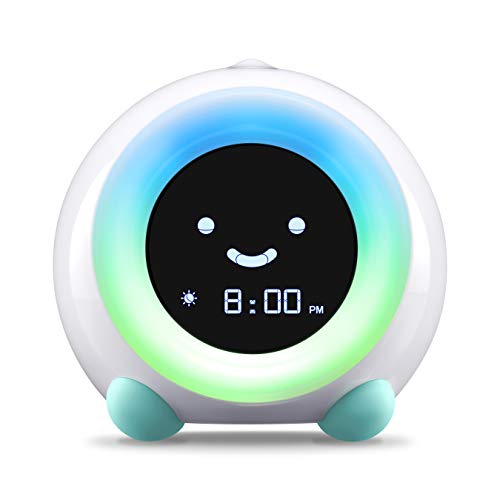
LittleHippo Mella uses color cues and facial expressions to guide kids toward wake times. It’s an all-in-one sleep gadget with night light colors, three alarm sounds, and both alarm and countdown features. Best for families seeking a friendly, kid-friendly design that grows with your child’s needs.
- Best for preschoolers and early readers
- Better for parents wanting a decorative, engaging approach
- Caution: not as feature-rich for adults or multi-user households
Buying Guide: How To Choose A Wake Up Light Clock
Consider these practical questions when selecting a wake up light clock:
- What type of wake cue do you prefer: light-only, sound-only, or a combination?
- How important is sunrise duration and brightness control?
- Do you need integrated Bluetooth speakers, FM radio, or baby/kid-friendly features?
- Are you shopping for adults, children, or both, and does the interface suit their tech comfort level?
- Is a full-screen light panel essential for your room layout or heavy sleepers?
Feature Comparison At A Glance
- Sunrise duration: 5–60 minutes is common; choose longer transitions for light sleepers.
- Brightness and color options: more colors offer flexible room ambiance and training cues.
- Sound options: built-in sounds vs. Bluetooth streaming; consider your audio preferences.
- Ease of use: simple buttons and clear indicators help family setups with kids.
FAQ
- What is the primary benefit of a wake up light clock? It provides a gradual light cue to ease waking, which can reduce morning grogginess.
- Can these clocks help kids stay in bed longer? Yes, models with Ok To Wake signals teach children when it is permissible to rise.
- Is a sunrise clock better than a traditional alarm? For many, yes, because it uses light to create a natural wake rather than a sudden noise.
- Do these clocks require internet access? Most can function without internet; Bluetooth sync is optional for time accuracy in some models.
- Can I use these clocks in a bright room? Look for models with strong front-facing light panels for better visibility in bright spaces.