Direct answer: when selecting a water main pressure valve, look for robust, lead-free construction, a clear adjustment range (typically 25–75 psi), and a reliable double-union or union-end design for easy service. The top choices below are best for varying needs—from residential protection to commercial reliability. This guide highlights five products, who they’re best for, and why they stand out. A quick summary table is provided to compare key specs at a glance.
| Product | Best For | Standout Feature |
|---|---|---|
| Zurn Wilkins 34-NR3XLDU | Tight spaces, quick service | Compact design with cartridge-loaded simplicity |
| Watts LF25AUB-Z3 | Residential/commercial with union ends | High-quality diaphragm, replaceable seat module |
| Merrill MFG PRVNL75100 | Well systems needing safety relief | 100 PSI relief valve for cold water safety |
| Cash Acme EB45 | Tamper-resistant settings | Direct-access pressure adjusting screw |
| Watts LFN45B | Thermal expansion protection, easy service | Double union with PEX ends and bypass |
Zurn Wilkins 34-NR3XLDU 3/4″ NR3XL PRV

The Zurn Wilkins 34-NR3XLDU is a compact, 3/4″ pressure reducing valve designed for tight spaces. Best for homeowners with limited installation room or retrofit jobs, this model’s short lay length and double union FNPT connection simplify removal and servicing. It uses a cartridge-loaded design to make repairs more straightforward, reducing maintenance time. The valve supports various tailpiece options, including threaded, PEX, copper sweat, and CPVC, which enhances compatibility with different piping systems. A potential limitation is that space remains a consideration even with its compact form; verify clearance before purchase.
Who it’s best for: Homeowners and small business setups that require easy maintenance and flexible connection options without sacrificing reliable pressure control. Why selected: its compact footprint and cartridge-driven service model are ideal for quick repairs and space-constrained installs.
Notes: Consider checking the tailpiece compatibility with your existing piping and ensure you have access for service in cramped locations.
Watts LF25AUB-Z3 Water Pressure Reducing Valve 3/4″

The Watts LF25AUB-Z3 is a robust 3/4″ PRV with a NPT Female Union x NPT Female connection. It reduces incoming pressure to protect plumbing and conserve water across residential, commercial, and industrial applications. It features a standard setting around 50 psi, with a broad 25–75 psi adjustable range. The unit uses lead-free copper silicon alloy, stainless steel strainers, and a corrosion-resistant adjusting cage screw, plus a high-temperature diaphragm. A potential limitation is that replacement parts may be required over time; confirm availability of the replaceable seat module and diaphragms for extended life.
Who it’s best for: Properties needing a durable, adjustable regulator with easy field maintenance and reliable downstream protection. Why selected: strong durability, accessible parts, and proven performance in varied settings.
Notes: Ensure the seat module is compatible with your local water composition and temperature range.
Merrill MFG PRVNL75100 3/4″ Lead-Free Brass PRV

The Merrill PRVNL75100 is a 3/4″ lead-free brass pressure relief valve designed for water system protection. It is suitable for well tanks, pumps, and plumbing systems, with a 100 PSI relief rating. Lead-free brass construction meets safety standards for potable water use. The valve’s relief function helps prevent damage from overpressure. A potential limitation is that it is primarily a relief valve, not a full-pressure regulator, so it may be paired with a regulator in some installations.
Who it’s best for: Systems requiring active overpressure protection to safeguard tanks and pumps. Why selected: straightforward safety valve with lead-free materials and a clear 100 PSI setting.
Cash Acme EB45 Pressure Regulating Valve 3/4″ NPTF
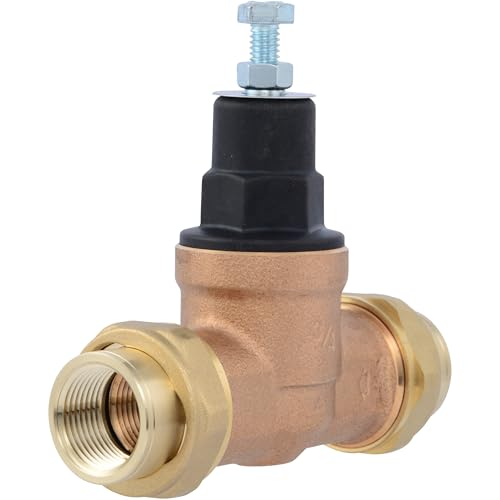
The Cash Acme EB45 Direct Pressure Regulating Valve features a tamper-resistant, inline 3/4″ NPTF double-union design. It aims to maintain downstream pressure and protect potable water systems in commercial and residential applications. The valve uses a half-cartridge design that enables direct access to the pressure adjusting screw, allowing straightforward field adjustments. Material construction includes brass and stainless steel components for durability, with a focus on corrosion resistance and NSF/ANSI 372 compliance. Limitation: the tamper-resistant design may require intentional access for adjustments if outlets are sealed.
Who it’s best for: Settings where tamper resistance and easy field adjustments matter, such as shared commercial spaces or facilities with multiple users. Why selected: combines accessible adjustment with robust materials and regulatory compliance.
Watts LFN45B Series 3/4″ PRV, Double Union

The Watts LFN45B is a lead-free, 3/4″ water pressure reducing valve with double union ends and PEX connections. It provides adjustable pressure from 25 to 75 psi, and can handle up to 400 psi maximum inlet pressure. The assembly includes a removable stainless steel strainer, a thermoplastic seat module, a thermal expansion bypass, and a sealed spring cage suitable for waterworks pit installations. A drawback is the potential need for professional installation in some waterwork pits due to space and piping complexity.
Who it’s best for: Installations needing robust thermal expansion protection, easy inline service, and PEX-ready connections. Why selected: comprehensive features for reliable long-term performance and serviceability.
Watts LFN45BM1-U 3/4″ PRV

The Watts LFN45BM1-U is a standard-capacity, 3/4″ lead-free PRV with NPT Union x FPT connections. It reduces incoming pressure to protect plumbing systems across commercial, industrial, and residential uses. It offers a typical 25–75 psi adjustable range, with a standard setting near 50 psi, and a durable lead-free brass body. A potential limitation is that field adjustments may require removing the valve from line assembly, depending on installation layout.
Buying Guide
What should I consider when choosing a water main pressure valve?
Key factors include material composition (lead-free brass or copper alloy), connection type (union, NPT, PEX), adjustable pressure range (commonly 25–75 psi), maximum inlet pressure, and whether the unit includes features like a bypass for thermal expansion, an integral strainer, or tamper resistance. Consider the environment (home, business, or well system) and maintenance needs (availability of replaceable seats and diaphragms).
Which features improve serviceability and longevity?
Cartage-loaded designs or cartridges simplify repairs. Double union connections allow easier removal without cutting pipes. A replaceable seat module and removable stainless steel strainer facilitate in-line maintenance. A bypass feature helps manage thermal expansion, preventing overpressure during hot water use.
What installation nuances matter?
Space constraints determine whether a compact or standard-size valve is better. Ensure compatibility with your piping material (copper, PEX, CPVC) and confirm that end connections match your system. For outdoor or pit installations, consider models with sealed spring cages and corrosion-resistant components.
How do I avoid overpressure problems?
Set the regulator within the recommended range for your locale (commonly around 50 psi). If you experience pressure surges from thermal expansion, choose a model with a bypass feature to return excess pressure to the main line. Regularly inspect and clean any built-in strainers to maintain consistent operation.
Maintenance tips
- Periodically check the pressure setting and adjust if needed, following manufacturer instructions.
- Inspect for leaks around unions and connections during routine plumbing checks.
- Replace worn seats or diaphragms as part of preventive maintenance to extend valve life.
FAQ
- What pressure should my home regulator be set to? Answer: Most homes use a regulator setting around 50 psi, adjustable within 25–75 psi depending on system needs.
- Are these valves safe for potable water? Answer: Yes, many models use lead-free brass or copper alloys and comply with relevant potable water standards.
- Do I need a bypass with a pressure reducing valve? Answer: Bypass helps manage thermal expansion and protects downstream piping in some installations.
- What is a double-union connection? Answer: A double-union connection allows easier removal and service without cutting pipes.
- Can I install a PRV myself? Answer: It’s feasible for handy homeowners, but professional installation is recommended in complex or high-pressure systems.