When lead risk is a concern, rely on dedicated filtration that clearly reduces lead in tap water. This guide highlights five widely available options that focus on lead reduction, from pitcher and faucet-mount systems to under-sink solutions. It’s ideal for safety-conscious households, renters seeking easy installs, and families needing long-term filtration. The following selections are chosen for their explicit lead-reduction capabilities, practical design, and ease of use. A quick comparison table is provided to help you choose at a glance.
| Product | Best For |
|---|---|
| Clearly Filtered Water Pitcher | Families needing high-contaminant coverage in a large pitcher |
| ZeroWater 22-Cup Dispenser | Households wanting zero TDS with lead reduction |
| ICEPURE Under Sink Filter | Full-kitchen filtration with long lifespan |
| LifeStraw Home Pitcher | Everyday protection including bacteria and heavy metals |
| PUR Plus Vertical Faucet-Mount | Easy, on-demand lead reduction at the faucet |
Clearly Filtered Filtered Water Pitcher

Best for: households needing extensive contaminant coverage. This pitcher targets 365+ contaminants, including fluoride, lead, PFAS, and microplastics. It uses a proprietary filtration technology designed to capture contaminants while preserving beneficial minerals. It’s BPA-free and crafted with medical-grade materials for durable daily use. A potential limitation is the need to replace the filter regularly to maintain performance.
ZeroWater 22-Cup Dispenser
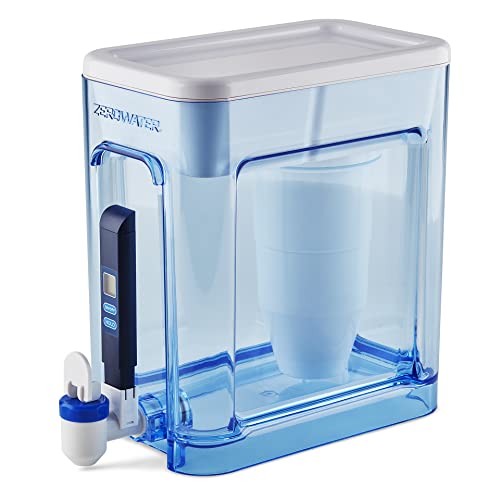
Best for: households seeking water with zero total dissolved solids (TDS). It features a 5-stage filtration system and an integrated TDS meter to indicate when to change the filter. It’s IAPMO certified to reduce lead and other substances. A caveat is that filter replacement frequency depends on use and water quality, which can increase ongoing costs.
ICEPURE Under Sink Water Filter System

Best for: homes seeking under-sink filtration with long life. This system offers a high-capacity filter designed to remove heavy metals and chlorine, with NSF/ANSI 42 & 372 certifications and a stated 22,000-gallon life. The installation is plug-and-play, and it emphasizes long-term filtration value. As a limitation, the setup requires space under the sink and alignment with existing plumbing.
LifeStraw Home Pitcher

Best for: households needing bacteria and parasite protection along with reduced lead. LifeStraw’s pitcher is designed to remove lead, mercury, and PFAS, while retaining minerals. It combines a sleek glass design with BPA-free materials. A consideration is the potential fragility of a glass pitcher compared with plastic alternatives, and the need to maintain mineral balance through regular usage.
PUR Plus Vertical Faucet-Mount

Best for: homes wanting immediate lead reduction at the tap with a quick install. This faucet-mount system uses a 3-in-1 filtration technology to reduce lead and other contaminants. It’s certified by NSF and designed for easy setup with minimal tools. A limitation is that it sits at the faucet and may be less visually discreet for some kitchens.
Buying Guide: Key Considerations For Lead-Reduction Filtration
- Lead reduction standards: Look for filters certified to reduce lead by reputable bodies (NSF/ANSI). Certifications indicate predictable performance.
- Filtration type and maintenance: Decide between pitcher, faucet-mount, or under-sink systems. Check filter lifetimes and replacement costs to estimate long-term value.
- Water usage and capacity: If you need filtered water for a family, prioritize larger-capacity pitchers or under-sink units with high daily output.
- Installation and space: Faucet mounts and under-sink systems require space and some DIY setup. Consider rental scenarios or wall-space restrictions.
- Impact on minerals: Some filters remove contaminants while preserving beneficial minerals. If mineral content matters to you, read the product notes on mineral retention.
- Taste and odor improvements: Many filters also reduce chlorine and other tastes. If taste is a priority, focus on filters with chlorine reduction claims.
FAQ
- Q: Do all lead-reducing filters remove 100% of lead? A: No, most filters reduce lead by a significant amount but not necessarily 100%. Check the specific reduction claims and certifications for each model.
- Q: How often should I replace the filter for lead reduction? A: Replacement frequency depends on the product and your water quality. Follow the manufacturer’s guidance and monitoring indicators when provided.
- Q: Can a pitcher filter remove lead as effectively as an under-sink system? A: Some pitchers are designed for strong lead reduction, but under-sink and faucet-mount systems often offer higher flow and longer filter life for lead-heavy tap water.
- Q: Do these filters affect minerals in water? A: Some filters preserve beneficial minerals, while others may reduce certain minerals as part of contaminant removal. Review product technical details if mineral content matters.
- Q: Are there any safety concerns with filters? A: Use products certified by recognized standards bodies and install according to instructions to ensure safe operation.
- Q: Which option is best for renters? A: Faucet-mount and pitcher systems are typically easiest to install without permanent changes, making them renter-friendly.