Answering the question “Which wood look epoxy countertop kit is best for my project?” this guide highlights top epoxy products designed to deliver a wood-like finish with high gloss, durability, and ease of use. Ideal for DIY enthusiasts who want a sealed, wood-grain appearance without traditional wood maintenance. The top picks below are best for different needs: some provide a solid base or undercoat, others offer a crystal-clear top layer for a natural wood look. A quick buying table is included to compare key details side-by-side.
| Product | Best For | Why It Stands Out |
|---|---|---|
| Stone Coat Epoxy Undercoat (White, 1 Quart) | Priming new builds | Two coats create a dense foundation that enhances longevity and thickness for a wood-look project. |
| Stone Coat Clear Epoxy Resin Kit (1 Gal) | All-over epoxy topcoat | Crystal clear finish with heat and scratch resistance; great for a wood-grain appearance over stained surfaces. |
| Stone Coat Epoxy Undercoat (Black, 1 Quart) | Dark wood-look bases | Similar foundation benefits with a dark base—helps achieve deeper wood tones. |
| Stone Coat Clear Epoxy Resin Kit (1/2 Gal) | Smaller projects or sample tops | Compact option with same safety and finish characteristics as the 1 Gal kit. |
| MAS Epoxies Penetrating Epoxy Resin Wood Sealer (1.5 Pint) | Wood sealing and rot protection | Penetrating sealer that protects wood before applying an epoxy topcoat. |
Stone Coat Epoxy Undercoat White (1 Quart)

This undercoat is designed to prepare porous surfaces for epoxy finishes. It’s best for those who want a solid, dense foundation to support a wood look. The product is applied in two coats to enhance adhesion and extend surface life. It pairs with Stone Coat epoxy kits to yield a refined, high-gloss result. Best for DIYers building new countertops or upgrading uneven bases. A caution: ensure full drying between coats to avoid trapped moisture or uneven bonding.
Stone Coat Clear Epoxy Resin Kit (1 Gal)

This clear epoxy resin kit offers a durable, crystal-clear gloss suitable for a wood-look countertop. It resists heat and scratches and is formulated to be low in VOCs, making it a safer option for kitchens and living spaces. The kit is ideal for countertop, tabletop, or bar-top projects where a wood grain is achieved with pigments or stains layered beneath the clear topcoat. A caveat: ensure proper ventilation during mixing and curing.
Stone Coat Epoxy Undercoat Black (1 Quart)

This black undercoat is designed to help achieve a rich, dark wood appearance in epoxy projects. Like the white undercoat, it creates a solid base with two coats to improve adhesion and surface durability. Best for projects where a deep, espresso-like wood tone is desired. Limitation: precise color layering is essential; misapplication can affect final tone and gloss.
Stone Coat Clear Epoxy Resin Kit (1/2 Gal)

Similar to the 1 Gal kit, this smaller option provides the same crystal-clear topcoat finish but is suited for smaller countertops, sample boards, or art pieces. It’s best for those who want to test color effects or hesitation about committing to a larger batch. A potential limitation is longer curing times when working in cooler environments.
MAS Epoxies Penetrating Epoxy Resin Wood Sealer (1.5 Pint)

This product is a penetrating wood sealer and two-part epoxy system designed to seal, harden, and protect wood—helpful before applying topcoats to achieve a wood-look finish. It’s suitable for porous or rotten wood issues and can be used on many wood types. Best for prep work on raw or damaged wood. Caution: verify compatibility with subsequent epoxy layers to avoid adhesion issues.
J-B Weld KwikWood Wood Repair Epoxy Putty (Tan)
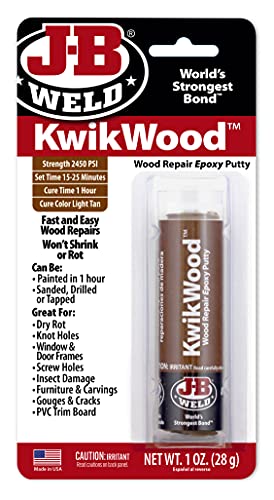
KwikWood is a two-part epoxy putty designed for repairing wood. It cures quickly and can be shaped, stained, and drilled, making it useful for repairing wood imperfections before applying epoxy countertops. Best for small imperfections or edge repairs. Limitation: not a substitute for large structural repairs or deep, rotted sections.
Abatron WoodEpox Kit (2 Pint)

Abatron WoodEpox is a two-part structural epoxy adhesive filler designed to repair and restore damaged wood. It can fill missing sections and accepts finishing treatments. Best for extensive wood restoration prior to epoxy application. Caution: as with any epoxy, follow working time and curing guidance to avoid issues with shape and finish.
Buying Guide: Key Considerations For Wood Look Epoxy Countertops
- Project scope: For full countertops, choose a larger kit (1 Gal) or a combination of undercoat plus clear topcoat. For accents or small projects, a 1/2 Gal kit plus an undercoat may suffice.
- Base preparation: Porous or damaged surfaces benefit from an epoxy undercoat or penetrating sealer to improve adhesion and longevity.
- Finish type: Clear epoxy tops yield a true wood look when used with stains or pigments. Dark undercoats can help achieve deeper wood tones.
- Safety and VOCs: Look for kits described as low-VOC and food-safe where applicable. Ventilation during mixing and curing is essential.
- Heat and scratch resistance: For kitchen counters, choose resin kits with heat and scratch resistance to maintain gloss and clarity over time.
- Application efficiency: Larger kits offer fewer seams; smaller kits are useful for practice or small countertops. Consider your workflow and time constraints.
Frequently Asked Questions
- What is the main advantage of a wood look epoxy countertop?
It provides a durable, glossy, wood-grain appearance with easier maintenance than natural wood. - Do I need an undercoat before applying epoxy?
An undercoat improves bonding on porous or damaged surfaces and can help achieve a denser finish. - Is all epoxy resin food-safe for kitchen surfaces?
Many kits claim food-safe capabilities in cured state; always verify product specifications and USDA or local guidelines. - Can I mix pigments to customize the wood look?
Yes, many clear epoxy kits accept pigments, mica powder, or metallic powders for a customized grain. - How long does curing take?
Curing times vary by product and environment; follow manufacturer guidelines for temperature and humidity. - What if I see white spots or bubbles after curing?
This can indicate improper mixing, air entrapment, or moisture; rework may be necessary with proper surface prep.