Looking for sturdy wood chopping blocks that mimic the rugged charm of a stump block while offering practical kitchen performance? This guide highlights five top options, explaining who they’re best for and why they stand out. Each product features varied wood types, thicknesses, and design details to suit different cooking styles, from heavy chopping to elegant serving. Ideal for home cooks, professional kitchens, and gift seekers who value durability and natural aesthetics.
Table: Selected products at a glance
| Product | Wood Type / Material | Best For | Key Benefit |
|---|---|---|---|
| Ziruma End Grain Butcher Block | Acacia Wood | Serious home cooks, heavy chopping | End grain durability; knife-friendly |
| Dexas Acacia End Grain Board | Acacia Wood | Versatile prep and presentation | Reversible surface; grips for handling |
| TJ POP End Grain Round Block | Acacia Wood | Serving and chopping on one board | Double-sided with juice groove |
| Nature’s Kitchen Bamboo Round Board | 100% Bamboo | Eco-conscious everyday use | Thick, sturdy surface; versatile serving |
| GoCraft Mango Wood Board | Mango Wood with Tree Bark Rim | Rustic serving and light prep | Natural aesthetics; lightweight |
End Grain Butcher Block Acacia Ziruma

Best for serious home cooks who need a heavy-duty cutting surface. Ziruma’s board uses acacia wood with end grain construction to provide long-lasting durability and knife-friendliness. The 1.5″ thick profile offers stability under heavy chopping, and the board’s natural oils and conditioning suggest durability and a refined finish. The deep juice groove helps manage liquids during prep, and the edge handles aid maneuvering. A potential limitation is that end grain boards can be heavier and require more care to maintain flatness over time.
- Best for: Heavy chopping, long-term use, and a premium cooking surface.
- Why selected: End grain construction resists knife wear and warping; visually appealing.
- Caution: Requires regular oiling to maintain flatness and moisture resistance.
Dexas Acacia End Grain Reversible Board

This board is best for cooks who value versatility and easy handling. It features a reversible end grain surface for extended wear life and a recessed grip-friendly design for lifting and serving. The acacia wood is known for its color, moisture resistance, and strength, making it suitable for daily use in busy kitchens. It’s a solid pick for those who want a dual-purpose chopping and serving board that can transition from prep to presentation with ease.
- Best for: Dual-purpose chopping and serving; easy handling.
- Why selected: Reversible design extends life; strong, attractive wood.
- Caution: Ensure proper cleaning and drying to prevent moisture damage.
TJ POP Round Acacia Cutting Board
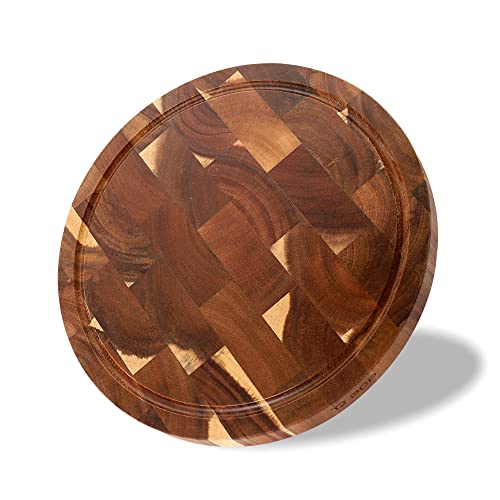
Choose this if you want a compact, round serving board with two useful sides. The front side includes a deep juice groove for messy prep, while the back side is polished for flat, smooth cutting. The double-handle design makes it easy to lift and transfer to the table or charcuterie setup. This board is best for smaller kitchens or for those seeking a stylish, all-in-one board for both chopping and serving.
- Best for: Small spaces; dual-purpose use for cutting and serving.
- Why selected: Two sides, juice groove on one side, polished surface on the other.
- Caution: Round shape may limit flat cutting area for large tasks.
Nature’s Kitchen Bamboo Round Cutting Board

Ideal for eco-conscious buyers who want a lightweight, durable cutting surface. The 12-inch round bamboo board is sturdy enough for daily prep and versatile for serving tasks like cheese boards or charcuterie platters. Bamboo is a fast-growing, renewable resource, adding an environmental edge to this option. A consideration is that bamboo boards can wear differently than hardwoods and may require regular conditioning to maintain moisture resistance.
- Best for: Everyday prep and stylish serving with an eco-friendly material.
- Why selected: Thick, stable surface; visually appealing and versatile.
- Caution: Regular conditioning helps maintain surface integrity over time.
GoCraft Mango Wood Round Board

This round mango wood board blends rustic charm with practical use. The tree bark rim adds a natural, decorative touch that works well for serving boards and casual chopping tasks. It’s best for buyers who prioritize aesthetics and lighter weight, making it easy to maneuver in daily meal prep or as a centerpiece for cheese and fruit platters. A limitation is that mango wood is generally softer than some hardwoods, so it may show knife marks sooner with heavy daily use.
- Best for: Aesthetics-aware cooks who want a decorative yet functional board.
- Why selected: Distinctive bark rim; lightweight and easy to handle.
- Caution: Monitor for knife marks on softer mango wood over time.
Buying Guide
Key considerations when choosing a wood stump or stump-inspired cutting block:
- Material and durability: End grain boards (like Ziruma, Dexas, and TJ POP) tend to be gentle on knives and resist knife scars, but require care to prevent warping. Solid hardwoods (acacia, acacia variants) offer long-lasting surfaces but may be heavier.
- Thickness and stability: Thicker boards (1″ to 1.5″) stay flatter under pressure and resist bending. Consider your chopping style and countertop space when selecting thickness.
- Maintenance: Oil conditioning is important for wood boards to preserve moisture resistance and prevent drying. Some boards come pre-conditioned; others require regular upkeep.
- Surface function: Reversible or multi-sided boards provide extended use life. Joins to consider for dual chopping and serving tasks.
- Size and storage: Round boards and compact sizes fit smaller kitchens. If you frequently prep large quantities, larger rectangular boards may be preferable.
Frequently Asked Questions
- What is the advantage of end grain boards? End grain boards are gentler on knife blades and self-heal minor cuts, prolonging the board’s life.
- Are bamboo boards as durable as hardwood boards? Bamboo is strong and eco-friendly, but may show wear differently than hardwoods and often requires conditioning.
- Should I oil my wooden cutting board? Yes, regular conditioning helps maintain moisture resistance and prevent cracking or warping.
- Is a reversible board beneficial? Reversible boards double usable surface life, reducing wear on a single face.
- What size is best for everyday use? A thickness of 1 to 1.5 inches is a good balance of stability and weight for most homes.
- Can I use a stump-inspired board for serving? Yes, most boards in this guide double as serving platters for cheeses, fruits, and charcuterie.